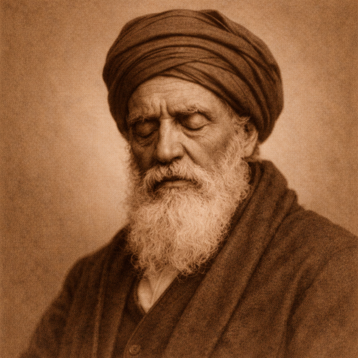
Abu al-ʻAlaʼ al-Maʻarri
Biography
Abu al-ʻAlaʼ al-Maʿarri (973–1057) was a blind Arab philosopher, poet, and writer from Maʿarrat al-Nuʻman in modern Syria. One of the greatest poets in the Arabic language, he is known for his rationalism, pessimism, and religious skepticism—remarkable positions for his time. His most famous work, the Luzumiyat, consists of poems written with a self-imposed constraint of double rhyme. He was a vegetarian who opposed animal cruelty, a skeptic who questioned organized religion, and a pessimist who advocated against reproduction. His freethinking earned comparisons to Lucretius and Omar Khayyam.
Common themes in Abu al-ʻAlaʼ al-Maʻarri's work
Arabic poetry
A recurring theme throughout Abu al-ʻAlaʼ al-Maʻarri's writing.
Rationalism
A recurring theme throughout Abu al-ʻAlaʼ al-Maʻarri's writing.
Religious skepticism
A recurring theme throughout Abu al-ʻAlaʼ al-Maʻarri's writing.
Philosophical poetry
A recurring theme throughout Abu al-ʻAlaʼ al-Maʻarri's writing.
Books
Explore by genre
Other authors you may enjoy

Why Abu al-ʻAlaʼ al-Maʻarri is still read today
Al-Maʿarri’s rationalism, skepticism, and ethical vegetarianism make him remarkably modern for an 11th-century poet. He is one of the great freethinkers in world literary history.
Frequently Asked Questions
Who was al-Maʿarri?
Abu al-ʻAlaʼ al-Maʿarri (973–1057) was a blind Syrian poet and philosopher, one of the greatest Arabic poets, known for his rationalism and skepticism.
What is the Luzumiyat?
His most famous collection of philosophical poems, written with a self-imposed double-rhyme constraint. Available free on TextStack.
Why is he considered modern?
His skepticism of religion, ethical vegetarianism, and rationalism were extraordinary for the 11th century.
Where can I read al-Maʿarri free?
TextStack offers the Luzumiyat to read free online.
Essential cookies keep you signed in and save your reading progress. Analytics cookies help us understand how the site is used. You can reject analytics — we still work without them. Learn more in our Privacy Policy.