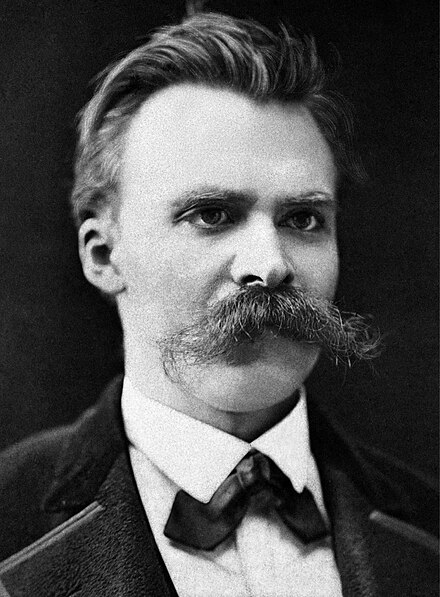
Friedrich Nietzsche
Biography
Friedrich Nietzsche (1844-1900) was a German philosopher, cultural critic, and poet whose ideas profoundly influenced Western philosophy and intellectual history. Born in Röcken, Prussia, he became a professor of classical philology at the University of Basel at the remarkably young age of 24. Nietzsche's major works include Thus Spoke Zarathustra, Beyond Good and Evil, and On the Genealogy of Morals. He introduced revolutionary concepts including the Übermensch (Superman), the will to power, eternal recurrence, and the provocative declaration that "God is dead." His critique of Christian morality and traditional values sparked controversy that continues today. Suffering a mental breakdown in 1889, Nietzsche spent his final years in the care of his mother and sister. Though later misappropriated by the Nazis, his philosophy has been reclaimed by existentialists, postmodernists, and contemporary thinkers. His aphoristic style and psychological insights make him one of the most quotable and challenging philosophers in history.
Common themes in Friedrich Nietzsche's work
Will to power
A recurring theme throughout Friedrich Nietzsche's writing.
Morality and its origins
A recurring theme throughout Friedrich Nietzsche's writing.
The death of God
A recurring theme throughout Friedrich Nietzsche's writing.
Eternal recurrence
A recurring theme throughout Friedrich Nietzsche's writing.
Books

Explore by genre
Other authors you may enjoy
Why Friedrich Nietzsche is still read today
Friedrich Nietzsche remains one of the most influential and controversial philosophers in Western thought. His concepts—the Übermensch, will to power, eternal recurrence, and "God is dead"—have permeated philosophy, psychology, literature, and popular culture. Freud acknowledged Nietzsche's anticipation of psychoanalysis, while existentialists from Heidegger to Sartre built on his work. Nietzsche's critique of Christian morality as "slave morality" and his call for the "revaluation of all values" continues to provoke debate. Though Nazi appropriation (via his sister's distortions) long tainted his reputation, scholars have largely separated his philosophy from fascist misreadings. His aphoristic style, psychological insight, and radical questioning of inherited values make him essential reading for anyone grappling with meaning, morality, and human potential.
Frequently Asked Questions
What did Nietzsche mean by God is dead?
Nietzsche argued that modern science and culture had made traditional Christian belief untenable. "God is dead" means the foundation of Western morality has collapsed, requiring humanity to create new values rather than receiving them from religion.
Was Nietzsche a Nazi?
No. Nietzsche despised nationalism, antisemitism, and German chauvinism. His sister Elizabeth, a Nazi sympathizer, edited his unpublished works to support Nazi ideology. Scholars have largely corrected these distortions.
What is the Übermensch?
The Übermensch ("overman" or "superman") is Nietzsche's ideal of a human who creates their own values and meaning after the death of God. It's not about racial superiority but about individual self-overcoming and creativity.
Where should I start reading Nietzsche?
Begin with Thus Spoke Zarathustra for his literary masterpiece, or Beyond Good and Evil for more direct philosophical argument. The Genealogy of Morals offers his most sustained analysis of moral origins. All are challenging but rewarding.
Why is Nietzsche difficult to read?
Nietzsche writes in aphorisms, parables, and poetic prose rather than systematic argument. His irony and exaggeration can be misread. He demands active interpretation rather than passive reception. This difficulty is intentional—he wants readers to think for themselves.
Essential cookies keep you signed in and save your reading progress. Analytics cookies help us understand how the site is used. You can reject analytics — we still work without them. Learn more in our Privacy Policy.