James Joyce
Biography
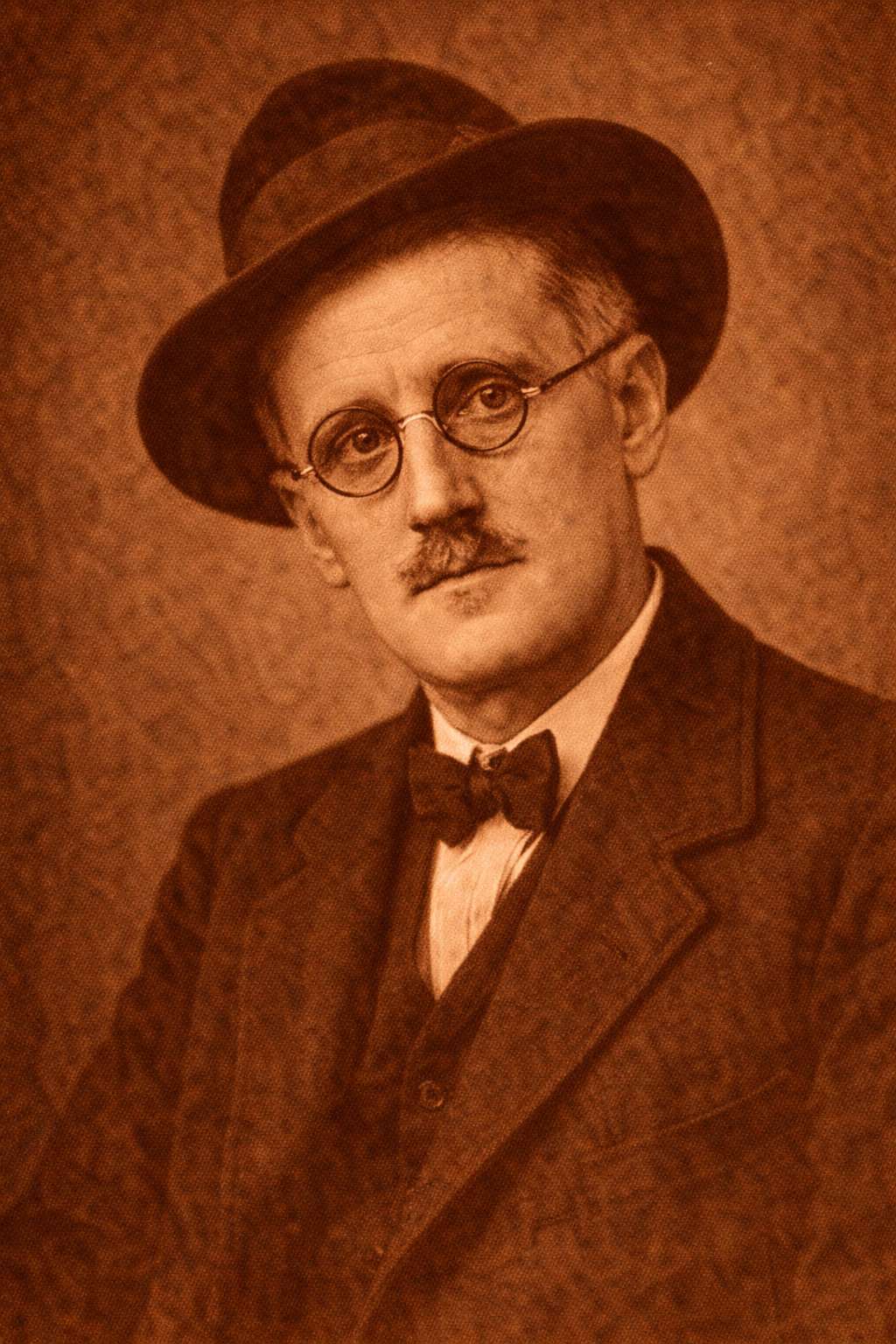
James Augustine Aloysius Joyce (1882–1941) was an Irish novelist, short story writer, and poet whose experimental approach to narrative form made him one of the most influential figures in modernist literature. Born in Dublin to a middle-class family whose financial circumstances declined throughout his childhood, Joyce was educated at Jesuit institutions including Clongowes Wood College and University College Dublin, where he studied languages and philosophy. In 1904, Joyce left Ireland with Nora Barnacle, his lifelong companion and eventual wife, settling on the European continent where he would spend the remainder of his life in Trieste, Zurich, and Paris. His first major publication, the short story collection Dubliners (1914), offered precise, naturalistic portraits of Irish middle-class life structured around what Joyce termed epiphanies — moments of sudden psychological revelation. His semi-autobiographical novel A Portrait of the Artist as a Young Man (1916) traced the intellectual and spiritual development of Stephen Dedalus, employing a style that evolved in complexity alongside its protagonist's consciousness. Joyce's landmark novel Ulysses (1922), which reimagines Homer's Odyssey across a single day in Dublin on June 16, 1904, represented a seismic shift in literary technique. The novel employs stream of consciousness narration, parody, and an encyclopedic range of styles across its eighteen episodes. Initially published in Paris by Sylvia Beach's Shakespeare and Company, Ulysses faced obscenity bans in the United States and the United Kingdom for over a decade. His final work, Finnegans Wake (1939), pushed linguistic experimentation further still, constructing a dense, multilingual prose built from portmanteau words, puns, and allusions drawn from dozens of languages. The text's cyclical structure — its final sentence loops back to its opening — embodies Joyce's interest in the theories of Giambattista Vico. Joyce suffered from chronic eye problems throughout his adult life, undergoing more than twenty surgical procedures. He died in Zurich in January 1941 following surgery for a perforated duodenal ulcer. His work fundamentally altered the possibilities of prose fiction and continues to generate extensive scholarly study and public celebration, most notably on Bloomsday, observed annually on June 16.
Common themes in James Joyce's work
Stream of consciousness
A recurring theme throughout James Joyce's writing.
Dublin and Irish identity
A recurring theme throughout James Joyce's writing.
Exile and belonging
A recurring theme throughout James Joyce's writing.
Language and wordplay
A recurring theme throughout James Joyce's writing.
Books
Explore by genre
Other authors you may enjoy
Why James Joyce is still read today
James Joyce (1882-1941) transformed literature with works that pushed the boundaries of language, form, and consciousness. His masterpiece "Ulysses" is frequently named the greatest novel of the twentieth century, while "Dubliners" perfected the modern short story. Joyce's revolutionary techniques—stream of consciousness, interior monologue, elaborate wordplay—influenced virtually every serious novelist who followed. From Dublin, which he portrayed with obsessive precision despite living in self-imposed exile, Joyce created a universal portrait of human experience. His prose ranges from the crystalline clarity of Dubliners to the encyclopedic experimentation of Ulysses, demonstrating unmatched range within a single career.
Frequently Asked Questions
Why is James Joyce considered one of the greatest writers?
Joyce revolutionized fiction through his technical innovations—stream of consciousness, interior monologue, elaborate linguistic experiments. Ulysses alone influenced nearly every major novelist who followed, while Dubliners perfected the modern short story.
What is Ulysses about?
Ulysses follows Leopold Bloom through a single day in Dublin—June 16, 1904. Structured on Homer's Odyssey, it captures the full range of human consciousness with unprecedented depth, covering everything from everyday activities to the most intimate thoughts.
Was Ulysses banned?
Yes, Ulysses was banned in the US and UK for obscenity until 1933 and 1936 respectively. The American court case became a landmark for literary freedom, with Judge Woolsey ruling the book was not pornographic.
What is Bloomsday?
June 16, the day Ulysses takes place, is celebrated annually as Bloomsday, particularly in Dublin. Fans trace Bloom's steps, read from the novel, and celebrate Joyce's immortalization of the city.
Should I start with Dubliners or Ulysses?
Start with Dubliners—its accessible short stories introduce Joyce's Dublin and his concept of epiphany. A Portrait of the Artist as a Young Man is the next step before tackling the challenge of Ulysses.
Essential cookies keep you signed in and save your reading progress. Analytics cookies help us understand how the site is used. You can reject analytics — we still work without them. Learn more in our Privacy Policy.