Jorge Isaacs
Biography
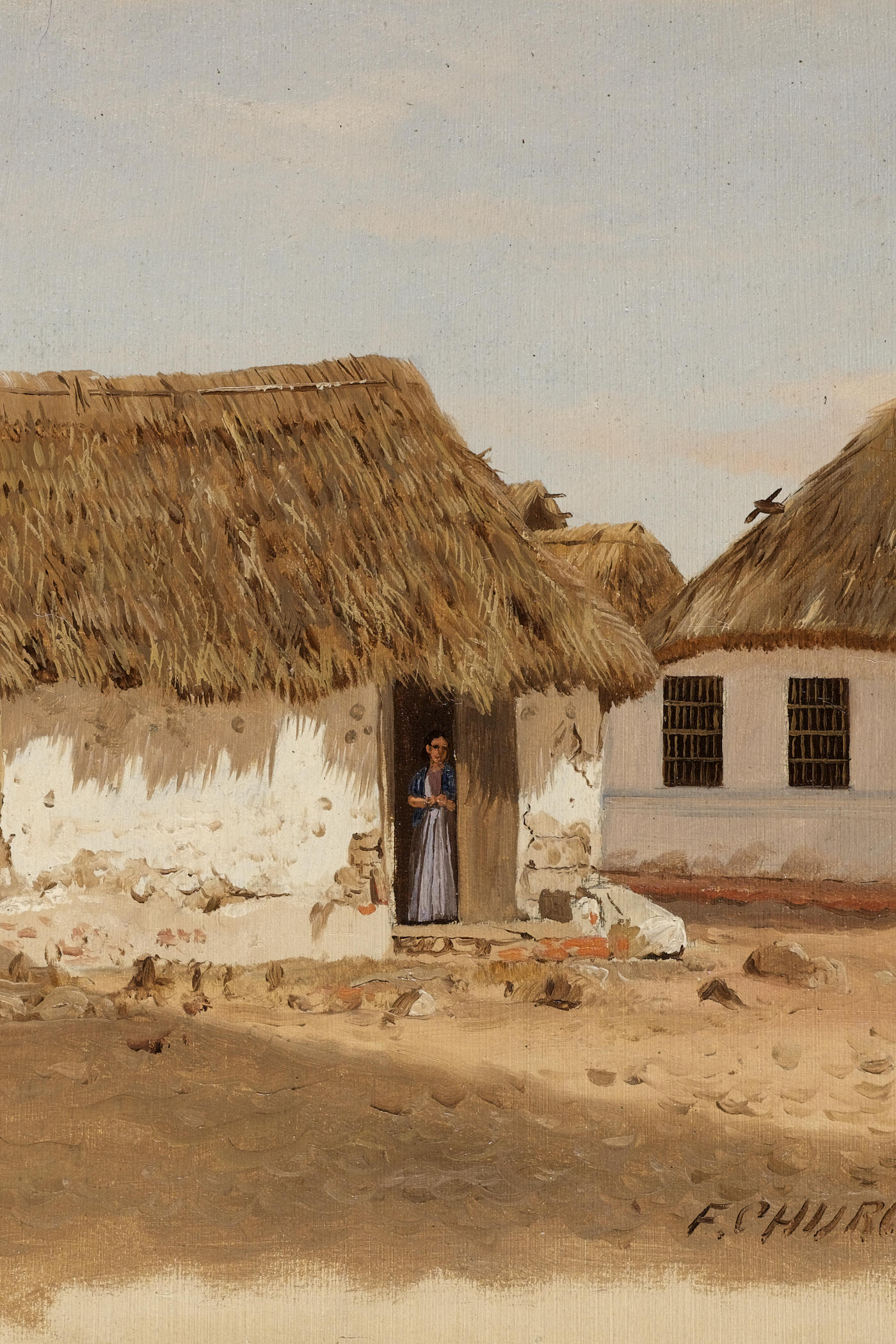
Jorge Isaacs (1837–1895) was a Colombian novelist and poet, born in Cali, in the Cauca Valley region of what was then the Republic of New Granada. His family background was a blend of Jewish-English heritage on his father's side and Colombian Creole on his mother's, a multicultural origin that informed his literary sensibility. Isaacs spent much of his youth on his family's hacienda, El Paraíso, in the Cauca Valley — a landscape that would become the vivid backdrop of his most celebrated work. After his father's death left the family in financial difficulty, Isaacs turned to writing and politics. He served as a soldier, diplomat, and political figure throughout his life, aligning at various points with both Liberal and Conservative factions in Colombia's turbulent nineteenth-century political landscape. His place in Latin American literature rests almost entirely on his novel María (1867), one of the most widely read Romantic novels written in Spanish. The work is a first-person narrative recounting the love between Efraín and María, two young people on a Colombian hacienda, set against an idealized natural landscape. The novel blends sentimental Romanticism with detailed regionalist description, drawing on costumbrismo — the literary portrayal of local customs and manners — to document life in the Cauca Valley. María was an immediate success across Latin America and Spain, translated into numerous languages and reprinted dozens of times during the author's lifetime and beyond. Beyond fiction, Isaacs wrote poetry and contributed to Colombian journalism. His poetry, collected in Poesías (1864), preceded María and established his literary reputation, though it has received far less critical attention than his novel. He also undertook ethnographic study of indigenous communities in the Sierra Nevada de Santa Marta region, producing scholarly observations later recognized for their documentary value. Isaacs died in Ibagué, Colombia, in 1895, having spent his final years in relative poverty. Despite producing a relatively small body of work, his single novel secured his lasting reputation as a foundational figure of Colombian and Latin American Romantic literature.
Common themes in Jorge Isaacs's work
Romantic love and loss
A recurring theme throughout Jorge Isaacs's writing.
Regional landscape and nature
A recurring theme throughout Jorge Isaacs's writing.
Family and social duty
A recurring theme throughout Jorge Isaacs's writing.
Nineteenth-century Colombian rural life
A recurring theme throughout Jorge Isaacs's writing.
Books
Explore by genre
Other authors you may enjoy
Why Jorge Isaacs is still read today
Jorge Isaacs remains a central figure in Latin American literary history, primarily through María, which is taught in secondary schools and universities across Spanish-speaking countries. The novel is frequently studied as a defining example of Latin American Romanticism and as a document of nineteenth-century Colombian social and rural life, offering readers insight into plantation society, regional customs, and period attitudes toward love, family, and mortality. The Cauca Valley setting of María has become a point of cultural and touristic identity for the region, with the original hacienda El Paraíso preserved as a museum. The novel has been adapted for film and television on multiple occasions, including a notable Colombian television series, demonstrating its continued presence in popular culture. Scholars engage with Isaacs's work in the context of postcolonial studies, examining its treatment of race, class, and indigenous and Afro-Colombian communities depicted in the narrative. His ethnographic writings on indigenous peoples have also attracted renewed academic interest. For readers new to nineteenth-century Latin American literature, Isaacs provides an accessible and emotionally resonant entry point.
Frequently Asked Questions
Who was Jorge Isaacs?
Jorge Isaacs (1837–1895) was a Colombian novelist and poet from Cali, best known for his Romantic novel María (1867), one of the most widely read works of nineteenth-century Latin American literature. He was also a soldier, diplomat, and political figure throughout his career.
What are the most famous works by Jorge Isaacs?
Isaacs is best known for the novel María (1867), a Romantic narrative set in the Cauca Valley of Colombia that achieved widespread popularity across Latin America and Spain. He also published a collection of poetry, Poesías (1864), and produced ethnographic writings on indigenous communities in Colombia.
Why is Jorge Isaacs still relevant today?
Isaacs remains relevant as a foundational figure of Latin American Romanticism. María is taught in schools and universities across Spanish-speaking countries and has been adapted for film and television. The hacienda featured in the novel is now a museum, and scholars continue to study his work for its depictions of Colombian society, race, and regional culture.
Where can I read books by Jorge Isaacs online?
Books by Jorge Isaacs, including María, are available to read free online on TextStack, which offers the full text in a clean, reader-friendly format suitable for both casual reading and academic study.
Essential cookies keep you signed in and save your reading progress. Analytics cookies help us understand how the site is used. You can reject analytics — we still work without them. Learn more in our Privacy Policy.