Lord Byron
Biography
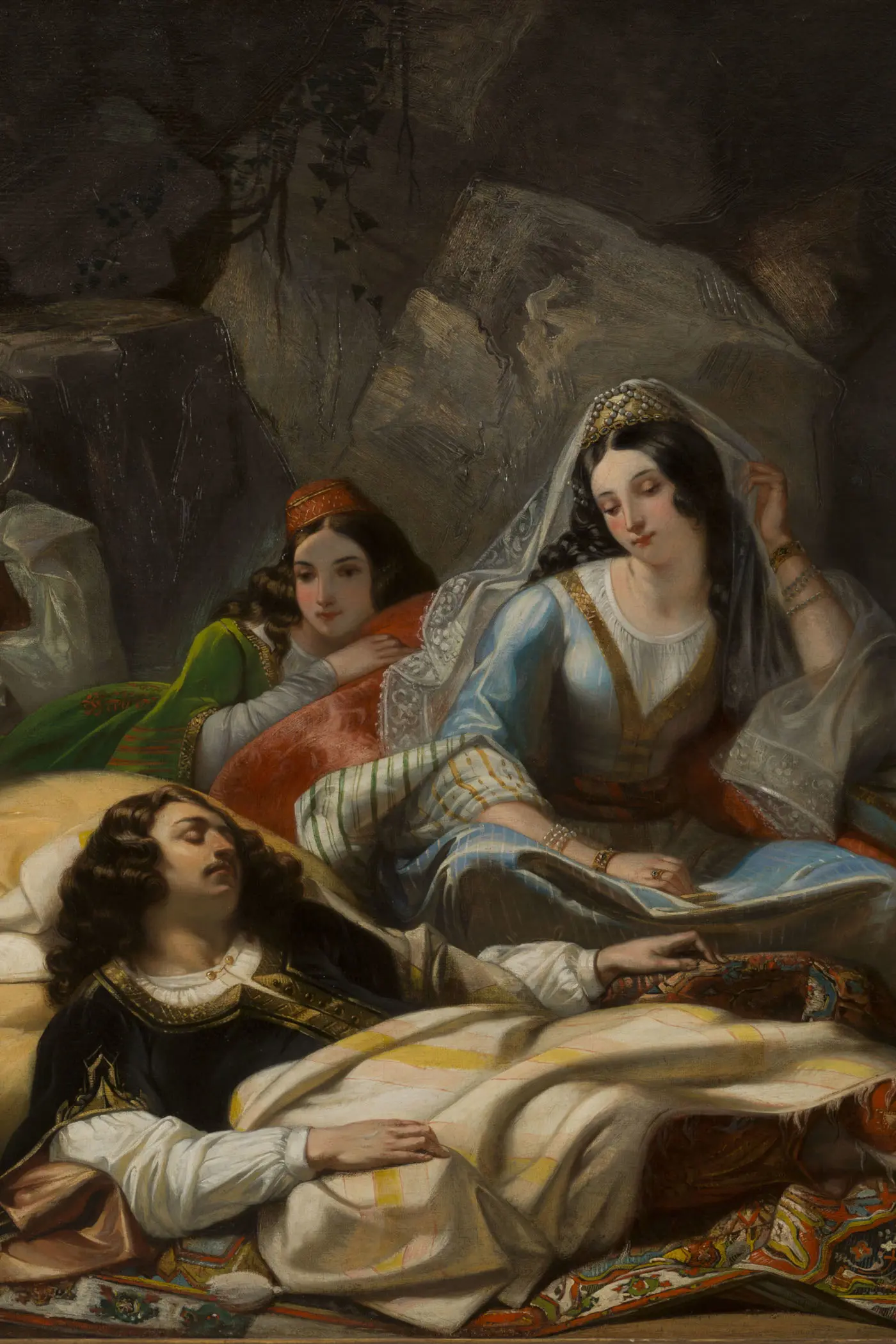
George Gordon Byron, 6th Baron Byron (1788–1824), commonly known as Lord Byron, was an English Romantic poet and satirist whose works and personality became the defining image of the Romantic movement. Born in London and raised in Scotland, Byron inherited his title at age ten and was educated at Harrow and Cambridge. His semi-autobiographical poem Childe Harold’s Pilgrimage (1812–1818) made him an overnight celebrity—he famously “awoke one morning and found myself famous.” Byron became the archetypal Romantic hero: passionate, rebellious, melancholic, and scandalous. His masterpiece, Don Juan (1819–1824), is a sprawling comic epic in verse that satirizes European society, politics, and hypocrisy with dazzling wit and narrative energy. Byron’s other works include Manfred, The Giaour, and The Corsair. His personal life—marked by love affairs, debts, and scandal—became as famous as his poetry. He died at age thirty-six while fighting for Greek independence, cementing his legendary status. Byron’s influence on European literature, music, and the Romantic imagination was enormous.
Common themes in Lord Byron's work
Romantic poetry
A recurring theme throughout Lord Byron's writing.
Byronic hero
A recurring theme throughout Lord Byron's writing.
Satirical verse
A recurring theme throughout Lord Byron's writing.
European Romanticism
A recurring theme throughout Lord Byron's writing.
Books
Explore by genre
Other authors you may enjoy
Why Lord Byron is still read today
Lord Byron’s poetry defined Romanticism and his persona created the archetype of the rebellious, passionate artist that still influences popular culture. Don Juan remains one of the wittiest and most entertaining long poems in the English language.
Frequently Asked Questions
Who was Lord Byron?
Lord Byron (1788–1824) was an English Romantic poet whose works and scandalous life defined the Romantic movement. His masterpiece Don Juan is one of the greatest comic poems in English.
What is the Byronic hero?
A character type Byron created—passionate, rebellious, melancholic, and self-destructive—that influenced literature from the Brontës to modern anti-heroes.
Where can I read Byron online?
You can read Don Juan for free on TextStack with a clean reading interface.
Essential cookies keep you signed in and save your reading progress. Analytics cookies help us understand how the site is used. You can reject analytics — we still work without them. Learn more in our Privacy Policy.