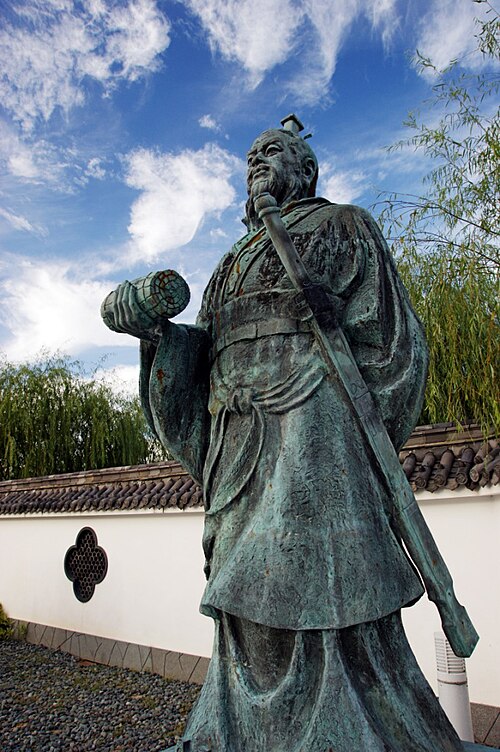
Sun Tzu
Biography
Sun Tzu (c. 544-496 BC) was an ancient Chinese military general, strategist, and philosopher traditionally credited with writing The Art of War, the most influential treatise on strategy ever composed. According to traditional accounts, he served as a general for King Helü of Wu during the Spring and Autumn period of Chinese history. The Art of War, comprising thirteen chapters on different aspects of warfare, transcends its military origins to offer universal principles applicable to business, politics, sports, and personal conflicts. Sun Tzu's emphasis on winning without fighting, knowing oneself and one's enemy, and adapting to circumstances has influenced leaders from Napoleon to modern CEOs. Whether Sun Tzu was a historical individual, a composite figure, or a name attached to accumulated military wisdom remains debated by scholars. Regardless, the text attributed to him has shaped strategic thinking across cultures for over two millennia. Its insights on leadership, competition, and human psychology remain startlingly relevant in the modern world.
Common themes in Sun Tzu's work
Military strategy and tactics
A recurring theme throughout Sun Tzu's writing.
Winning without fighting
A recurring theme throughout Sun Tzu's writing.
Deception and intelligence
A recurring theme throughout Sun Tzu's writing.
Leadership and command
A recurring theme throughout Sun Tzu's writing.
Books
Explore by genre
Other authors you may enjoy

Why Sun Tzu is still read today
Sun Tzu's Art of War has transcended its origins as a military treatise to become one of the most influential texts on strategy ever written. Originally composed for ancient Chinese warfare, its principles now inform business strategy, sports coaching, legal tactics, and personal development. The text's emphasis on winning without fighting, knowing yourself and your enemy, and adapting to circumstances offers wisdom applicable far beyond battlefields. Contemporary executives study it alongside MBA curricula; coaches assign it to athletes; negotiators apply its insights. Whether Sun Tzu was a historical figure or a composite author remains debated, but the text's influence is undeniable. In an era of intense competition, its strategic wisdom continues to find new applications.
Frequently Asked Questions
What is The Art of War about?
The Art of War is a Chinese military treatise covering strategy, tactics, and philosophy of warfare. Its 13 chapters address topics from planning to espionage. Its core message: the supreme art of war is subduing the enemy without fighting, through superior strategy and intelligence.
Was Sun Tzu a real person?
Tradition dates Sun Tzu to 6th-5th century BCE as a general serving the King of Wu. Some scholars question his historicity, suggesting the text is a compilation by multiple authors. Regardless, the work attributed to him has been influential for over two millennia.
Why do business people read The Art of War?
The text's principles—know your competition, choose your battles carefully, use resources efficiently, adapt to circumstances—translate readily to business competition. Its strategic framework has been applied to marketing, negotiation, management, and entrepreneurship.
What are Sun Tzu's most famous quotes?
'The supreme art of war is to subdue the enemy without fighting.' 'Know yourself and know your enemy; in a hundred battles you will never be in peril.' 'Appear weak when you are strong, and strong when you are weak.' These aphorisms circulate widely beyond military contexts.
How does The Art of War differ from Western military thinking?
Sun Tzu emphasizes avoiding battle through superior positioning, intelligence, and psychology, rather than seeking decisive engagements. His focus on deception, adaptability, and winning without fighting contrasts with Western traditions often emphasizing direct confrontation and overwhelming force.
Essential cookies keep you signed in and save your reading progress. Analytics cookies help us understand how the site is used. You can reject analytics — we still work without them. Learn more in our Privacy Policy.