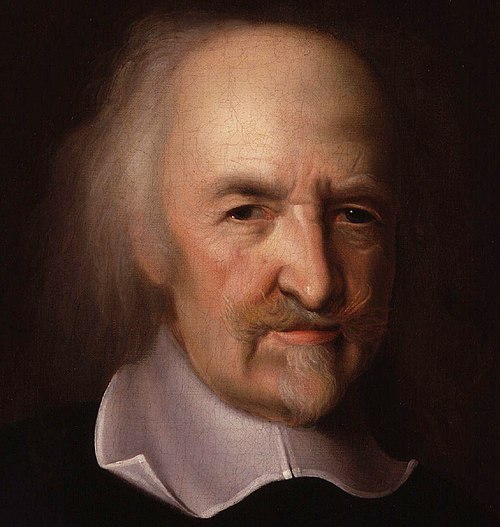
Thomas Hobbes
Biography
Thomas Hobbes (1588-1679) was an English philosopher best known for his political philosophy, particularly Leviathan (1651), which laid the groundwork for modern political science and social contract theory. Born prematurely when his mother heard of the approaching Spanish Armada, he lived through the English Civil War, which profoundly shaped his thinking about political order. Hobbes argued that without strong government, human life would be "solitary, poor, nasty, brutish, and short"—a state of war of "every man against every man." His solution was an absolute sovereign to whom citizens surrender their freedoms in exchange for security. This social contract theory, though authoritarian, influenced later liberal thinkers including Locke and Rousseau. Beyond politics, Hobbes made contributions to geometry, optics, and psychology. His materialist philosophy and scientific approach to human nature earned him accusations of atheism. Though controversial in his time and after, Hobbes's rigorous analysis of power and authority established him as a founder of modern political philosophy.
Common themes in Thomas Hobbes's work
The social contract and sovereignty
A recurring theme throughout Thomas Hobbes's writing.
Human nature and self-interest
A recurring theme throughout Thomas Hobbes's writing.
The state of nature
A recurring theme throughout Thomas Hobbes's writing.
Security and order
A recurring theme throughout Thomas Hobbes's writing.
Books
Explore by genre
Other authors you may enjoy
Why Thomas Hobbes is still read today
Thomas Hobbes fundamentally shaped Western political philosophy with Leviathan, his argument for absolute sovereignty based on a materialist understanding of human nature. His vision of the "state of nature" as a war of all against all, and his social contract theory explaining legitimate authority, remain reference points for political philosophy. Whether accepted or rejected, Hobbes's arguments demand engagement from anyone thinking seriously about political order, sovereignty, and the basis of government. His influence extends through Locke, Rousseau, and the entire social contract tradition. Contemporary debates about security, liberty, and governmental power continue to grapple with questions he posed. His rigorous, systematic approach established models for political philosophy as a discipline.
Frequently Asked Questions
What is the 'state of nature' in Hobbes?
Hobbes imagined human life without government as a 'war of all against all' where life would be 'solitary, poor, nasty, brutish, and short.' This thought experiment justifies creating a powerful sovereign to maintain peace—people rationally surrender freedom for security.
What is Leviathan about?
Leviathan (1651) argues that rational self-interest leads people to create an absolute sovereign (the 'Leviathan') to escape the violent state of nature. It covers human psychology, political philosophy, and religious authority, constructing a comprehensive theory of government.
Was Hobbes a defender of tyranny?
Hobbes argued for strong sovereign power but based on rational consent, not divine right. He thought absolute authority necessary for peace, but the sovereign's purpose was protecting subjects. Whether this justifies tyranny or prevents chaos remains debated.
How did Hobbes influence later political philosophy?
Locke, Rousseau, and Kant all responded to Hobbes's social contract theory, even while disagreeing. His materialist psychology, analysis of power, and systematic approach influenced political science. Contemporary theorists still engage with his arguments about sovereignty and security.
What was Hobbes's view of religion?
Hobbes's materialism and subordination of church to state authority made him seem atheistic to critics. Leviathan devotes significant space to biblical interpretation, arguing that religious authority should be controlled by the sovereign to prevent conflict.
Essential cookies keep you signed in and save your reading progress. Analytics cookies help us understand how the site is used. You can reject analytics — we still work without them. Learn more in our Privacy Policy.