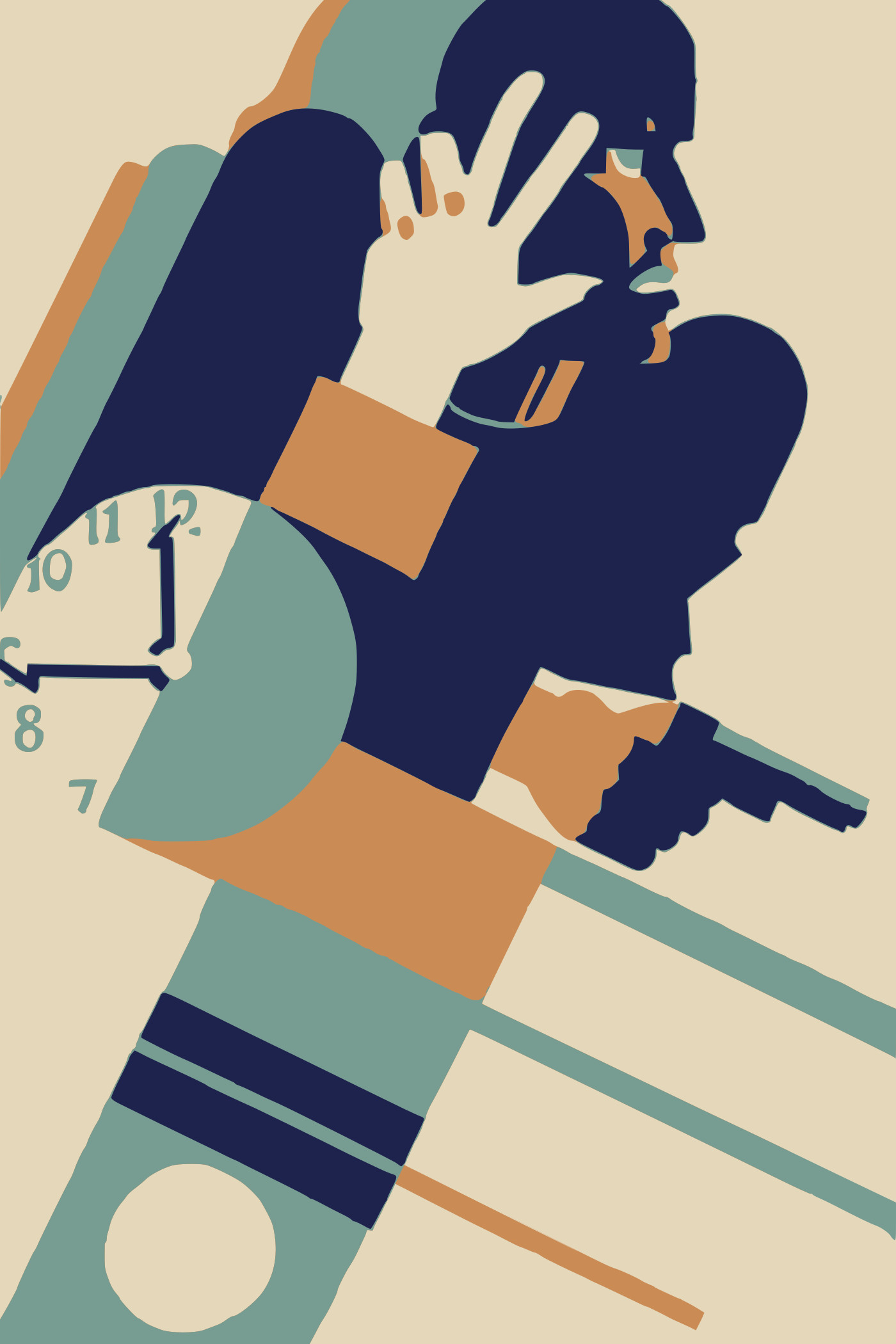
Murder by the Clock
What is Murder by the Clock about?
Murder by the Clock (1929) is a detective novel by American mystery writer Rufus King, featuring his recurring protagonist Lieutenant Valcour of the New York Police Department. The story opens with Mrs. Endicott's growing unease over the safety of Herbert, her husband, setting in motion a police investigation that unfolds with careful attention to time and sequence. When a murder occurs in a Manhattan household, Lieutenant Valcour methodically pieces together witness accounts, physical evidence, and the precise chronology of events to identify the killer. King constructs the plot around the exactness of time — clocks, schedules, and alibis — as both narrative device and thematic anchor. The novel belongs to the Golden Age of detective fiction, sharing the period's emphasis on puzzle construction, a closed social circle of suspects, and a cerebral investigator who relies on observation and deduction over action. King's prose is restrained and precise, with dialogue that reveals character through indirection. Murder by the Clock was serialized and later adapted for film in 1931, reflecting its popularity among contemporary audiences. It remains a competent and readable example of the American strand of Golden Age crime fiction, distinguished by its New York setting and King's understated narrative style.
Main themes in Murder by the Clock
Domestic suspicion and betrayal
The presence of domestic suspicion and betrayal in Murder by the Clock connects readers to its enduring relevance.
Time and alibi construction
The presence of time and alibi construction in Murder by the Clock connects readers to its enduring relevance.
Class and urban social order
The presence of class and urban social order in Murder by the Clock connects readers to its enduring relevance.
Police procedure and deduction
Police procedure and deduction emerges as a defining element in Murder by the Clock, shaping character development.
Why Murder by the Clock is still relevant today
Murder by the Clock participates in an enduring tradition of crime fiction centered on domestic spaces and the breach of social trust, themes that continue to drive popular mystery writing and television drama. The novel's use of precise timekeeping as both plot mechanism and title motif anticipates later procedural fiction in which forensic chronology is central to solving crimes. Rufus King's Lieutenant Valcour represents an early iteration of the urban American detective, a figure distinct from the British country-house investigator of the same era. Readers interested in the historical development of American crime fiction will find the novel instructive. It also offers a period portrait of upper-middle-class New York domestic life in the late 1920s. The complete text is available to read free on TextStack, where readers can track their progress and save vocabulary across sessions.
Frequently Asked Questions
What is Murder by the Clock about?
Murder by the Clock is a 1929 detective novel by Rufus King in which Lieutenant Valcour investigates a murder inside a Manhattan household. The case turns on the precise timing of events, and Valcour must reconstruct an exact chronology of the evening to identify the killer among a small circle of suspects.
Is Murder by the Clock difficult to read?
The novel is written in a clear, restrained prose style typical of Golden Age detective fiction. The vocabulary and sentence structure are accessible to most adult readers, though the setting and social conventions reflect 1920s New York. Readers on TextStack can look up unfamiliar words directly while reading.
How long does it take to read Murder by the Clock?
Murder by the Clock is a compact mystery novel of roughly 60,000 to 70,000 words, which most readers complete in four to six hours. TextStack tracks your reading progress automatically, so you can pick up where you left off across sessions.
What are the main themes in Murder by the Clock?
The novel's central themes include domestic suspicion and betrayal, the use of time and alibi as investigative tools, class dynamics in urban American society, and the mechanics of police deduction. The precise role of clocks and schedules in the plot gives the book its title and its structural logic.