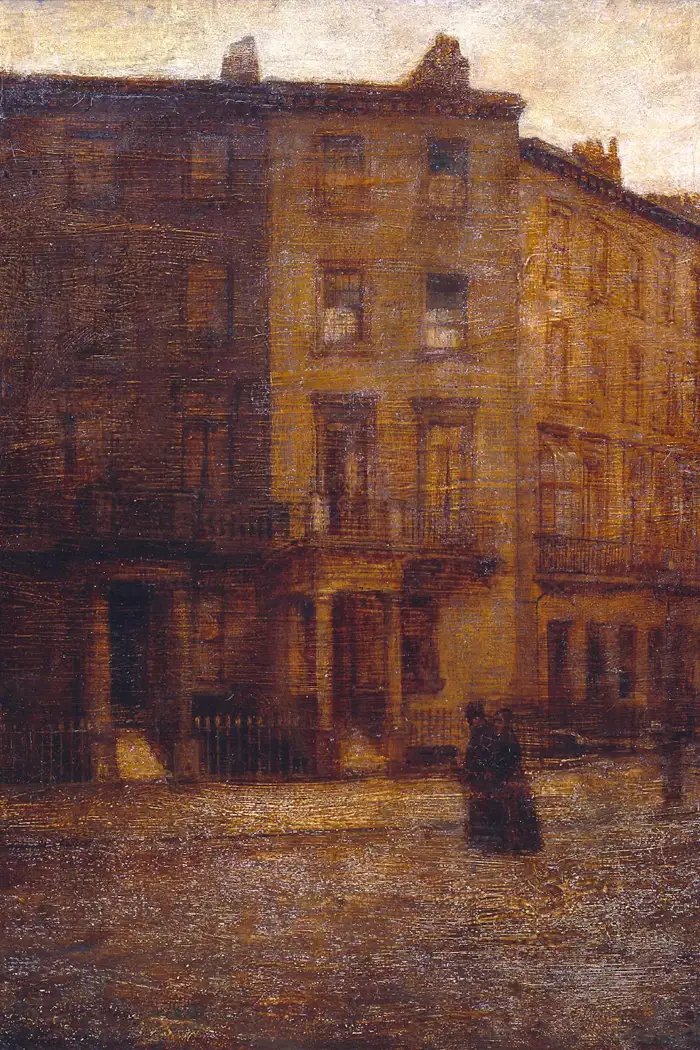
New Grub Street
What is New Grub Street about?
New Grub Street (1891) is George Gissing’s masterpiece and one of the greatest novels about the literary life ever written. Set in 1880s London, it follows two writers with contrasting approaches: Edwin Reardon, a serious novelist slowly destroyed by poverty and the pressure to produce commercial work, and Jasper Milvain, a shrewd literary journalist who thrives by treating writing as a business. Through their intersecting stories, Gissing creates a devastating portrait of the commercialization of literature, the crushing weight of poverty on creative ambition, and the moral compromises demanded by the literary marketplace.
Main themes in New Grub Street
Literary life
The theme of literary life weaves through New Grub Street, adding depth to its narrative.
Art vs commerce
New Grub Street thoughtfully explores art vs commerce through its central conflicts.
Poverty
The presence of poverty in New Grub Street connects readers to its enduring relevance.
Victorian London
Victorian London emerges as a defining element in New Grub Street, shaping character development.
Why New Grub Street is still relevant today
New Grub Street is the definitive novel about writing as a profession and the tension between art and commerce. Its themes—financial pressure on creators, the literary marketplace, creative integrity—are as relevant now as in 1891.
More by this author

Frequently Asked Questions
What is New Grub Street about?
Two writers in 1880s London—one idealistic, one pragmatic—navigate the literary marketplace, exploring the tension between artistic integrity and commercial survival.
Why is it called New Grub Street?
Grub Street was the historical London street associated with hack writers. “New Grub Street” represents the modernized but equally brutal literary marketplace.
Is it still relevant?
Extremely. Its themes about the economics of creative work, the pressure to produce, and art vs. commerce feel contemporary.
Can I read it free?
Yes, the complete novel is available free on TextStack.