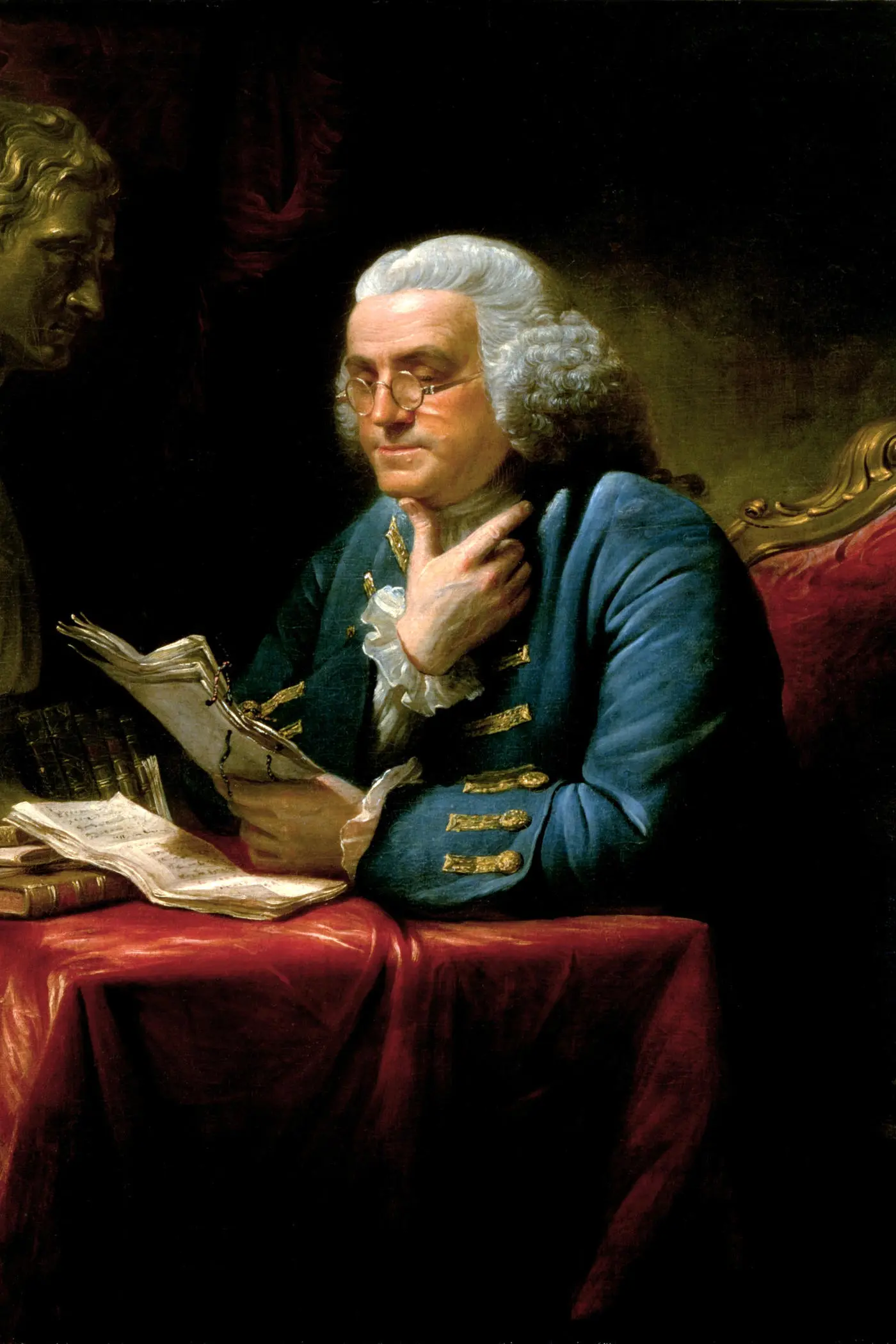
The Autobiography of Benjamin Franklin
What is The Autobiography of Benjamin Franklin about?
The Autobiography of Benjamin Franklin is one of the most important works in American literature, written in four parts between 1771 and 1790 and published posthumously. Franklin recounts his rise from a poor Boston candle-maker's son to one of the most famous men in the world—printer, publisher, scientist, inventor, and statesman. The book is both a vivid portrait of colonial and revolutionary America and a practical manual for self-improvement, including Franklin's famous plan for achieving moral perfection through the systematic practice of thirteen virtues. It established the template for the American success story.
Main themes in The Autobiography of Benjamin Franklin
American Autobiography
The theme of american autobiography weaves through The Autobiography of Benjamin Franklin, adding depth to its narrative.
Self-Made Man
The presence of self-made man in The Autobiography of Benjamin Franklin connects readers to its enduring relevance.
Colonial America
The Autobiography of Benjamin Franklin thoughtfully explores colonial america through its central conflicts.
Self-Improvement
In The Autobiography of Benjamin Franklin, self-improvement provides a lens for understanding the story's core message.
Why The Autobiography of Benjamin Franklin is still relevant today
This autobiography defined the American self-made man ideal and remains a cornerstone of American literature. Franklin's practical wisdom and narrative of self-improvement continue to inspire readers worldwide.
Frequently Asked Questions
What is The Autobiography of Benjamin Franklin about?
Franklin recounts his rise from poverty to fame, offering a vivid portrait of colonial America and a practical guide to self-improvement.
Did Franklin finish his autobiography?
No, he wrote it in four parts over nineteen years but never completed it. It ends before the American Revolution.
Where can I read Franklin's Autobiography online?
You can read it free on TextStack.