The Lusiads
What is The Lusiads about?
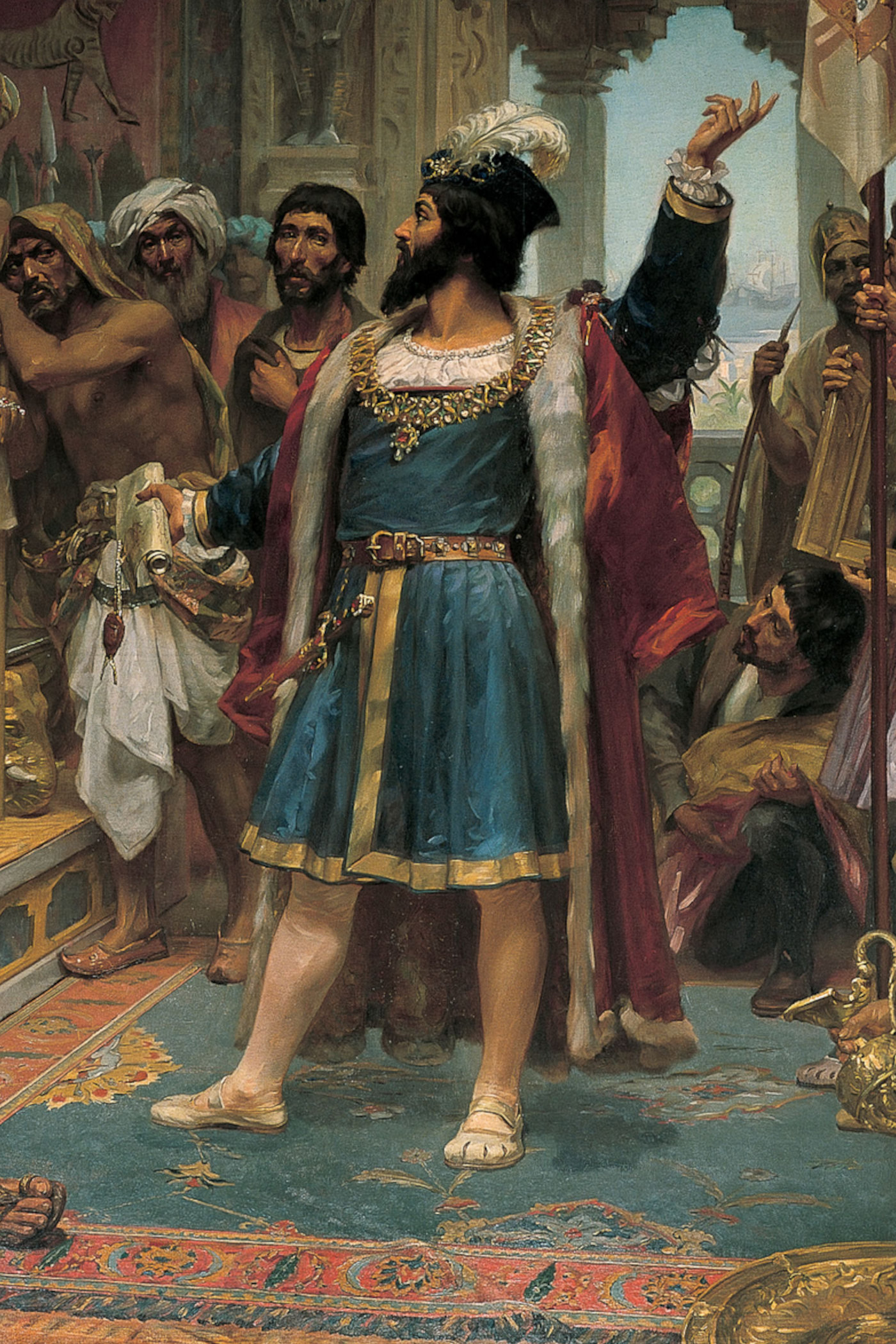
The Lusiads (Os Lusíadas) is a Portuguese epic poem written by Luís de Camões and first published in 1572. Composed in ottava rima across ten cantos and 1,102 stanzas, the poem chronicles the historic voyage of Vasco da Gama from Portugal around the Cape of Good Hope to India between 1497 and 1499. Camões interweaves the historical expedition with the machinery of classical mythology, placing Olympian gods — Venus as protector of the Portuguese, Bacchus as their antagonist — alongside real navigators, storms, and foreign courts. The narrative also incorporates episodes from broader Portuguese history, tracing the nation's origins and military achievements as a backdrop to da Gama's mission. Modeled consciously on Virgil's Aeneid and Homer's epics, The Lusiads elevates maritime exploration to the status of national destiny. It stands as the central work of Portuguese-language literature, taught in schools across Portugal and Brazil, and is regarded as one of the defining epics of the European Renaissance. The version available on TextStack is the English translation dedicated to Emperor Dom Pedro II of Brazil, making it accessible to English-language readers without an intermediary.
Main themes in The Lusiads
Maritime exploration and national destiny
In The Lusiads, maritime exploration and national destiny provides a lens for understanding the story's core message.
Classical mythology and Christian providence
The theme of classical mythology and christian providence weaves through The Lusiads, adding depth to its narrative.
Imperial ambition and its human cost
In The Lusiads, imperial ambition and its human cost provides a lens for understanding the story's core message.
Heroism and sacrifice
Heroism and sacrifice emerges as a defining element in The Lusiads, shaping character development.
Why The Lusiads is still relevant today
The Lusiads remains a live document for understanding how early modern Europe conceptualized exploration, empire, and national identity. The poem shaped how Portuguese-speaking cultures have narrated their own history for over four centuries, and its influence is visible in Brazilian and Lusophone African literature to this day. For contemporary readers, it offers a primary-source perspective on the Age of Discovery — including its internal tensions, since Camões himself served in campaigns and wrote with firsthand knowledge of both the glories and costs of expansion. Scholars of postcolonial literature frequently engage with The Lusiads as a foundational text whose ideological assumptions later writers have contested and rewritten. Readers interested in epic poetry, Renaissance humanism, the history of navigation, or Iberian culture will find it an essential reference point.
Frequently Asked Questions
What is The Lusiads about?
The Lusiads is a Renaissance epic poem that follows the Portuguese explorer Vasco da Gama on his historic sea voyage from Lisbon around the Cape of Good Hope to India in 1497–1499. The poem blends this historical journey with classical mythology — gods intervene on behalf of or against the expedition — and with episodes from Portuguese history stretching back to the nation's founding. It is essentially a celebration of Portugal's rise as a maritime power, cast in the form of a Virgilian epic.
Is The Lusiads difficult to read?
The Lusiads is a demanding poem due to its dense classical allusions, formal verse structure, and extensive historical references. Readers unfamiliar with figures from Greek and Roman mythology or with Portuguese medieval history may need to consult notes. However, a good English translation — such as the one available on TextStack — smooths much of this difficulty, and the narrative thrust of da Gama's voyage provides a clear through-line that makes the poem more accessible than its reputation suggests.
How long does it take to read The Lusiads?
A full reading of The Lusiads in English translation typically takes between eight and fourteen hours, depending on reading pace and how much time is spent on annotations. The poem spans ten cantos. On TextStack you can read it in chapters at your own pace, bookmark your place, and resume across sessions.
What are the main themes in The Lusiads?
The central themes include maritime exploration as national destiny, the tension between classical mythology and Christian providence, imperial ambition and its human cost, heroism and personal sacrifice, and the construction of Portuguese national identity. Camões also develops a thread of lyric melancholy — the grief of sailors' families left behind — that complicates the poem's triumphalist surface.