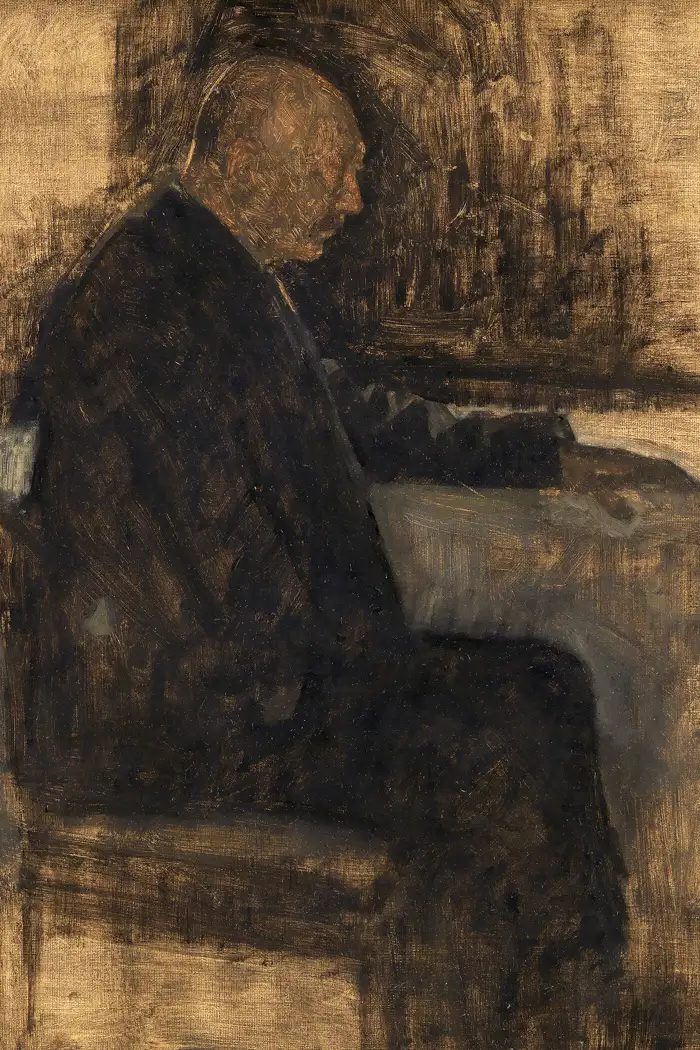
The Old Man in the Corner
What is The Old Man in the Corner about?
The Old Man in the Corner (1909) is a detective fiction collection by Baroness Emmuska Orczy, best known for creating The Scarlet Pimpernel. The book introduces an unnamed, eccentric elderly man who habitually occupies a corner table at a London ABC teashop, where he encounters journalist Polly Burton. Over successive meetings, the old man reconstructs sensational criminal cases—murders, disappearances, and financial crimes—through pure logical deduction, relying solely on newspaper reports and his own analytical reasoning rather than physical investigation. Each story follows a consistent structure: Polly presents a case the public considers unsolved, and the old man methodically dismantles apparent mysteries to reveal hidden explanations, often implicating individuals who escaped justice. His solutions are delivered with detached intellectual superiority, and his identity and true motives remain deliberately ambiguous throughout. The collection holds a recognized place in the history of detective fiction as an early example of the "armchair detective" archetype—a figure who solves crimes without leaving a fixed location. The character influenced subsequent detectives in popular fiction and represents a formal experiment in puzzle-driven narrative structure. The stories were originally serialized in The Royal Magazine before being collected in book form.
Main themes in The Old Man in the Corner
Armchair detection and pure rationalism
The theme of armchair detection and pure rationalism weaves through The Old Man in the Corner, adding depth to its narrative.
Justice versus legal acquittal
Justice versus legal acquittal emerges as a defining element in The Old Man in the Corner, shaping character development.
Public fascination with crime
The theme of public fascination with crime weaves through The Old Man in the Corner, adding depth to its narrative.
Intellectual detachment and moral ambiguity
The theme of intellectual detachment and moral ambiguity weaves through The Old Man in the Corner, adding depth to its narrative.
Why The Old Man in the Corner is still relevant today
The Old Man in the Corner anticipates narrative conventions that remain central to crime fiction today, including the armchair detective, the skeptical audience surrogate, and the unreliable or morally ambiguous solver. Readers familiar with Agatha Christie's Hercule Poirot or Miss Marple will recognize structural patterns Orczy helped establish more than a decade earlier. The stories also document Edwardian London's social geography—ABC teashops, newspaper culture, and public fascination with criminal trials—providing historical texture alongside the puzzle plots. For readers interested in the roots of the detective genre, the collection functions as a direct precursor to the Golden Age of Crime Fiction that followed in the 1920s and 1930s. The full text is available to read free on TextStack, making it accessible to genre historians, literature students, and casual mystery readers alike.
More by this author



Frequently Asked Questions
What is The Old Man in the Corner about?
The Old Man in the Corner is a collection of detective stories by Baroness Orczy in which an unnamed elderly man solves high-profile criminal cases through logical reasoning alone, recounting his deductions to journalist Polly Burton at a London teashop. Each story presents a real or apparent mystery that the old man systematically explains without ever leaving his corner seat.
Is The Old Man in the Corner difficult to read?
The prose is clear and accessible, written for a general magazine-reading audience of the early 1900s. Readers comfortable with Victorian or Edwardian fiction will find the language straightforward. Each story is self-contained and relatively short, making the collection easy to read in episodes.
How long does it take to read The Old Man in the Corner?
The full collection runs approximately 80,000–90,000 words across its stories. An average reader can expect to finish it in around five to seven hours, or read individual stories in 20–30 minutes each. The text is available in full on TextStack with reading progress tracked automatically.
What are the main themes in The Old Man in the Corner?
The central themes include the power of rational deduction over intuition, the gap between legal justice and actual guilt, public appetite for criminal sensationalism, and the moral ambiguity of a detective who solves crimes but has no interest in ensuring punishment. The character of the old man also raises questions about intellectual detachment as a form of complicity.