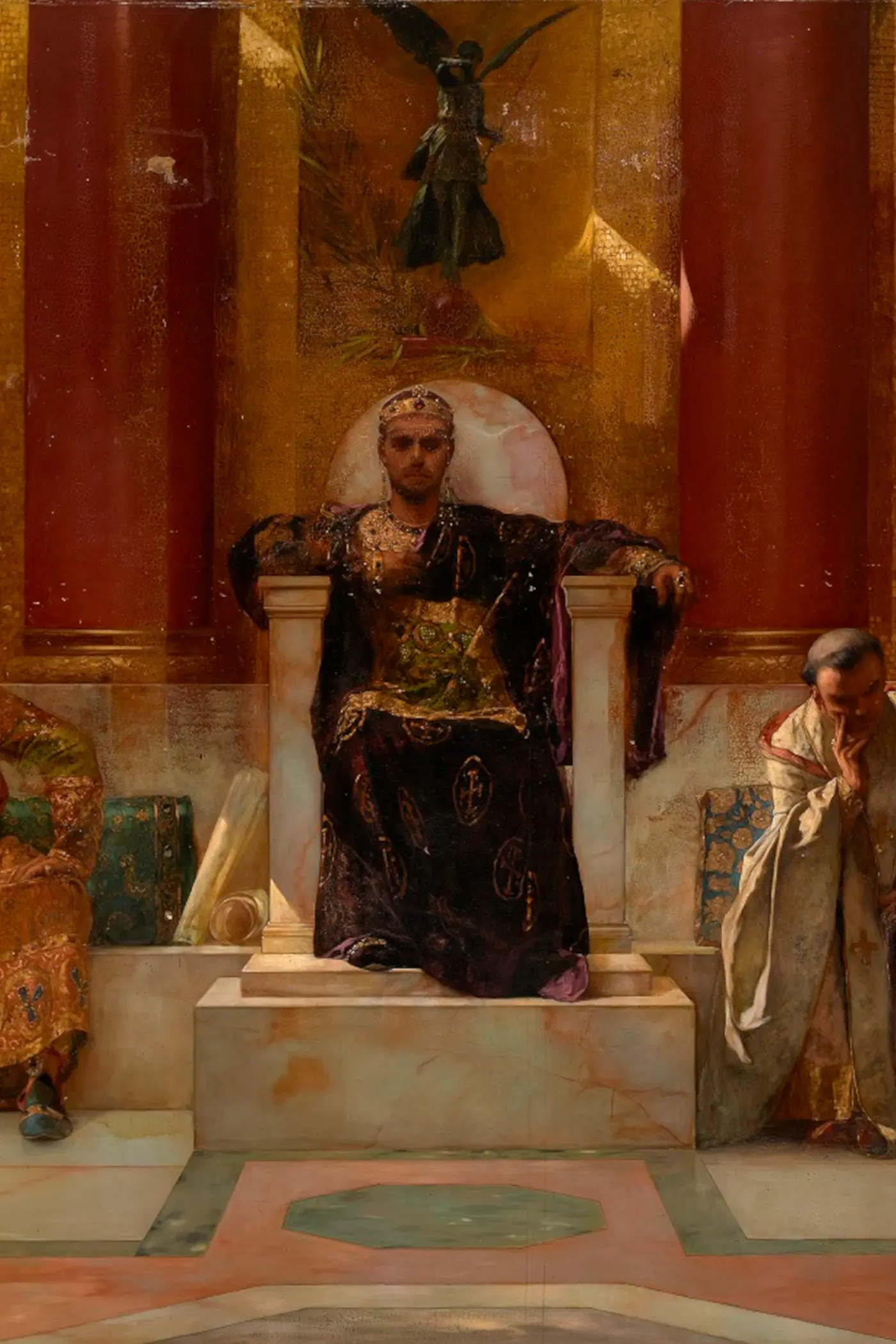
The Secret History
What is The Secret History about?
The Secret History (Anecdota, c. 550 AD) is Procopius’s sensational, unpublished attack on Emperor Justinian I and Empress Theodora—a work so scandalous that it was kept hidden during the author’s lifetime and not discovered until the 17th century. In his official histories, Procopius praised Justinian’s military conquests and building programs. In the Secret History, he paints a devastatingly different picture: Justinian is a demon in human form, Theodora a former prostitute of insatiable appetite, and their rule a tyranny of corruption, incompetence, and cruelty. Procopius accuses the imperial couple of destroying the Roman Empire through greed, vanity, and malice, providing vivid (and possibly exaggerated) accounts of their personal depravity and political crimes. The Secret History has fascinated historians for centuries because it raises fundamental questions about historical truth: how do we reconcile Procopius’s two completely contradictory accounts of the same reign? Which Procopius tells the truth? The text remains one of the most entertaining and problematic documents from the ancient world.
Main themes in The Secret History
Byzantine Scandal
The theme of byzantine scandal weaves through The Secret History, adding depth to its narrative.
Imperial Corruption
The presence of imperial corruption in The Secret History connects readers to its enduring relevance.
Official vs. Secret Truth
In The Secret History, official vs. secret truth provides a lens for understanding the story's core message.
Justinian and Theodora
The Secret History thoughtfully explores justinian and theodora through its central conflicts.
Why The Secret History is still relevant today
The Secret History’s contrast between official narrative and hidden truth speaks to every era of propaganda and controlled media. As a document about the gap between public image and private reality in imperial power, it remains endlessly relevant.
Frequently Asked Questions
What is The Secret History about?
Procopius’s sensational, hidden attack on Emperor Justinian and Empress Theodora, accusing them of demonic corruption and imperial tyranny. Read it free on TextStack.
Why was it kept secret?
The content was so explosive—accusing the reigning emperor and empress of supernatural evil and sexual depravity—that publication would have meant Procopius’s death.
Is The Secret History entertaining?
Extremely. The vivid accusations, scandalous details, and sheer malice make it one of the most readable ancient texts, though its reliability as history is debated.
How was The Secret History discovered?
The manuscript was found in the Vatican Library in the 17th century, over a thousand years after Procopius wrote it, and has fascinated historians ever since.