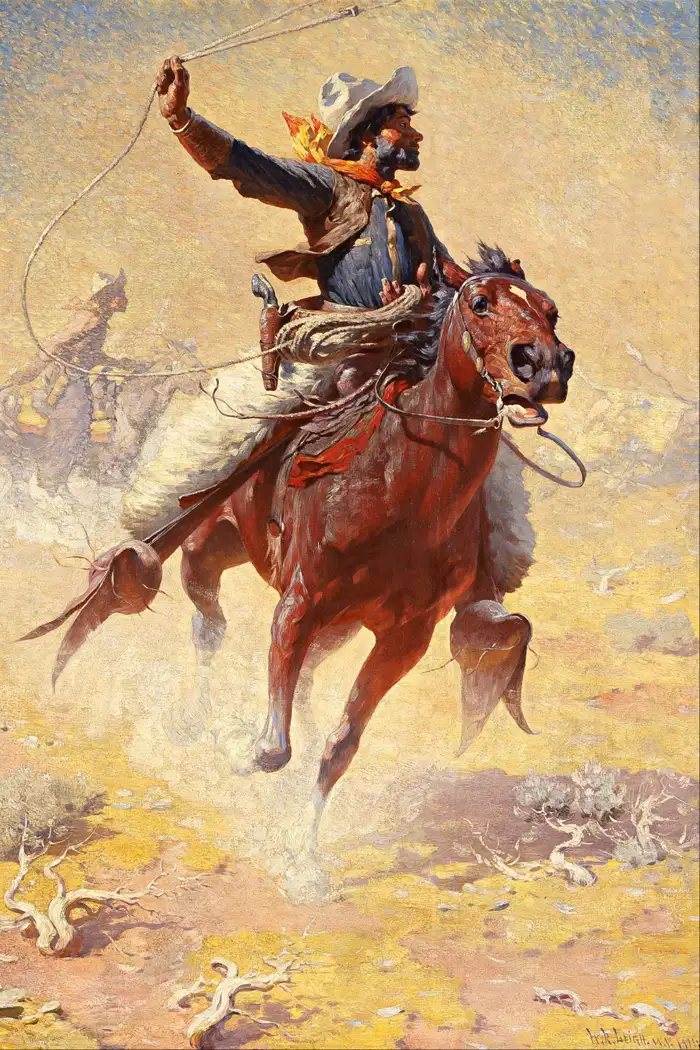
The Virginian
What is The Virginian about?
The Virginian (1902) is the novel that created the Western genre, establishing conventions that would shape American fiction, film, and television for over a century. Set in the cattle country of Wyoming in the 1870s and 1880s, the novel follows an unnamed narrator from the East who befriends a charismatic cowboy known only as "the Virginian." The Virginian is the prototype of the Western hero: laconic, principled, skilled with horses and guns, gentle with women but capable of decisive violence when honor demands it. The novel traces his romance with the Eastern schoolteacher Molly Wood, his deepening conflict with the cattle rustler Trampas, and his moral struggle over frontier justice—culminating in the famous showdown that became the template for every Western gunfight. Wister’s vivid descriptions of Wyoming’s landscape give the novel an epic quality, and his hero’s famous line—"When you call me that, smile"—became one of the most quoted phrases in American popular culture.
Main themes in The Virginian
Western Genre Origin
In The Virginian, western genre origin provides a lens for understanding the story's core message.
Cowboy Hero
The Virginian thoughtfully explores cowboy hero through its central conflicts.
Frontier Justice
Frontier Justice emerges as a defining element in The Virginian, shaping character development.
Wyoming Cattle Country
In The Virginian, wyoming cattle country provides a lens for understanding the story's core message.
Why The Virginian is still relevant today
The Virginian’s influence on American popular culture is immeasurable. The cowboy hero, the frontier showdown, the Eastern tenderfoot narrator—these conventions shaped Western fiction, film from John Wayne to Clint Eastwood, and the broader mythology of the American West.
Frequently Asked Questions
What is The Virginian about?
An Eastern narrator befriends a charismatic Wyoming cowboy whose romance with a schoolteacher and conflict with a cattle rustler culminate in a legendary frontier showdown. Read it free on TextStack.
Why is The Virginian considered the first Western?
It established every major convention of the genre: the laconic hero, the Eastern love interest, the villain, frontier justice, and the climactic gunfight—all set against the moral landscape of the West.
Is The Virginian difficult to read?
The novel is well-paced and engaging, with vivid characters and beautiful landscape descriptions. Its mix of romance, adventure, and moral drama makes it compelling for modern readers.
What is the famous line from The Virginian?
“When you call me that, smile”—the Virginian’s cool response to an insult—became one of the most quoted lines in American popular culture.