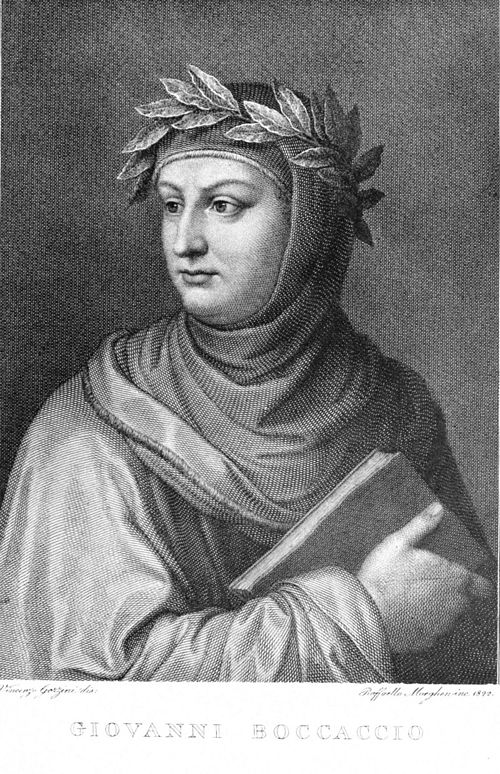
Giovanni Boccaccio
Biography
Giovanni Boccaccio (1313-1375) was an Italian writer, poet, and humanist scholar whose Decameron established him as a founder of European prose fiction. Born possibly in Paris or Certaldo, he spent his formative years in Naples at the court of King Robert, where he developed his literary ambitions and romantic sensibilities. The Decameron (1348-1353), Boccaccio's masterpiece, frames 100 tales told by ten young Florentines fleeing the Black Death. Its vivid storytelling, psychological realism, and frank treatment of human desire influenced Chaucer, Shakespeare, and the entire tradition of European short fiction. In later life, Boccaccio became a devoted scholar and friend of Petrarch, turning to humanist studies and writing important works on classical mythology and geography. He delivered the first public lectures on Dante's Divine Comedy, establishing Dante studies as an academic discipline. Together with Dante and Petrarch, he is considered one of the three crowns of Italian literature.
Common themes in Giovanni Boccaccio's work
Storytelling and narrative art
A recurring theme throughout Giovanni Boccaccio's writing.
Love, desire, and sexuality
A recurring theme throughout Giovanni Boccaccio's writing.
Social satire and human folly
A recurring theme throughout Giovanni Boccaccio's writing.
Fortune and wit
A recurring theme throughout Giovanni Boccaccio's writing.
Books
Explore by genre
Other authors you may enjoy
Why Giovanni Boccaccio is still read today
Giovanni Boccaccio's Decameron stands as one of the foundational works of European prose fiction, its hundred tales told during the Black Death establishing narrative frameworks that persist in literature today. His influence on Chaucer, Shakespeare, and countless other writers demonstrates the international reach of his storytelling innovations. Boccaccio's frank treatment of sexuality, social satire, and human nature shocked and delighted readers, offering a secular counterpoint to the religious literature of his time. His scholarly work on classical mythology and his biography of Dante contributed significantly to Renaissance humanism. The frame narrative of the Decameron—young people fleeing plague to tell stories—has acquired new resonance in contemporary times of pandemic. His celebration of human wit, desire, and resilience speaks to readers across centuries.
Frequently Asked Questions
What is the Decameron about?
The Decameron consists of 100 tales told by ten young Florentines who flee to the countryside during the Black Death of 1348. Over ten days, each person tells one story daily on assigned themes. The tales range from bawdy comedy to tragic romance to sharp social satire.
How did the Decameron influence later literature?
Boccaccio's frame narrative structure and storytelling techniques influenced countless writers. Chaucer drew directly on his tales for The Canterbury Tales. Shakespeare adapted several Decameron stories. The work helped establish prose fiction as a serious literary form.
Why was the Decameron controversial?
The Decameron's frank treatment of sexuality, mockery of corrupt clergy, and celebration of clever adultery shocked moral authorities. It was repeatedly censored and bowdlerized. Yet its literary quality ensured its survival and continued influence despite controversy.
What was Boccaccio's relationship with Dante and Petrarch?
Boccaccio deeply admired both poets. He wrote one of the first biographies of Dante and helped establish his reputation. He was close friends with Petrarch and helped spread humanist scholarship. Together, the three are considered fathers of Italian literature.
Was the Decameron based on real events?
The frame story reflects the real devastation of the Black Death in Florence (1348), which killed perhaps half the city's population. Many individual tales draw on earlier story traditions, including French fabliaux, classical sources, and contemporary events, which Boccaccio transformed.
Essential cookies keep you signed in and save your reading progress. Analytics cookies help us understand how the site is used. You can reject analytics — we still work without them. Learn more in our Privacy Policy.