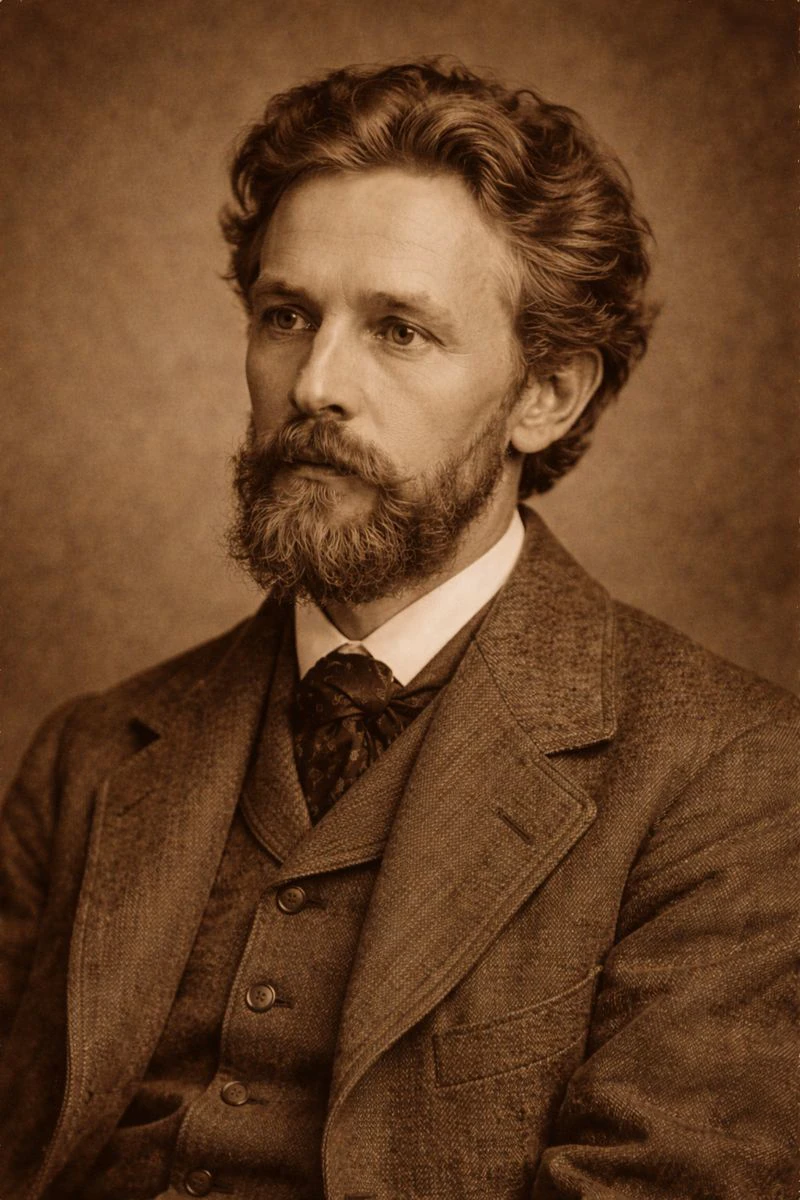
J. P. Jacobsen
Biography
J. P. Jacobsen was a Danish novelist, poet, and scientist whose work played a crucial role in the development of literary realism and symbolism in Scandinavian literature. Born in 1847, he was trained as a botanist and introduced Charles Darwin’s theories to Denmark through influential translations and essays. Jacobsen’s fiction is known for its lyrical prose, psychological subtlety, and exploration of themes such as love, faith, disillusionment, and the conflict between idealism and reality. His novels and short stories combine scientific realism with poetic introspection, marking a shift away from romanticism toward modern literary sensibility. Although his literary output was small and his life cut short by illness, Jacobsen’s influence was profound. Writers such as Rainer Maria Rilke, Thomas Mann, and Sigmund Freud admired his work, and he is now regarded as one of the most important figures in nineteenth-century European literature.
Common themes in J. P. Jacobsen's work
Atheism and loss of faith
A recurring theme throughout J. P. Jacobsen's writing.
Aestheticism and beauty
A recurring theme throughout J. P. Jacobsen's writing.
Death and mortality
A recurring theme throughout J. P. Jacobsen's writing.
Disillusionment and modern doubt
A recurring theme throughout J. P. Jacobsen's writing.
Books
Explore by genre
Other authors you may enjoy
Why J. P. Jacobsen is still read today
Jens Peter Jacobsen occupies a unique position in Scandinavian literature, his small body of work—two novels and some poems—exerting influence vastly disproportionate to its size. Niels Lyhne profoundly affected Rilke, who wrote that it had formed him, and its exploration of atheism, aestheticism, and disillusionment anticipated European modernism. Jacobsen pioneered psychological realism in Danish literature, his prose style remarkable for its precision and sensory detail. His translation of Darwin into Danish also marked him as a key figure in introducing evolutionary thought to Scandinavia. Though less known to English readers, his influence on major European writers—Rilke, Stefan George, Hermann Bang—places him among the most significant 19th-century Scandinavian authors.
Frequently Asked Questions
What is Niels Lyhne about?
Niels Lyhne follows a Danish dreamer from childhood through repeated disappointments in love, art, and faith. His atheism is tested by personal tragedies. The novel explores what it means to live without religious consolation, making it a key text of 19th-century freethought.
Why did Rilke admire Jacobsen so much?
Rilke called Niels Lyhne his 'breviary' and said it formed him more than any other book. Jacobsen's prose style—precise, sensory, psychological—and themes of artistic aspiration and mortality deeply influenced Rilke's own development as a writer.
What makes Jacobsen significant to Danish literature?
Jacobsen brought psychological realism and poetic prose to Danish fiction. As Darwin's translator, he also introduced evolutionary thought to Denmark. Though he wrote little due to illness, his two novels established him as a key figure in modern Scandinavian literature.
Why isn't Jacobsen better known internationally?
Writing in Danish limited his immediate audience. His small output—just two novels and some poems before dying at 38 of tuberculosis—also reduced his visibility. However, his influence on major writers like Rilke, and translations of his work, preserve his significance.
What is Marie Grubbe about?
Jacobsen's first novel is a historical work following a 17th-century Danish noblewoman through marriages and social decline. Its psychological portrait and prose style were innovative. The novel explores passion, independence, and the conflict between desire and social convention.
Essential cookies keep you signed in and save your reading progress. Analytics cookies help us understand how the site is used. You can reject analytics — we still work without them. Learn more in our Privacy Policy.