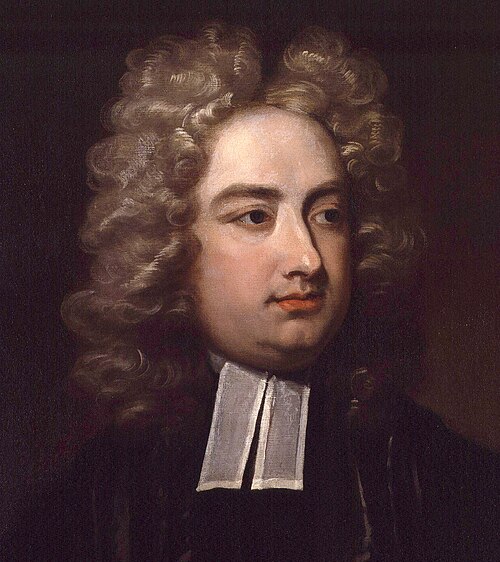
Jonathan Swift
Biography
Jonathan Swift (1667-1745) was an Anglo-Irish satirist, essayist, and poet who became the foremost prose satirist in the English language. Born in Dublin to English parents, he was educated at Trinity College Dublin and later became Dean of St. Patrick's Cathedral, a position he held for over thirty years. Swift's masterpiece Gulliver's Travels (1726) uses fantastical voyages to satirize human nature, politics, and society with devastating wit. A Modest Proposal (1729), suggesting the Irish poor sell their children as food, remains the most famous example of sustained satirical irony in English literature. As a political pamphleteer, Swift wielded enormous influence in both English and Irish politics. His Drapier's Letters made him a national hero in Ireland. Though his savage indignation against human folly sometimes bordered on misanthropy, Swift championed the Irish poor and exposed hypocrisy with unmatched skill. His influence on satirical writing extends to the present day.
Common themes in Jonathan Swift's work
Satire and social criticism
A recurring theme throughout Jonathan Swift's writing.
Human nature and folly
A recurring theme throughout Jonathan Swift's writing.
Reason vs. passion
A recurring theme throughout Jonathan Swift's writing.
Political corruption and power
A recurring theme throughout Jonathan Swift's writing.
Books
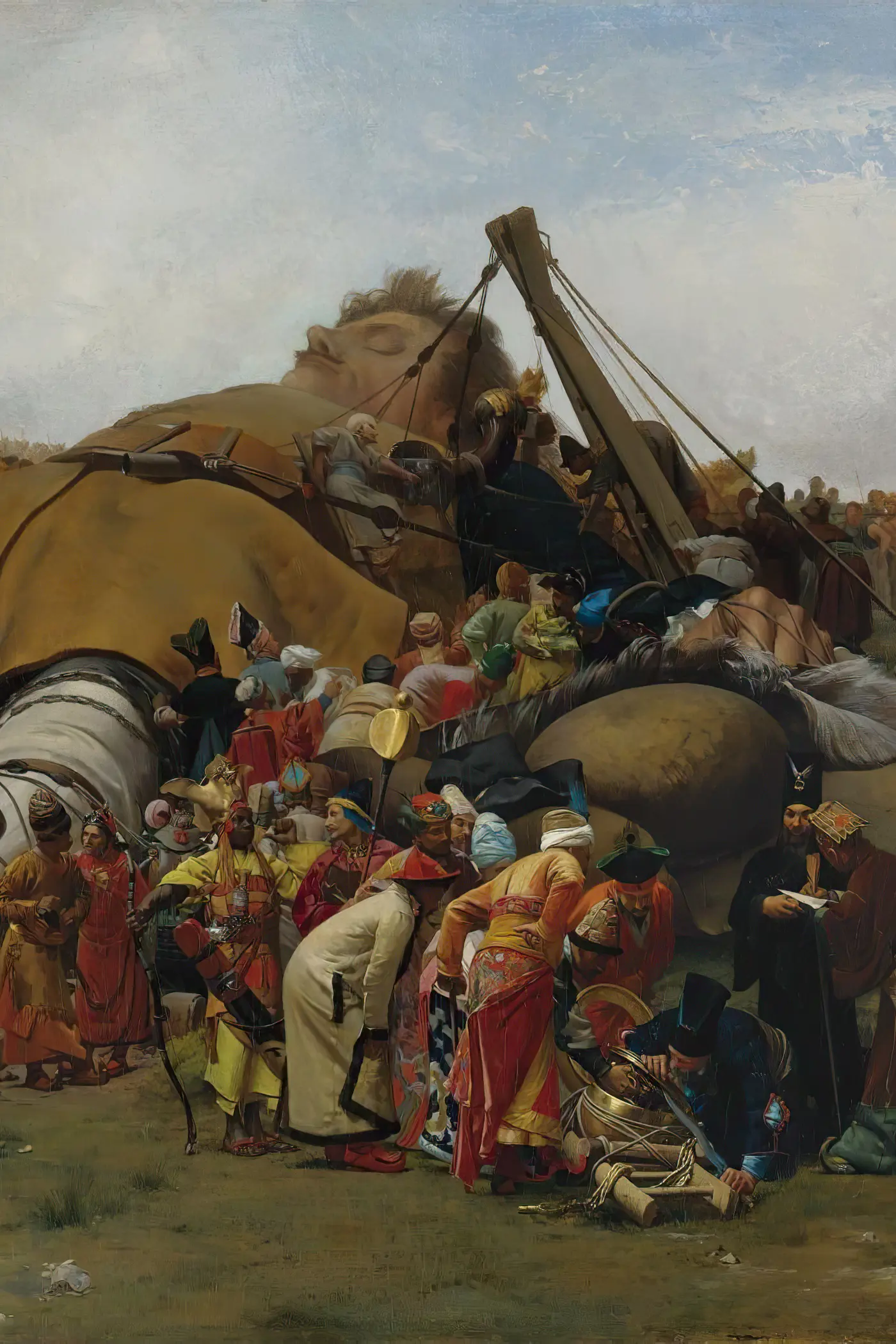
Explore by genre
Other authors you may enjoy
Why Jonathan Swift is still read today
Jonathan Swift stands as the supreme satirist in the English language, his savage wit targeting human folly and institutional corruption with unmatched precision. Gulliver's Travels, though often abridged as children's literature, remains one of the most biting critiques of human nature ever written, its fantasy framework disguising profound philosophical and political commentary. Swift's shorter satires, including "A Modest Proposal," demonstrate the power of irony to shock readers into moral awareness. His influence on satirical writing—from Voltaire to contemporary political comedy—cannot be overstated. As Dean of St. Patrick's Cathedral in Dublin, he became a champion of Irish causes, and his legacy in Ireland remains significant. Swift's exploration of reason, power, and the human capacity for self-deception speaks directly to our era of political polarization and media manipulation.
Frequently Asked Questions
Is Gulliver's Travels a children's book?
While often adapted for children, the original Gulliver's Travels (1726) is a sophisticated satire for adults. Its four voyages use fantasy settings to critique human nature, politics, science, and philosophy. The full text contains dark humor and complex ideas inappropriate for young readers.
What is 'A Modest Proposal' actually proposing?
Swift's famous 1729 essay satirically suggests that impoverished Irish families sell their children as food to wealthy English landlords. This shocking 'proposal' was actually a savage critique of British exploitation of Ireland and callous attitudes toward poverty.
What are the four voyages in Gulliver's Travels?
Gulliver visits: Lilliput (tiny people, satirizing petty politics), Brobdingnag (giants, showing human insignificance), Laputa and others (critiquing impractical science), and the Houyhnhnms (rational horses who expose human Yahoo nature).
Was Swift Irish or English?
Swift was born in Dublin to English parents and spent much of his life in Ireland, serving as Dean of St. Patrick's Cathedral. Though he felt himself an exile from English political life, he became a fierce defender of Irish interests against English exploitation.
Why is Swift considered such an important satirist?
Swift perfected the use of irony and parody to expose hypocrisy and injustice. His ability to maintain a straight face while proposing outrageous ideas forces readers to recognize absurdities they might otherwise accept. His techniques influenced all subsequent satirical writing.
Essential cookies keep you signed in and save your reading progress. Analytics cookies help us understand how the site is used. You can reject analytics — we still work without them. Learn more in our Privacy Policy.