Julius Caesar
Biography
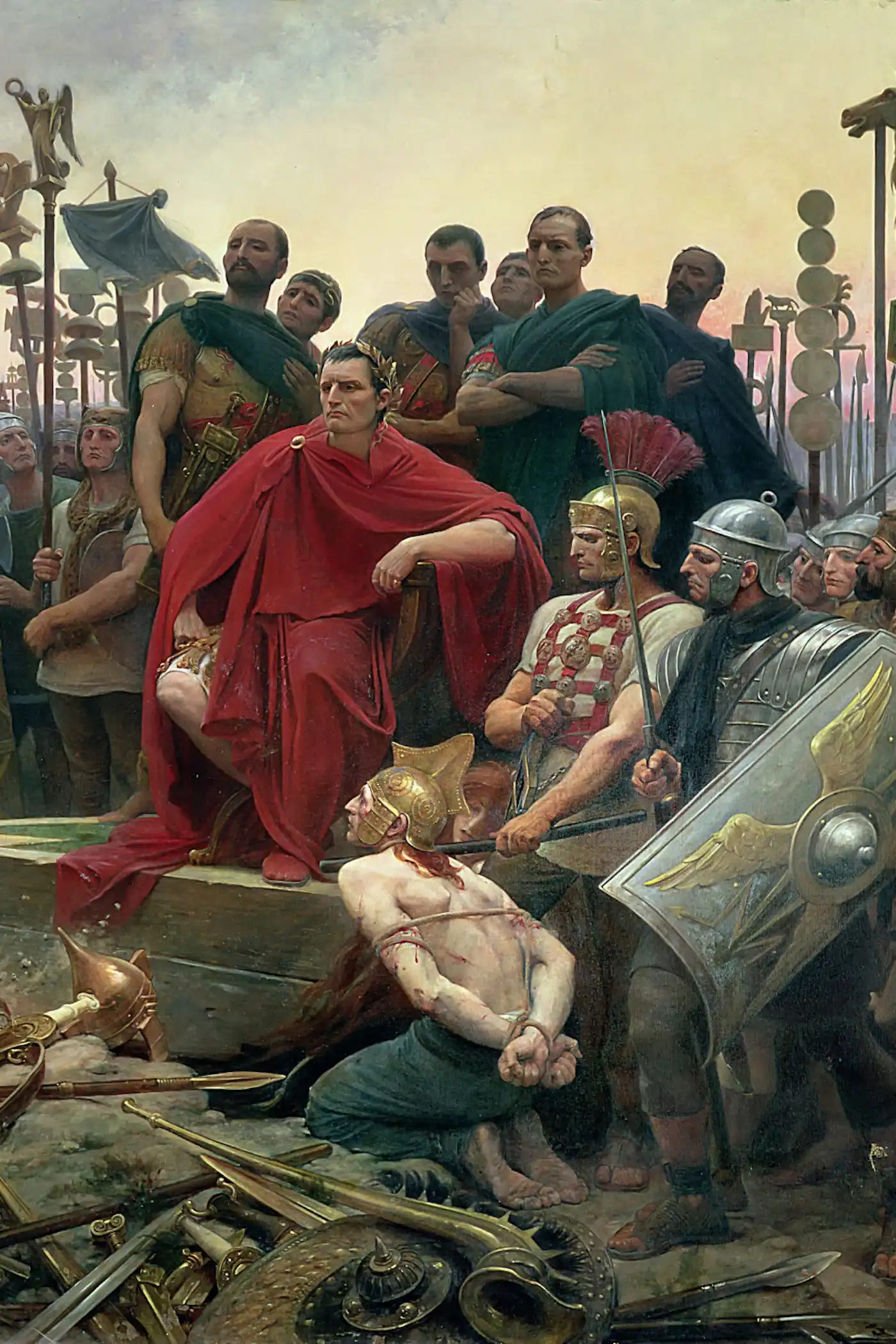
Gaius Julius Caesar (100–44 BCE) was a Roman general, statesman, and author whose military genius, political ambition, and literary skill made him one of the most consequential figures in Western history. Born into a patrician family in Rome, Caesar rose through the political ranks while conducting brilliant military campaigns that expanded Roman territory across Gaul (modern France), Britain, and Germany. His crossing of the Rubicon in 49 BCE precipitated a civil war that ended the Roman Republic and led to his appointment as dictator. Caesar was assassinated on the Ides of March, 44 BCE, by a group of senators led by Brutus and Cassius. Beyond his political and military achievements, Caesar was an accomplished writer whose Commentaries on the Gallic War and Commentaries on the Civil War are considered masterpieces of Latin prose—clear, direct, and elegantly structured accounts of his campaigns that also serve as sophisticated works of political self-justification. His prose style influenced Latin literature for centuries.
Common themes in Julius Caesar's work
Roman history
A recurring theme throughout Julius Caesar's writing.
Military memoir
A recurring theme throughout Julius Caesar's writing.
Gallic Wars
A recurring theme throughout Julius Caesar's writing.
Latin prose
A recurring theme throughout Julius Caesar's writing.
Books
Explore by genre
Other authors you may enjoy

Why Julius Caesar is still read today
Julius Caesar’s Commentaries remain essential reading for students of Roman history, military strategy, and Latin literature. His accounts of the Gallic Wars provide the primary source for understanding one of antiquity’s most significant military campaigns and the political dynamics that ended the Roman Republic.
Frequently Asked Questions
Who was Julius Caesar as an author?
Beyond being a general and statesman, Caesar wrote the Commentaries on the Gallic War, considered a masterpiece of Latin prose and an essential primary source on Roman history.
Are the Commentaries reliable history?
They are invaluable primary sources but also works of political self-justification—Caesar presents himself in the most favorable light while providing detailed, generally accurate military accounts.
Where can I read Caesar online?
You can read Commentaries on the Gallic War for free on TextStack.
Essential cookies keep you signed in and save your reading progress. Analytics cookies help us understand how the site is used. You can reject analytics — we still work without them. Learn more in our Privacy Policy.