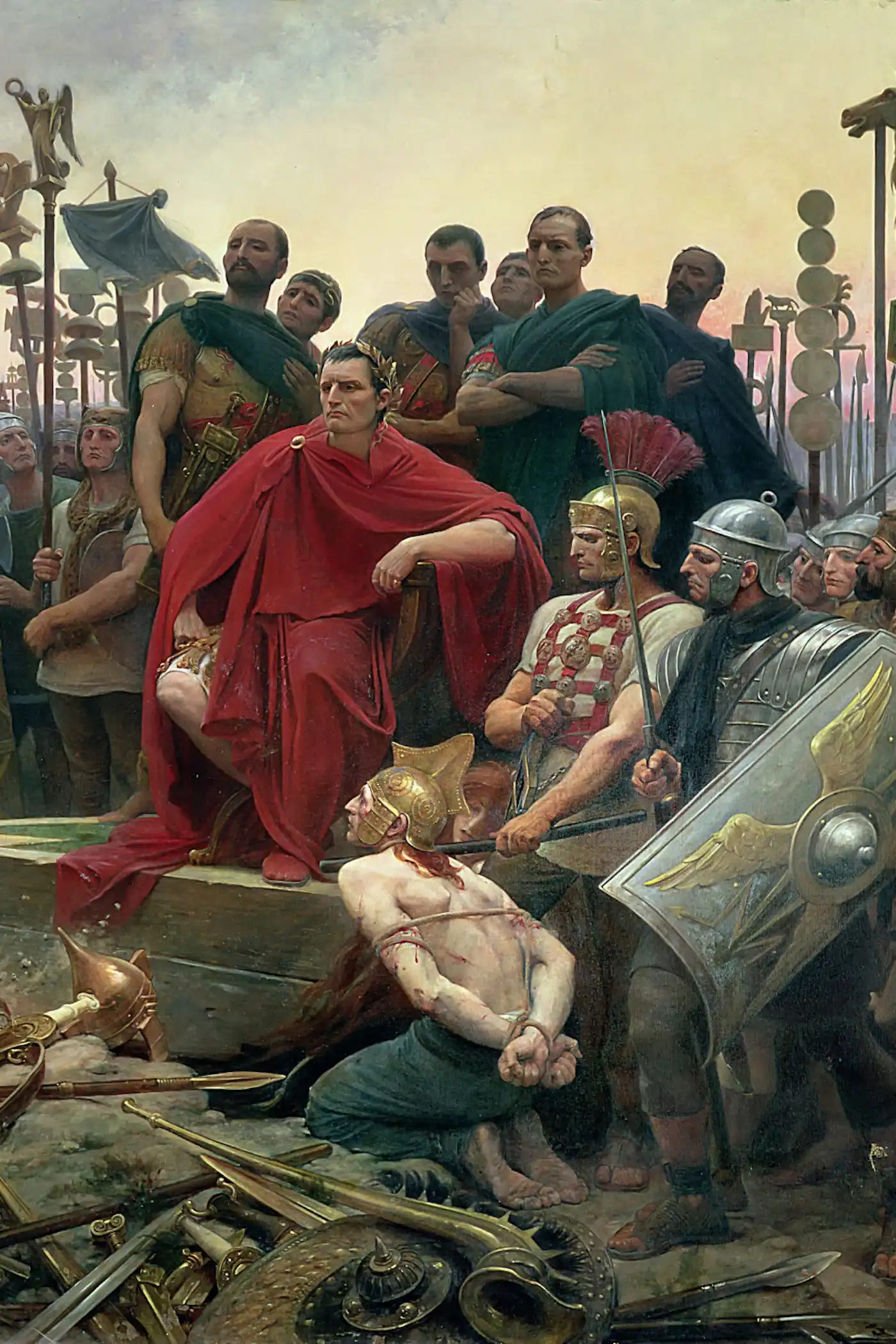
Commentaries on the Gallic War
What is Commentaries on the Gallic War about?
Commentaries on the Gallic War (Commentarii de Bello Gallico) by Julius Caesar is one of the most famous works of Latin prose, a firsthand account of Caesar’s military campaigns in Gaul (modern France, Belgium, and parts of Germany, Switzerland, and the Netherlands) from 58 to 50 BCE. Written in the third person with characteristically clean, direct prose, Caesar describes his conquest of Gaul through a series of campaigns against Celtic and Germanic tribes, including famous episodes like the siege of Alesia, the crossing of the Rhine, and the expeditions to Britain. The work serves multiple purposes: it is a military memoir of extraordinary campaigns, a work of ethnographic observation describing the customs and societies of the Gauls, Germans, and Britons, and a sophisticated piece of political propaganda designed to justify Caesar’s actions and enhance his reputation in Rome. Caesar’s prose style—celebrated for its clarity, economy, and elegant simplicity—has been used to teach Latin for centuries. The Commentaries remain the primary historical source for the Roman conquest of Gaul and among the most readable works of ancient literature.
Main themes in Commentaries on the Gallic War
Roman conquest of Gaul
The presence of roman conquest of gaul in Commentaries on the Gallic War connects readers to its enduring relevance.
Military strategy
The presence of military strategy in Commentaries on the Gallic War connects readers to its enduring relevance.
Latin prose classic
The theme of latin prose classic weaves through Commentaries on the Gallic War, adding depth to its narrative.
Ancient ethnography
In Commentaries on the Gallic War, ancient ethnography provides a lens for understanding the story's core message.
Why Commentaries on the Gallic War is still relevant today
The Commentaries on the Gallic War is the primary source for understanding Rome’s conquest of Gaul and one of the most readable works of ancient literature. Its clear prose style has taught Latin to millions of students over two millennia.
Frequently Asked Questions
What is Commentaries on the Gallic War about?
Caesar’s firsthand account of his military campaigns in Gaul (58–50 BCE), including battles against Celtic tribes, the siege of Alesia, and expeditions to Britain.
Is this good for learning Latin?
It has been used to teach Latin for centuries thanks to Caesar’s famously clear and elegant prose style.
Can I read it online for free?
Yes, read the Commentaries for free on TextStack with a clean reading experience.