Louis H. Sullivan
Biography
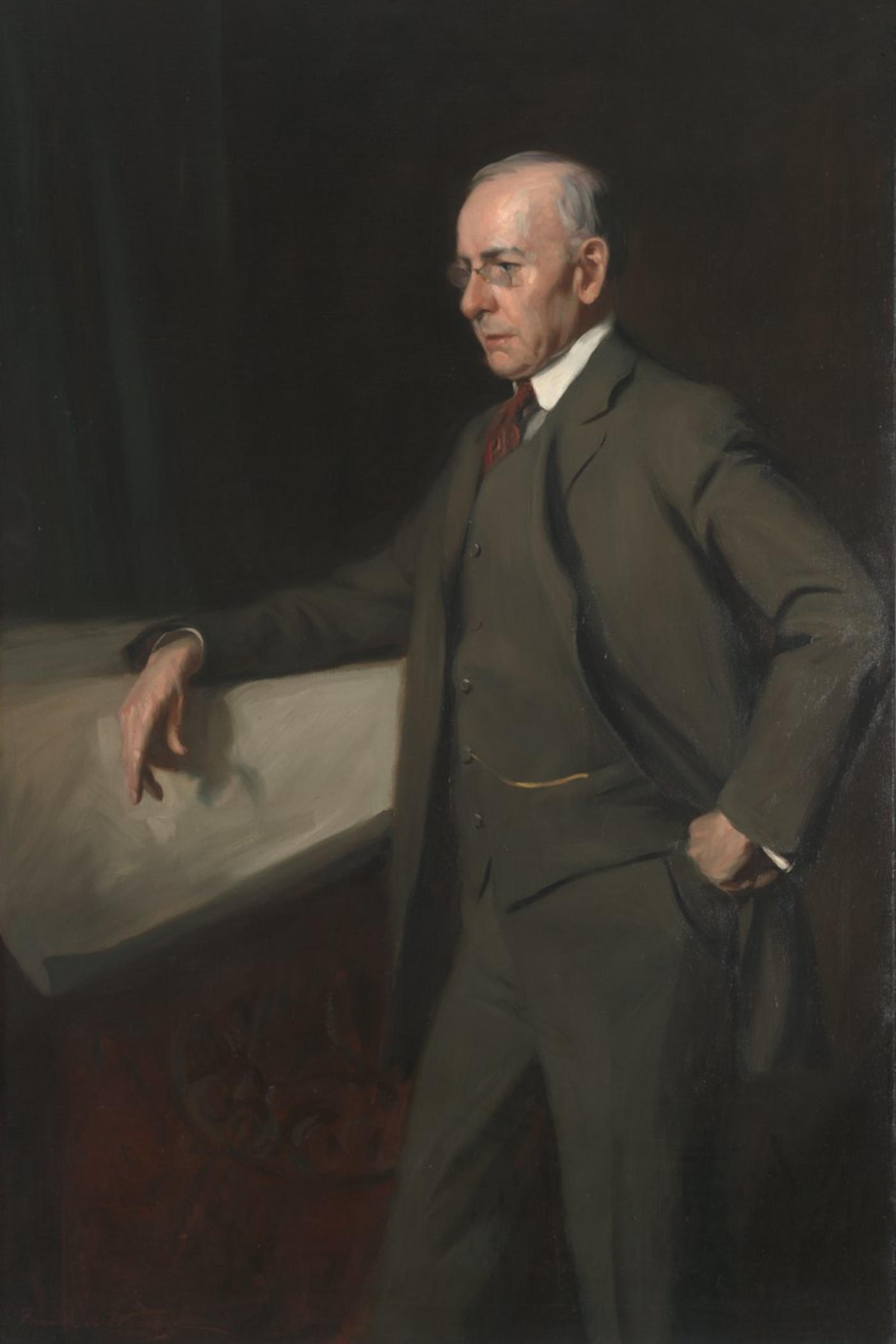
Louis Henry Sullivan (1856–1924) was an American architect and theorist widely regarded as the father of modernism in American architecture and the creator of the modern skyscraper. Born in Boston to an Irish immigrant father and a Swiss-German mother, Sullivan studied briefly at MIT and the École des Beaux-Arts in Paris before settling in Chicago, where he joined the firm of Dankmar Adler. The partnership of Adler & Sullivan (1883–1895) produced landmark buildings including the Auditorium Building in Chicago and the Wainwright Building in St. Louis—the latter often cited as the first true skyscraper to express its steel-frame construction honestly in its exterior design. Sullivan’s famous dictum "form follows function" became a foundational principle of modern architecture. His ornamental designs, combining geometric precision with organic, naturalistic forms, remain among the most distinctive in architectural history. After his partnership with Adler dissolved, Sullivan’s career declined as his uncompromising artistic vision clashed with commercial pressures. His later years were marked by poverty and alcoholism, though he continued to produce brilliant small-scale works, particularly Midwestern banks. His writings, including The Autobiography of an Idea (1924) and Kindergarten Chats, articulated a democratic philosophy of architecture that profoundly influenced his protégé Frank Lloyd Wright and subsequent generations.
Common themes in Louis H. Sullivan's work
American Architecture
A recurring theme throughout Louis H. Sullivan's writing.
Modernism
A recurring theme throughout Louis H. Sullivan's writing.
Form Follows Function
A recurring theme throughout Louis H. Sullivan's writing.
Chicago Architecture
A recurring theme throughout Louis H. Sullivan's writing.
Books
Explore by genre
Other authors you may enjoy
Why Louis H. Sullivan is still read today
Sullivan’s principle that "form follows function" remains one of the most quoted and debated ideas in architecture and design. His vision of architecture as democratic expression continues to influence discussions about the social responsibility of design. As cities worldwide grapple with sustainable and humane urban development, Sullivan’s ideas about buildings serving human needs feel more relevant than ever.
Frequently Asked Questions
Who was Louis Sullivan?
Sullivan was the father of modern American architecture, creator of the modern skyscraper aesthetic, and originator of the principle “form follows function.” Read his autobiography free on TextStack.
What does “form follows function” mean?
Sullivan’s dictum means that a building’s design should grow naturally from its purpose. This principle became foundational to modernist architecture and industrial design.
How did Sullivan influence Frank Lloyd Wright?
Wright worked as a draftsman in Sullivan’s office and considered Sullivan his “Lieber Meister” (beloved master). Sullivan’s organic design philosophy and democratic ideals deeply shaped Wright’s approach.
Where can I read Sullivan’s writing?
You can read The Autobiography of an Idea for free on TextStack—Sullivan’s reflective account of his life, philosophy, and the development of modern American architecture.
Essential cookies keep you signed in and save your reading progress. Analytics cookies help us understand how the site is used. You can reject analytics — we still work without them. Learn more in our Privacy Policy.