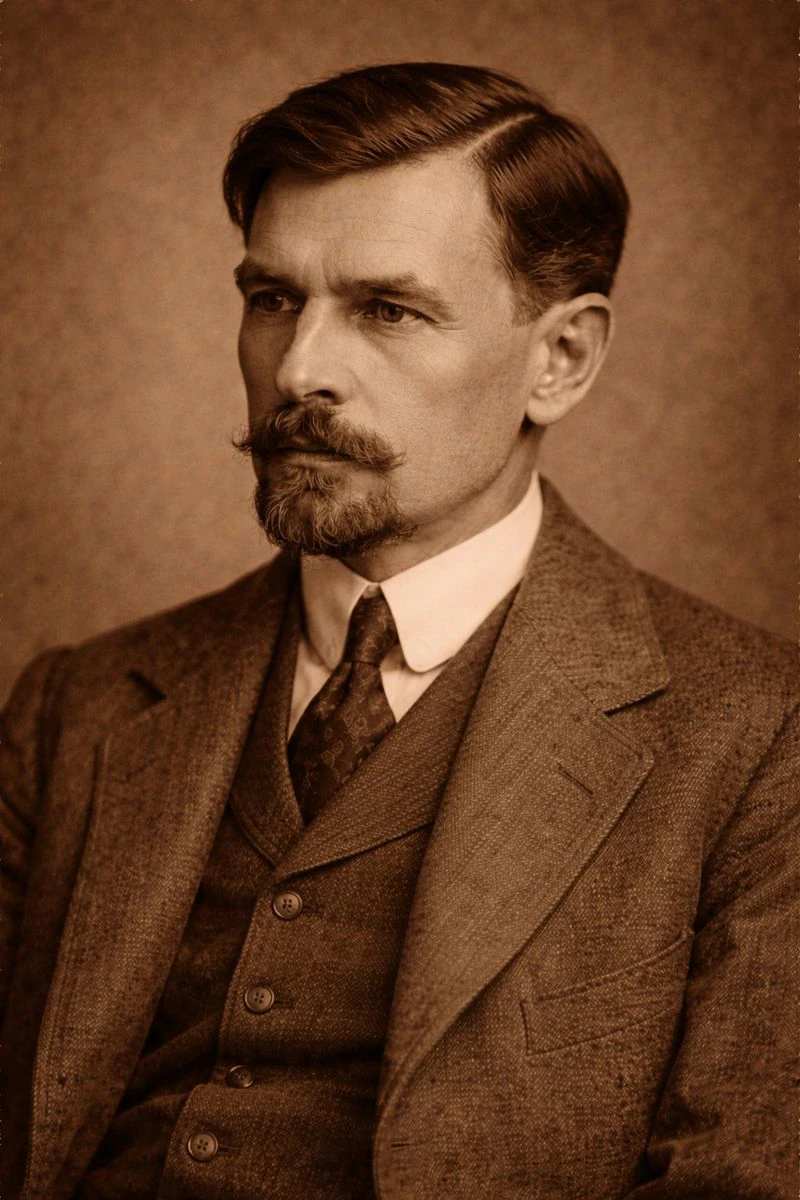
Yevgeny Zamyatin
Biography
Yevgeny Zamyatin was a Russian novelist, essayist, and engineer whose work laid the foundation for modern dystopian literature. Born in 1884, he was trained as a naval engineer and combined a scientific mindset with sharp literary and political insight. Zamyatin is best known for his novel We, a groundbreaking dystopian work that depicts a totalitarian society governed by logic, surveillance, and the suppression of individuality. Written in the early 1920s, the novel was banned in the Soviet Union for its critical portrayal of authoritarian control, leading Zamyatin to face censorship and eventual exile. Beyond his fiction, Zamyatin was a prominent literary critic and advocate for artistic freedom. His influence extends far beyond Russian literature, shaping later dystopian classics by authors such as George Orwell and Aldous Huxley. Today, he is recognized as a visionary writer whose work remains deeply relevant to discussions of power, conformity, and resistance.
Common themes in Yevgeny Zamyatin's work
Dystopia and totalitarianism
A recurring theme throughout Yevgeny Zamyatin's writing.
Surveillance and control
A recurring theme throughout Yevgeny Zamyatin's writing.
Individuality vs. collectivism
A recurring theme throughout Yevgeny Zamyatin's writing.
Technology and dehumanization
A recurring theme throughout Yevgeny Zamyatin's writing.
Books
Explore by genre
Other authors you may enjoy
Why Yevgeny Zamyatin is still read today
Yevgeny Zamyatin's novel We essentially invented the modern dystopian genre, directly influencing George Orwell's 1984 and Aldous Huxley's Brave New World. Written in 1920-21 but banned in the Soviet Union, the novel anticipated totalitarianism with uncanny precision. Its vision of a glass-walled surveillance state, numbered citizens, and controlled emotions established conventions that dystopian fiction still employs. Zamyatin, originally a Bolshevik, became disillusioned with revolution turned oppression, and We expresses his warnings about collectivism destroying individuality. Contemporary concerns about surveillance, technology, and authoritarian control make his work newly relevant. His fusion of science fiction with political critique created templates for an entire literary tradition.
Frequently Asked Questions
What is We about?
Set in the 26th century One State, We follows D-503, a mathematician building a spaceship, whose orderly life is disrupted by a rebellious woman. The totalitarian state controls every aspect of life through surveillance and conformity. D-503's awakening to individuality and love threatens his loyalty.
How did We influence 1984 and Brave New World?
Orwell acknowledged We as a direct influence on 1984, borrowing elements like surveillance, thoughtcrime, and doomed rebellion. Huxley denied reading it, but similarities abound. Zamyatin essentially invented the modern dystopia; both later novels developed his template.
Why was We banned in the Soviet Union?
Though Zamyatin was initially a Bolshevik, We's critique of totalitarian uniformity was unmistakably applicable to Soviet ideology. It became the first work banned by the Soviet censorship bureau. Zamyatin eventually emigrated after persecution; the novel wasn't published in Russia until 1988.
What makes We's vision distinctive?
We imagines a surveillance state with glass walls, scheduled sex, and mathematical control. Its critique targets not just political tyranny but rationalism itself—the dream of perfecting humanity through total order. The protagonist's mathematical perspective gives the narrative unique texture.
What happened to Zamyatin?
Facing persecution after We circulated abroad, Zamyatin wrote to Stalin requesting exile. Remarkably, Stalin allowed him to leave in 1931. Zamyatin died in Paris in 1937. His prescient warnings about totalitarianism proved tragically accurate as Stalinism intensified.
Essential cookies keep you signed in and save your reading progress. Analytics cookies help us understand how the site is used. You can reject analytics — we still work without them. Learn more in our Privacy Policy.