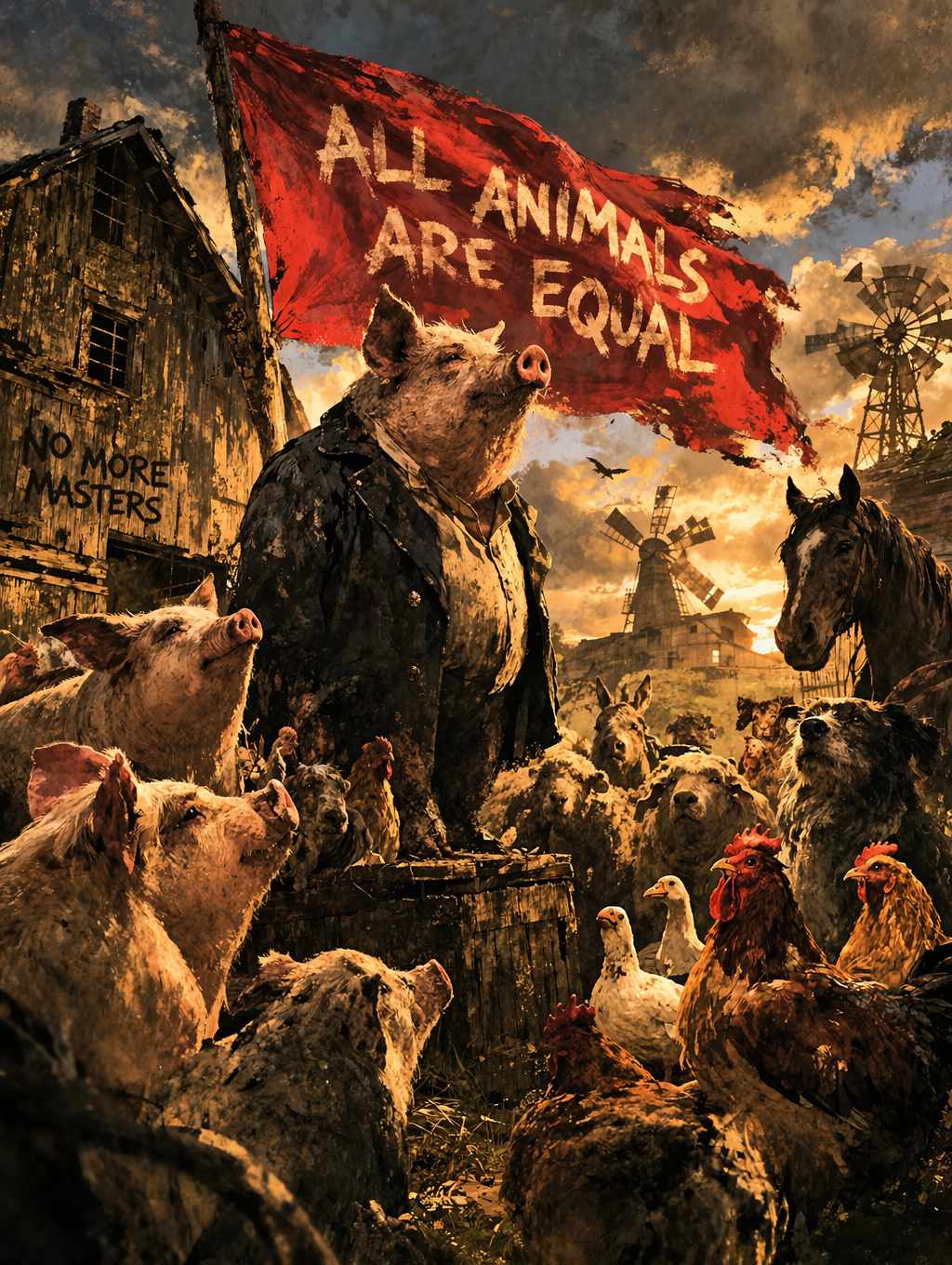
Animal Farm
What is Animal Farm about?
Animal Farm is George Orwell's satirical novella, first published in 1945. The animals of Manor Farm overthrow their drunken farmer and establish a society based on the principle that all animals are equal. Led by the pigs Napoleon and Snowball, the farm initially thrives. But gradually the pigs assume more power and privilege, rewriting the rules to suit themselves, until the famous final commandment reads: "All animals are equal, but some animals are more equal than others." A sharp and timeless allegory of the Russian Revolution and Stalinist betrayal of socialist ideals, Animal Farm is one of the most widely read political fables ever written.
Main themes in Animal Farm
Revolution and Betrayal
Revolution and Betrayal emerges as a defining element in Animal Farm, shaping character development.
Power and Corruption
The presence of power and corruption in Animal Farm connects readers to its enduring relevance.
Propaganda
In Animal Farm, propaganda provides a lens for understanding the story's core message.
Class Struggle
The theme of class struggle weaves through Animal Farm, adding depth to its narrative.
Why Animal Farm is still relevant today
Animal Farm remains the go-to text for understanding how revolutions are co-opted by the very power structures they sought to destroy. Its lessons apply far beyond the Soviet Union — anywhere idealism meets corruption, Orwell's fable finds new relevance. It is widely taught in schools and continues to sell millions of copies annually.
More by this author
Frequently Asked Questions
What is Animal Farm about?
Farm animals overthrow their human owner to create an equal society, but the pigs gradually seize all power and become indistinguishable from the humans they replaced. Read it free on TextStack.
Is Animal Farm an allegory?
Yes. The characters and events parallel the Russian Revolution, with Napoleon representing Stalin and Snowball representing Trotsky.
How long does it take to read Animal Farm?
It is a short novella — about 100 pages — and can be read in a single sitting.
What is the moral of Animal Farm?
Power corrupts. Revolutionary ideals are easily betrayed when those in charge rewrite the rules to benefit themselves.