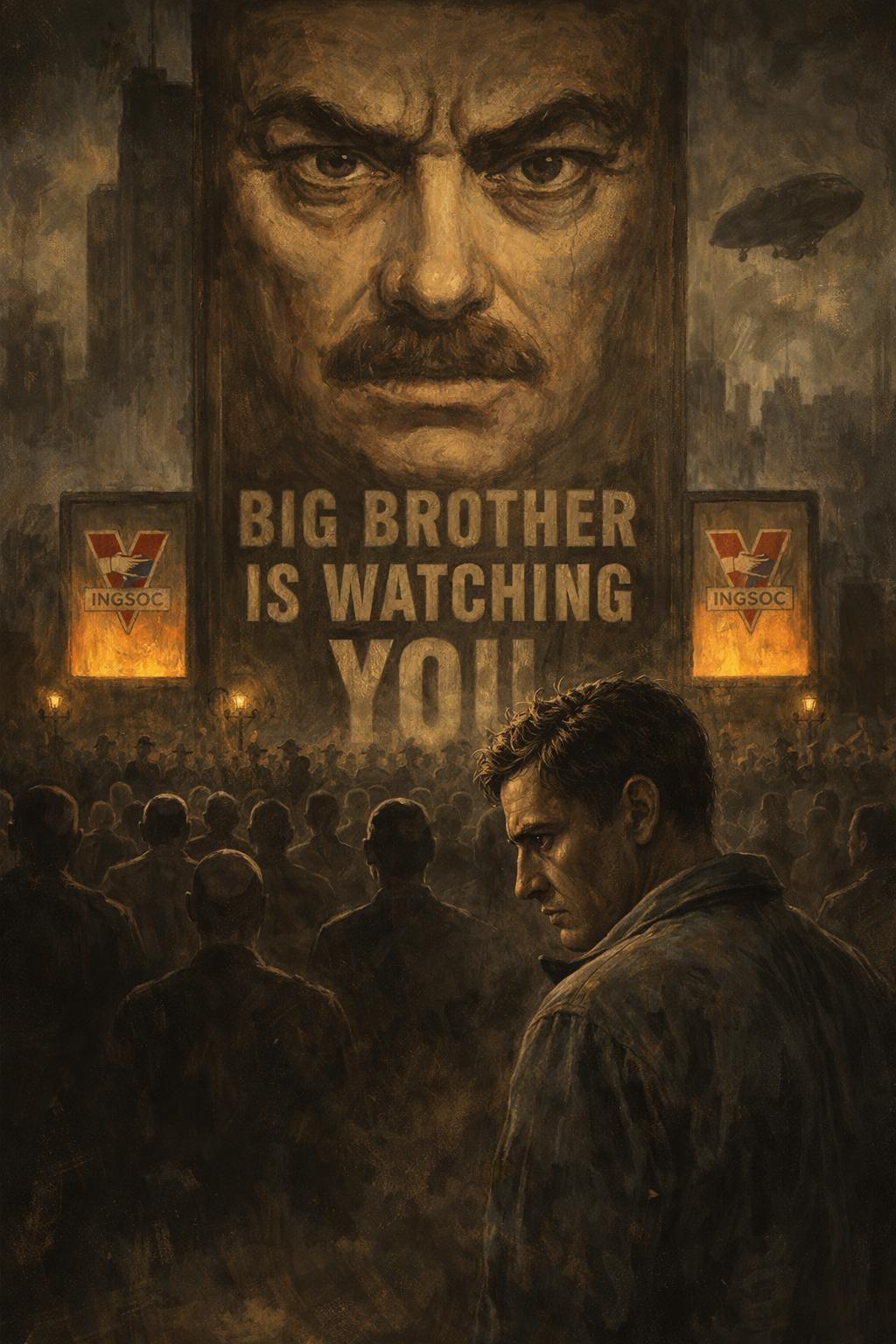
1984
What is 1984 about?
Nineteen Eighty-Four (1984) is George Orwell's final novel, published in 1949. Set in a dystopian superstate called Oceania, it follows Winston Smith, a low-ranking Party member who secretly despises the totalitarian regime led by the omnipresent Big Brother. Winston begins a forbidden love affair and seeks out a rumoured resistance movement, but the Party's apparatus of surveillance, thought control, and historical revisionism proves inescapable. The novel introduced concepts that have become fundamental to political discourse: Big Brother, doublethink, thoughtcrime, Newspeak, and Room 101. It remains one of the most widely read and referenced novels in the English language.
Main themes in 1984
Totalitarianism
1984 thoughtfully explores totalitarianism through its central conflicts.
Surveillance State
The theme of surveillance state weaves through 1984, adding depth to its narrative.
Thought Control
In 1984, thought control provides a lens for understanding the story's core message.
Propaganda and Truth
Propaganda and Truth emerges as a defining element in 1984, shaping character development.
Why 1984 is still relevant today
In an age of mass surveillance, social media manipulation, and contested truth, Nineteen Eighty-Four feels less like a period piece and more like a user manual for the present. Sales spike during every political crisis. The novel's vocabulary — Big Brother, Newspeak, memory hole — is embedded in how we talk about power, privacy, and propaganda today.
More by this author
Frequently Asked Questions
What is Nineteen Eighty-Four about?
Winston Smith lives in a totalitarian state where the Party controls all thought, history, and language. His attempt to resist leads to devastating consequences. Read it free on TextStack.
Is 1984 hard to read?
No. Orwell's prose is famously clear and direct. The novel is gripping and reads quickly despite its heavy themes.
Why is 1984 still relevant?
Its themes of surveillance, propaganda, and truth manipulation apply directly to debates about data privacy, misinformation, and authoritarian politics.
What does Big Brother mean?
Big Brother is the face of the Party's surveillance state — always watching. The term is now used worldwide to describe intrusive government or corporate monitoring.