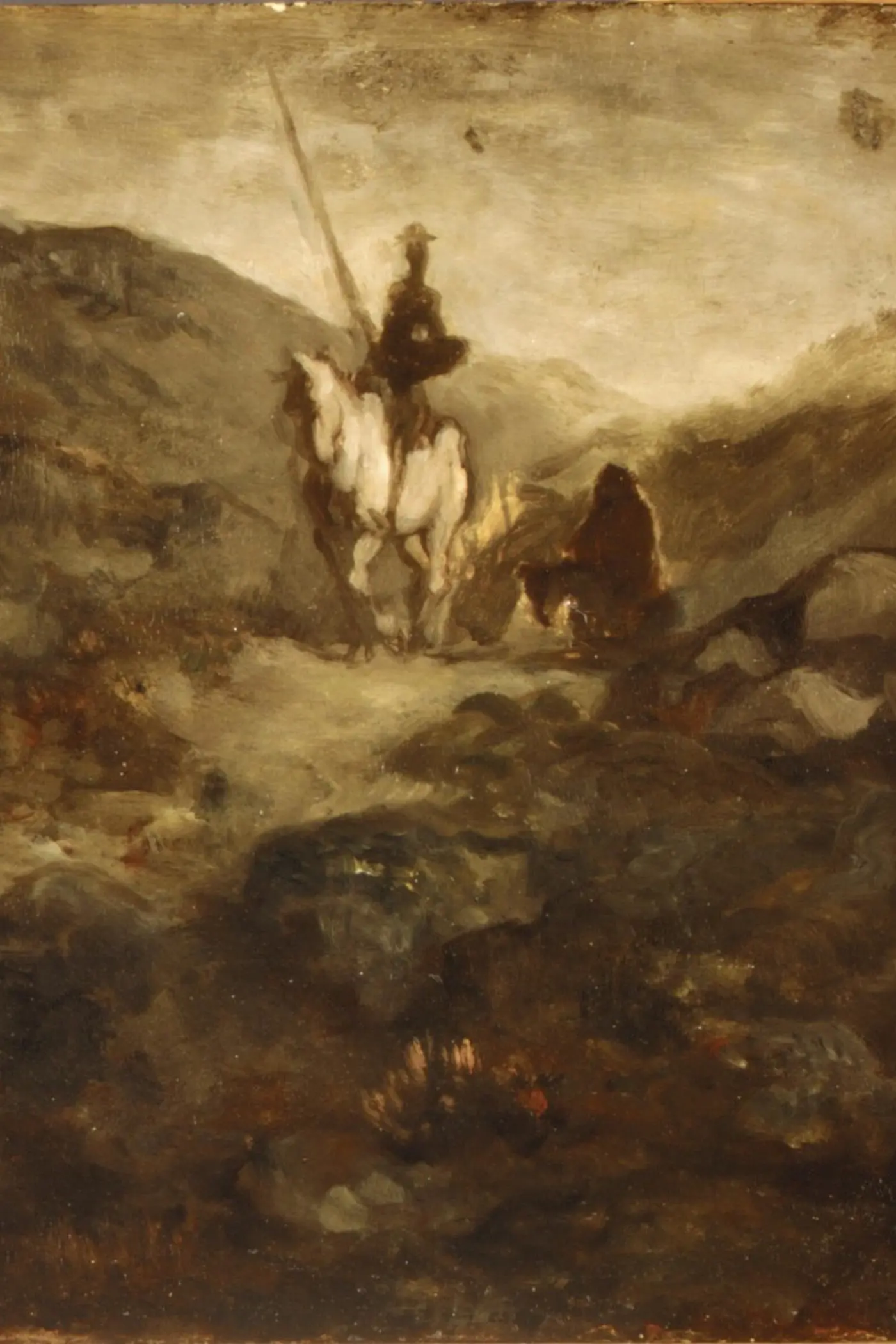
Don Quixote
What is Don Quixote about?
Don Quixote by Miguel de Cervantes is widely regarded as the first modern novel and one of the greatest literary works ever written. Published in two parts in 1605 and 1615, this Spanish masterpiece tells the story of Alonso Quixano, an aging nobleman who becomes so enchanted by tales of chivalry that he reinvents himself as the knight-errant Don Quixote de la Mancha. Accompanied by his loyal squire Sancho Panza, he embarks on absurd yet touching adventures, tilting at windmills and pursuing impossible dreams. Cervantes crafted a profound meditation on reality, idealism, and the power of imagination that has influenced countless writers and remains timelessly relevant.
Main themes in Don Quixote
Idealism vs. reality
The theme of idealism vs. reality weaves through Don Quixote, adding depth to its narrative.
The power and danger of literature
In Don Quixote, the power and danger of literature provides a lens for understanding the story's core message.
Madness and wisdom
In Don Quixote, madness and wisdom provides a lens for understanding the story's core message.
Friendship and loyalty
Friendship and loyalty emerges as a defining element in Don Quixote, shaping character development.
Why Don Quixote is still relevant today
Don Quixote is universally regarded as one of the greatest novels ever written and the first modern novel. Cervantes' tale of an idealistic knight and his practical squire has resonated for four centuries, its themes of dreams versus reality, the power of literature, and noble folly speaking to every generation. "Tilting at windmills" has entered common language. The novel's influence on subsequent fiction is incalculable—from Fielding to Borges to contemporary literature. Readers seeking the roots of the novelistic tradition will find here humor, pathos, and profound humanity.
Frequently Asked Questions
What is Don Quixote about?
An elderly Spanish gentleman, Alonso Quixano, reads so many chivalric romances that he believes himself a knight-errant, renaming himself Don Quixote. With his practical squire Sancho Panza, he sets out seeking adventures, famously attacking windmills he believes to be giants.
Why is Don Quixote considered the first modern novel?
Cervantes pioneered techniques defining the modern novel: complex psychology, self-aware narration, multiple perspectives, and blending comedy with serious themes. The novel examines itself as fiction while treating characters with unprecedented depth and humanity.
Is Don Quixote difficult to read?
At over 900 pages with 17th-century origins, Don Quixote requires commitment. However, its episodic structure and humor make it accessible. Modern translations (try Edith Grossman's) render the Spanish beautifully. Many readers find it surprisingly entertaining and relevant.
What does 'tilting at windmills' mean?
This phrase, from Don Quixote's attack on windmills he believes are giants, means fighting imaginary enemies or pursuing unrealistic goals. It's become one of literature's most recognized references, symbolizing noble but deluded idealism.
Is Don Quixote meant to be funny?
Yes, Cervantes intended comedy—the novel was a bestseller in its time. However, beneath the humor lies pathos and philosophical depth. Don Quixote's delusions are ridiculous yet sympathetic. The blend of comedy and profundity explains the novel's enduring appeal.