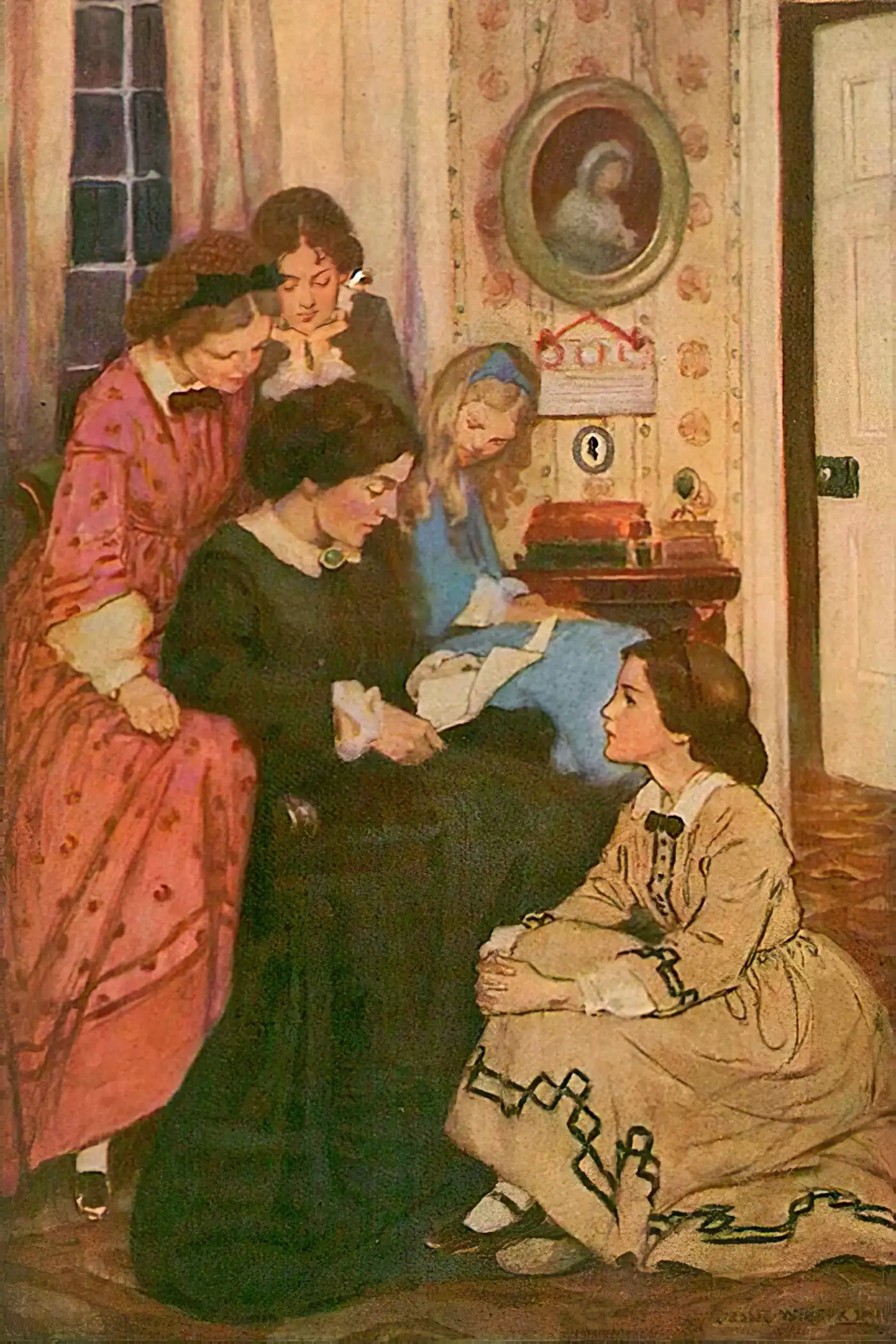
Little Women
What is Little Women about?
Little Women by Louisa May Alcott is a beloved American classic that has captivated readers for over 150 years. Published in 1868, this heartwarming novel follows the four March sisters—practical Meg, tomboyish Jo, gentle Beth, and artistic Amy—as they grow from childhood to womanhood during and after the Civil War. Drawing from her own family experiences, Alcott created unforgettable characters whose struggles with poverty, ambition, love, and loss resonate across generations. Jo March's determination to become a writer and live on her own terms made her an early feminist icon. This timeless coming-of-age story celebrates family bonds, individual growth, and the enduring power of sisterhood.
Main themes in Little Women
Family and sisterhood
The theme of family and sisterhood weaves through Little Women, adding depth to its narrative.
Growing up and coming of age
In Little Women, growing up and coming of age provides a lens for understanding the story's core message.
Women's ambition and independence
Little Women thoughtfully explores women's ambition and independence through its central conflicts.
Poverty and making do
Little Women thoughtfully explores poverty and making do through its central conflicts.
Why Little Women is still relevant today
Little Women has shaped ideas about family, womanhood, and growing up for over 150 years, its influence on generations of readers making it one of the most beloved novels in American literature. Louisa May Alcott's semi-autobiographical tale of the March sisters during the Civil War era offers models of female ambition, sisterly love, and moral development that continue to resonate. The novel's perennial popularity, demonstrated by ongoing adaptations, testifies to its enduring appeal. Readers seeking warmth, humor, and honest treatment of women's aspirations will find this novel richly rewarding.
More by this author
Frequently Asked Questions
What is Little Women about?
Little Women follows the four March sisters—Meg, Jo, Beth, and Amy—as they grow from childhood to adulthood during and after the Civil War. Their father is away serving as a chaplain, and the novel chronicles their struggles, dreams, and loves.
Is Little Women autobiographical?
Largely yes. Louisa based Jo on herself, and her sisters Anna, Elizabeth, and May inspired Meg, Beth, and Amy. Many incidents were drawn from Alcott's own family life, including poverty, their father's idealism, and their close sisterly bonds.
Why does Jo refuse Laurie?
Jo believes they are too alike and that she cannot be the wife Laurie deserves. Alcott later said she refused to write conventional romance; Jo's rejection of the expected love match reflects Alcott's own unconventional views about women and marriage.
Is Little Women sentimental?
While containing sentiment characteristic of its era, particularly in Beth's death, the novel also offers realism about poverty, disappointment, and women's limited choices. Alcott balances warmth with honest portrayal of her characters' flaws and struggles.
Why has Little Women lasted so long?
The novel's genuine characters, especially the ambitious, imperfect Jo, resonate across generations. Its themes of sisterhood, pursuing dreams against obstacles, and becoming oneself remain relevant. Regular adaptations keep introducing it to new audiences.