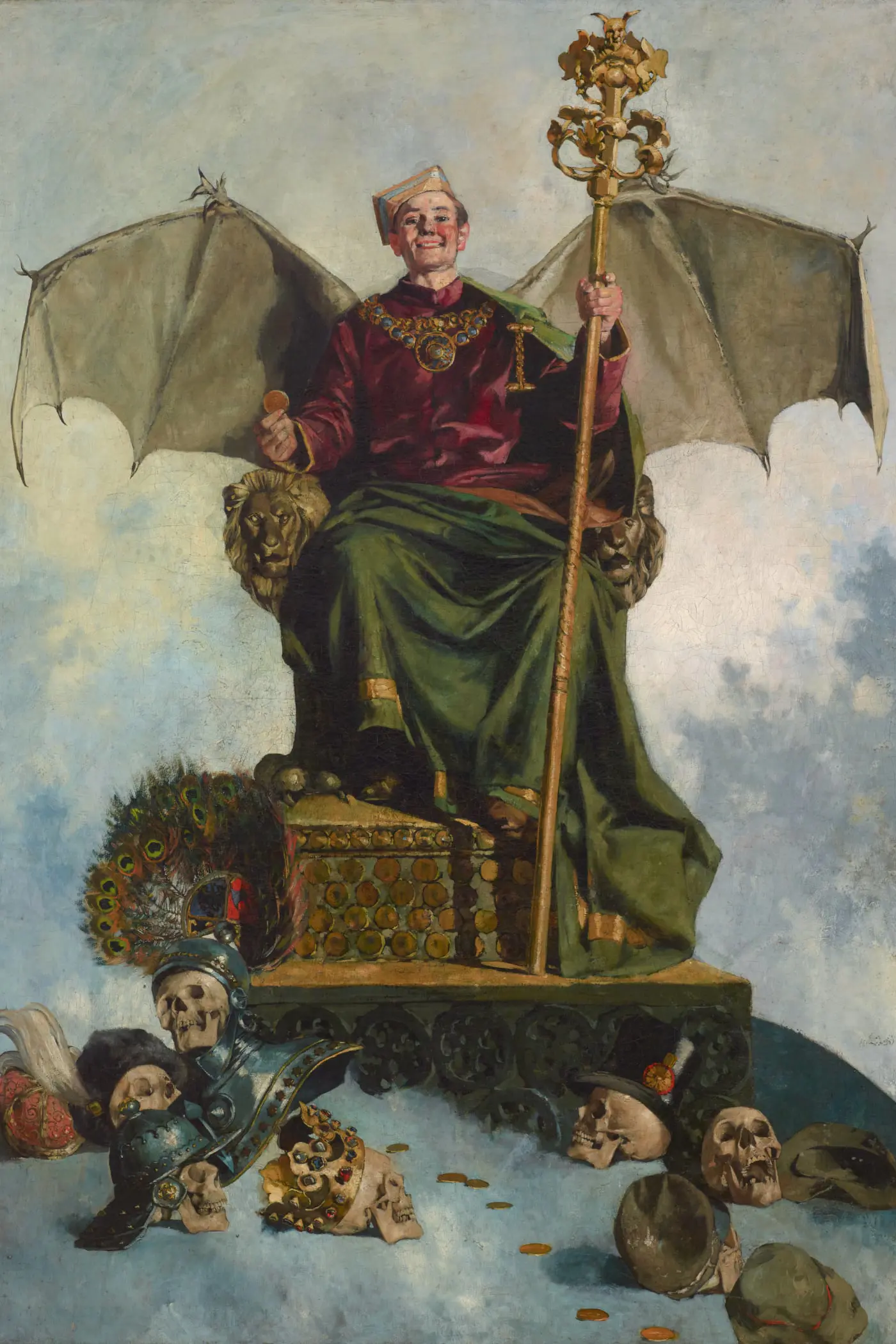
Là-Bas
What is Là-Bas about?
Là-Bas (1891) is J.-K. Huysmans’s controversial novel about Satanism in 19th-century Paris. The writer Durtal researches the life of Gilles de Rais, the 15th-century child murderer and companion of Joan of Arc, while simultaneously investigating a Black Mass and occult practices in contemporary Paris. The novel interweaves medieval horror with fin-de-siècle decadence, exploring the intersection of evil, art, and spiritual seeking. Là-Bas marks Huysmans’s transition from aestheticism toward the Catholic mysticism of his later works, as Durtal’s encounter with evil ultimately points him toward faith.
Main themes in Là-Bas
Satanism
The theme of satanism weaves through Là-Bas, adding depth to its narrative.
Occultism
The theme of occultism weaves through Là-Bas, adding depth to its narrative.
Gilles de Rais
The theme of gilles de rais weaves through Là-Bas, adding depth to its narrative.
Black Mass
Black Mass emerges as a defining element in Là-Bas, shaping character development.
Why Là-Bas is still relevant today
Là-Bas is a unique novel combining historical research on Gilles de Rais with investigation of contemporary occultism. It marks a crucial turning point in Huysmans’s spiritual journey.
More by this author
Frequently Asked Questions
What is Là-Bas about?
A writer researching the medieval child-murderer Gilles de Rais simultaneously investigates Satanism and Black Masses in contemporary 1890s Paris.
Is it a horror novel?
It contains disturbing content about historical atrocities and occult practices, but it is primarily a philosophical and spiritual novel.
How does it connect to Against the Grain?
Its protagonist Durtal continues the spiritual journey begun by Des Esseintes, moving from aestheticism toward religious seeking.
Can I read it free?
Yes, the complete novel is available free on TextStack.