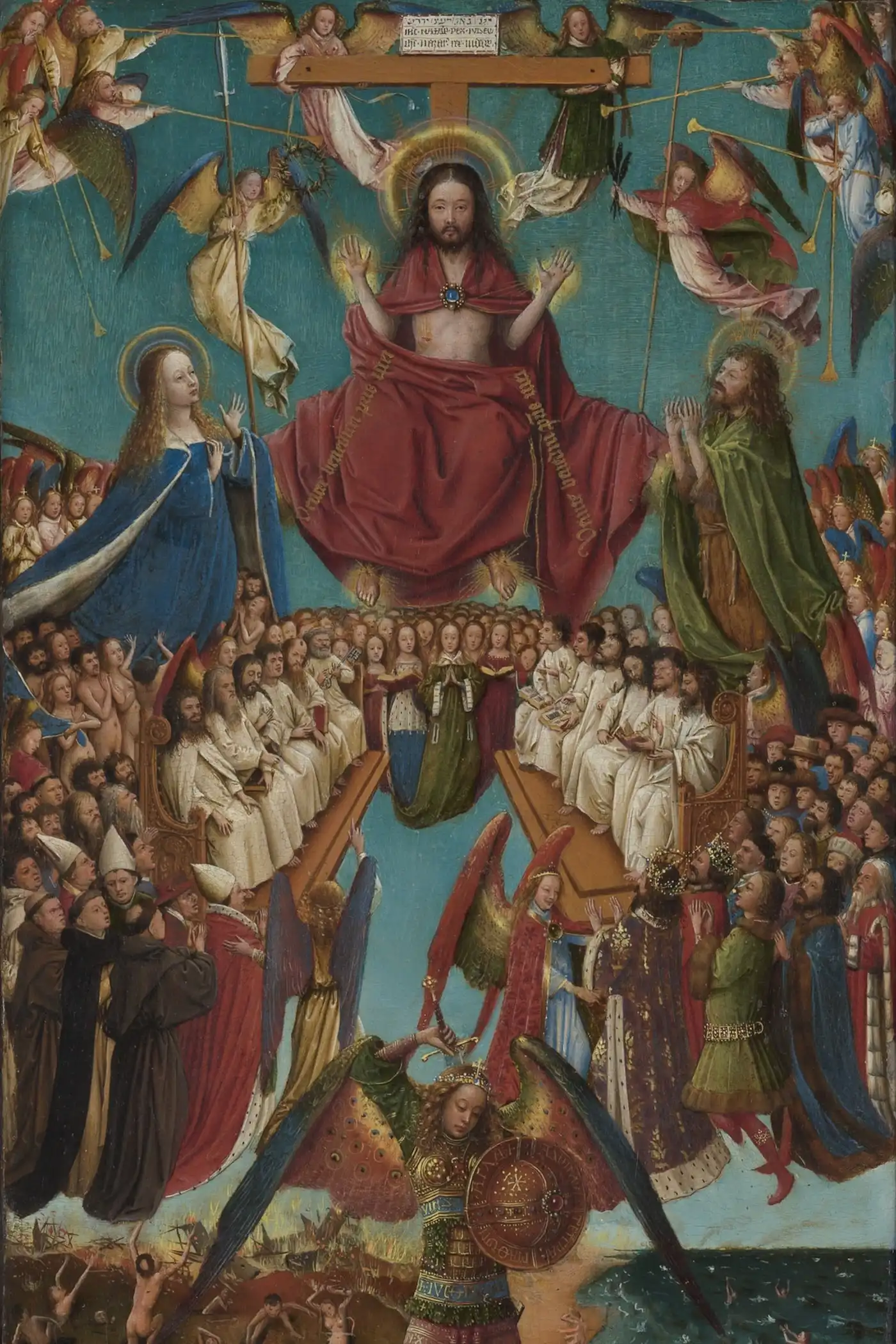
The City of God
What is The City of God about?
The City of God (De Civitate Dei, 413–426 CE) is Augustine's monumental work of Christian philosophy, written in response to the sack of Rome by the Visigoths in 410 CE. Spanning twenty-two books, it refutes the pagan claim that Rome fell because it abandoned its traditional gods, and presents a sweeping Christian philosophy of history. Augustine distinguishes between the earthly city, built on self-love, and the City of God, built on love of God, tracing their intertwined histories from creation to the Last Judgment. The work addresses theology, philosophy, history, and political theory, becoming one of the most influential books in Western civilization.
Main themes in The City of God
Christian Philosophy
The theme of christian philosophy weaves through The City of God, adding depth to its narrative.
Philosophy of History
Philosophy of History emerges as a defining element in The City of God, shaping character development.
Church and State
The City of God thoughtfully explores church and state through its central conflicts.
Fall of Rome
In The City of God, fall of rome provides a lens for understanding the story's core message.
Why The City of God is still relevant today
The City of God is foundational to Western political philosophy, theology, and the philosophy of history. It shaped medieval Christendom's understanding of the relationship between church and state and continues to influence political and theological thought.
Frequently Asked Questions
What is The City of God about?
Written after the sack of Rome in 410 CE, it presents a Christian philosophy of history contrasting the earthly city with the City of God.
Is The City of God difficult to read?
It is long and intellectually demanding, but individual sections are quite readable. Many readers focus on the most famous books rather than reading all twenty-two.
Where can I read The City of God online?
You can read it free on TextStack.