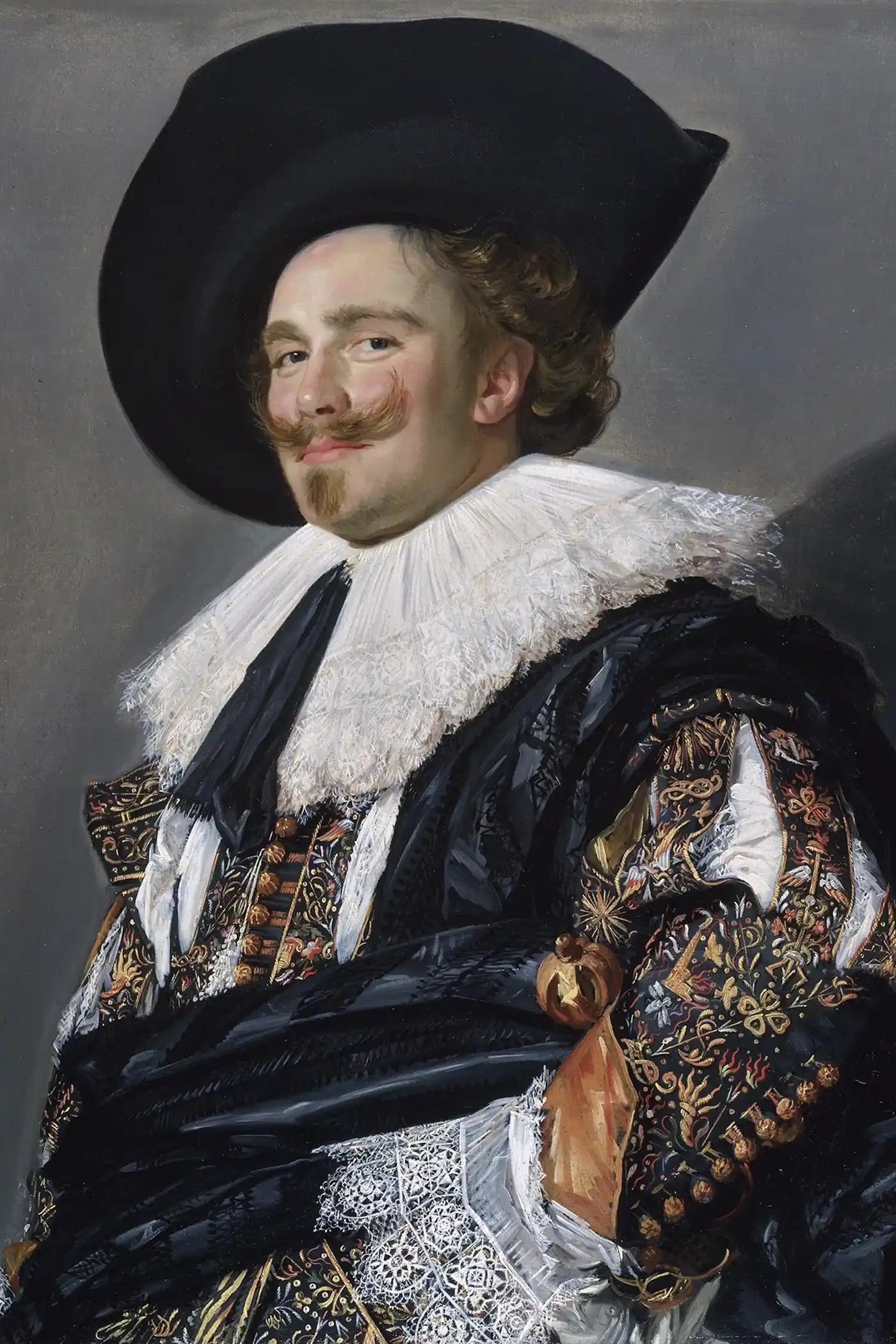
The Laughing Cavalier
What is The Laughing Cavalier about?
The Laughing Cavalier (1914) by Baroness Orczy is a historical adventure novel set in Haarlem during the Dutch Golden Age, opening on March 29, 1623. The story centers on Diogenes, a roguish English soldier of fortune living in the Netherlands, who becomes entangled in a dangerous conspiracy surrounding Gilda Beresteyn and her brother Nicolaes. When Gilda overhears a treasonous plot, Nicolaes hires Diogenes to abduct and silence her — not knowing she is his own sister. Diogenes agrees, but as he spends time with his captive, grudging respect and deeper feeling develop between them. The novel takes its title from the famous 1624 portrait by Frans Hals, with Orczy presenting its unnamed subject as an ancestor of her iconic Scarlet Pimpernel hero. Published five years after The Scarlet Pimpernel established Orczy's reputation, the book stands as both a prequel in spirit and an independent adventure, drawing extensively on Dutch history, the political tensions of the early seventeenth century, and the vivid atmosphere of a prosperous mercantile republic on the eve of its greatest conflicts. The narrative balances intrigue, pursuit, and period detail with a central romantic tension that drives the plot to its resolution.
Main themes in The Laughing Cavalier
Honour and mercenary obligation
The Laughing Cavalier thoughtfully explores honour and mercenary obligation through its central conflicts.
Disguise and concealed identity
In The Laughing Cavalier, disguise and concealed identity provides a lens for understanding the story's core message.
Political conspiracy and betrayal
In The Laughing Cavalier, political conspiracy and betrayal provides a lens for understanding the story's core message.
Romantic tension across class and circumstance
The theme of romantic tension across class and circumstance weaves through The Laughing Cavalier, adding depth to its narrative.
Why The Laughing Cavalier is still relevant today
The Laughing Cavalier connects to enduring interests in the Dutch Golden Age, a period that produced Rembrandt, Vermeer, and Frans Hals while the Netherlands became a global commercial and cultural power. Orczy's use of a real painting as a narrative anchor anticipates the art-historical fiction popularized by later authors, making the novel an early example of the genre. The central tension — a mercenary bound by contract to harm the woman he comes to admire — remains a recognizable moral dilemma explored across adventure and romance fiction. Readers drawn to swashbuckling historical novels, morally complex protagonists, or the Scarlet Pimpernel series will find this book a natural companion. Its public domain status means the full text is available to read for free on TextStack without registration.
More by this author
Frequently Asked Questions
What is The Laughing Cavalier about?
The Laughing Cavalier is a historical adventure novel set in Haarlem in 1623. A hired soldier named Diogenes is paid to abduct Gilda Beresteyn after she overhears a treasonous plot, not knowing she is the sister of the man who hired him. The novel follows their journey, the growing bond between captor and captive, and the political intrigue surrounding them.
Is The Laughing Cavalier difficult to read?
The novel is written in an accessible early twentieth-century style with a strong plot and fast-moving scenes. Readers familiar with adventure or historical fiction should find it straightforward. Some Dutch names and period references appear throughout, but these do not obstruct the narrative.
How long does it take to read The Laughing Cavalier?
The Laughing Cavalier is a full-length novel of roughly 120,000 words. At an average reading pace it takes approximately six to nine hours to read. You can track your progress and reading time using the reading statistics feature on TextStack.
What are the main themes in The Laughing Cavalier?
The central themes include honour under mercenary obligation, disguise and concealed identity, political conspiracy and betrayal among the Dutch merchant class, romantic tension that develops between adversaries, and the social fabric of the Dutch Golden Age. The novel also examines loyalty — to employers, to family, and to personal conscience.