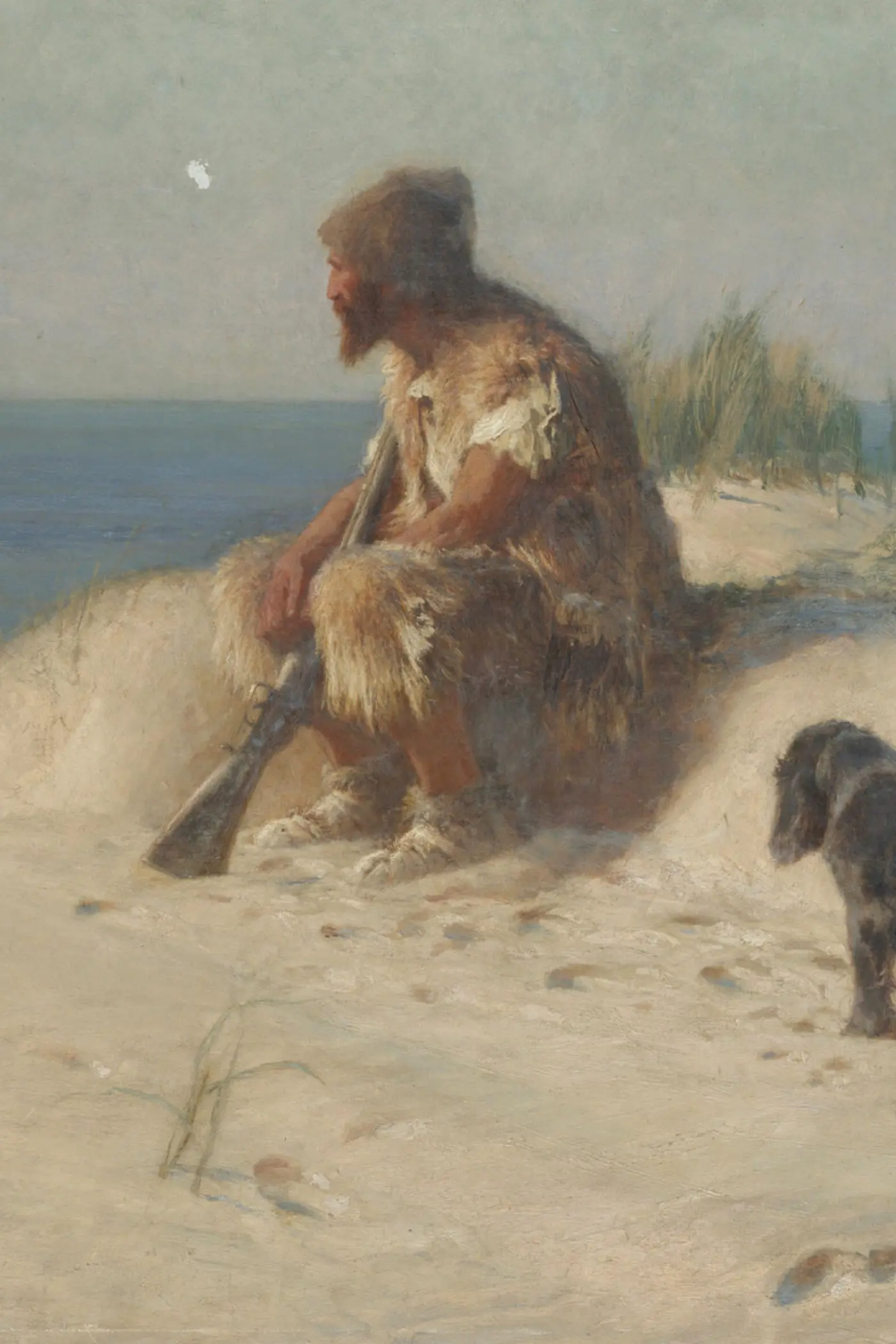
The Life and Adventures of Robinson Crusoe
What is The Life and Adventures of Robinson Crusoe about?
Robinson Crusoe by Daniel Defoe is the original castaway story and one of the first English novels ever written. Published in 1719, this groundbreaking work follows an English sailor who survives a shipwreck and spends 28 years on a remote tropical island. Defoe's detailed account of Crusoe's survival—building shelter, growing crops, and eventually encountering the native Friday—created the template for all subsequent survival narratives. Beyond adventure, the novel explores themes of solitude, self-reliance, colonialism, and spiritual redemption. Often called the first true novel in English, Robinson Crusoe remains a powerful story of human resilience and the determination to survive against all odds.
Main themes in The Life and Adventures of Robinson Crusoe
Survival and self-reliance
Survival and self-reliance emerges as a defining element in The Life and Adventures of Robinson Crusoe, shaping character development.
Colonialism and empire
The Life and Adventures of Robinson Crusoe thoughtfully explores colonialism and empire through its central conflicts.
Providence and spiritual conversion
The presence of providence and spiritual conversion in The Life and Adventures of Robinson Crusoe connects readers to its enduring relevance.
Nature and mastery
Nature and mastery emerges as a defining element in The Life and Adventures of Robinson Crusoe, shaping character development.
Why The Life and Adventures of Robinson Crusoe is still relevant today
Robinson Crusoe is often considered the first English novel and certainly one of the most influential books ever written. Defoe's tale of a castaway surviving through ingenuity and faith spawned an entire genre of survival narratives—the "Robinsonade"—whose influence extends from Swiss Family Robinson to Cast Away. The novel raises questions about colonialism, self-reliance, and human nature that continue to generate scholarly debate. Its vision of individual enterprise and mastery of nature speaks to enduring concerns about humanity's relationship with the world.
More by this author
Frequently Asked Questions
What is Robinson Crusoe about?
Shipwrecked on a deserted island, Robinson Crusoe survives for 28 years through ingenuity and faith. He builds shelter, grows crops, and eventually rescues a man he names Friday. The novel details his practical survival and spiritual growth.
Is Robinson Crusoe based on a true story?
Defoe drew inspiration from Alexander Selkirk, a sailor marooned for four years on a Pacific island. However, Defoe transformed this into a much longer narrative with different themes and characters, particularly adding the figure of Friday.
Why is Robinson Crusoe considered important?
As possibly the first English novel, it established realistic fiction conventions. Its survival narrative spawned an entire genre. The novel also engages with Enlightenment ideas about individual enterprise, religion, and colonialism that shaped modern thinking.
Is the portrayal of Friday problematic?
Friday's portrayal reflects 18th-century attitudes about race and colonialism. The relationship between Crusoe and Friday—master and grateful servant—raises questions postcolonial critics continue to explore. Readers should engage critically with these aspects.
How long does it take to read Robinson Crusoe?
At around 300 pages, most readers complete Robinson Crusoe in 8-12 hours. Its episodic structure and practical details make it surprisingly readable despite 18th-century prose. The survival narrative maintains consistent interest.