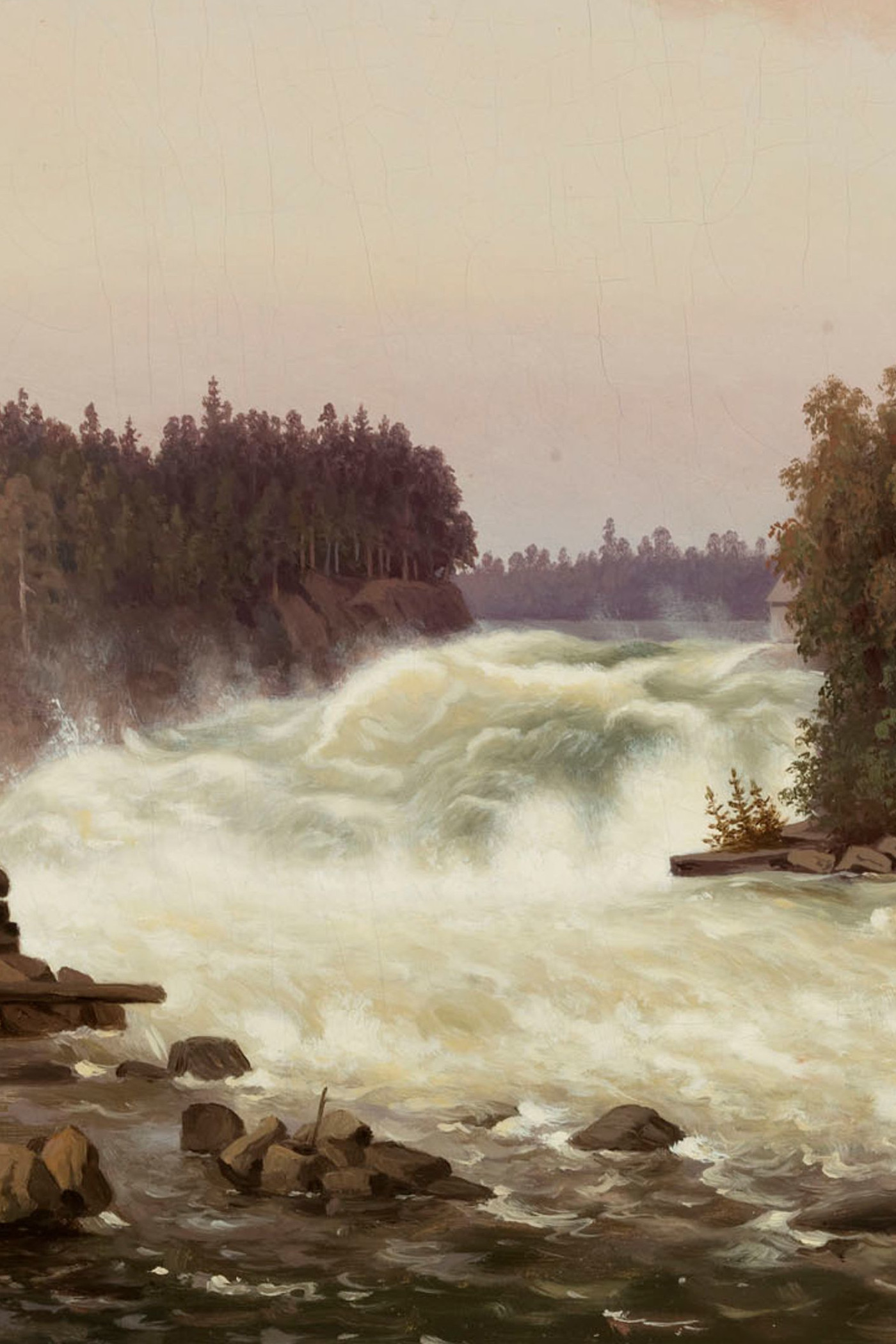
The Sundering Flood
What is The Sundering Flood about?
The Sundering Flood is a prose romance by William Morris, completed shortly before his death and published posthumously in 1897. Set in a mythologized medieval landscape, the story centers on two young people—Osberne, a boy of fierce courage living on the western bank of an impassable river, and Elfhild, a girl on the eastern shore. The uncrossable flood that separates them becomes both a literal barrier and the governing symbol of the narrative. Osberne grows into a renowned warrior through years of service in distant wars, while the two maintain their bond across the water. The tale follows his military adventures, feudal loyalties, and ultimate quest to reunite with Elfhild. Morris drew on Old Norse saga tradition, Icelandic prose rhythms, and medieval English romance conventions to construct a narrative voice that is archaic yet fluid. The Sundering Flood stands as the final major work in Morris's series of late prose romances—which includes The Wood Beyond the World and The Well at the World's End—and represents the culmination of his efforts to revive pre-modern narrative forms. Scholars of fantasy literature regard this body of work as a direct precursor to J.R.R. Tolkien's world-building and prose style.
Main themes in The Sundering Flood
Separation and longing
The Sundering Flood thoughtfully explores separation and longing through its central conflicts.
Coming of age through warfare
Coming of age through warfare emerges as a defining element in The Sundering Flood, shaping character development.
Feudal loyalty and honor
The presence of feudal loyalty and honor in The Sundering Flood connects readers to its enduring relevance.
The natural world as obstacle and witness
The Sundering Flood thoughtfully explores the natural world as obstacle and witness through its central conflicts.
Why The Sundering Flood is still relevant today
The Sundering Flood holds documentary importance for readers tracing the origins of modern fantasy literature. William Morris's late romances established conventions—invented geographies, archaic diction, the hero's long wandering, and the intertwining of personal love with martial duty—that Tolkien explicitly acknowledged as formative influences. The novel's central image of two people separated by an uncrossable boundary resonates with enduring themes of longing, patience, and identity forged through adversity. For readers interested in medievalism as a literary and cultural movement, Morris illustrates how the Victorian era reimagined the Middle Ages not merely as spectacle but as an ethical and aesthetic alternative. The work also appeals to those studying the relationship between socialism, craft, and art, given Morris's broader political commitments. The full text is available to read free of charge on TextStack.
More by this author

Frequently Asked Questions
What is The Sundering Flood about?
The Sundering Flood is a medieval prose romance by William Morris about two young people, Osberne and Elfhild, who fall in love but are separated by a vast, uncrossable river. The story follows Osberne's years as a soldier and warrior in distant lands as he works toward eventually reuniting with Elfhild. It was Morris's last completed romance, published posthumously in 1897.
Is The Sundering Flood difficult to read?
The prose is written in a deliberately archaic style modeled on Old Norse sagas and medieval English romance, which some readers find challenging at first. The vocabulary and sentence rhythms are not contemporary, but readers who enjoy Tolkien or older fantasy literature generally adapt to the style within the first few chapters. TextStack displays the full text in a clean reader format that makes extended reading more comfortable.
How long does it take to read The Sundering Flood?
The Sundering Flood is a novel of moderate length, typically estimated at around 8 to 12 hours of reading time depending on pace and familiarity with Morris's archaic prose style. You can read the complete text for free on TextStack and track your reading progress across sessions.
What are the main themes in The Sundering Flood?
The central themes include separation and longing, the coming-of-age of a warrior, feudal loyalty and the obligations of honor, the indifferent power of the natural world as embodied by the river, and the long patience required for eventual reunion. Morris also weaves in the tension between the individual's personal life and the demands of military service.