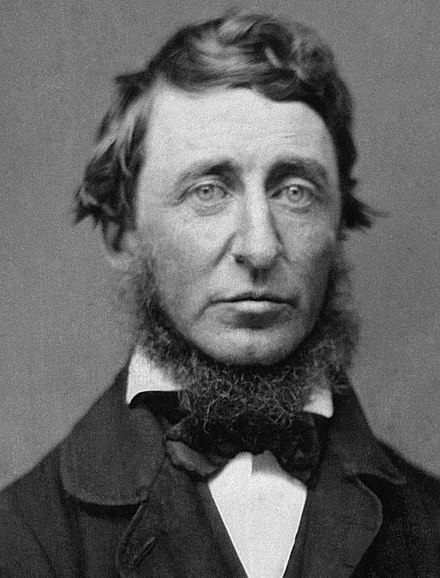
Henry David Thoreau
Biography
Henry David Thoreau (1817-1862) was an American essayist, poet, philosopher, and naturalist who became a leading figure in the transcendentalist movement. Born in Concord, Massachusetts, he graduated from Harvard and formed a lifelong friendship with Ralph Waldo Emerson, who became his mentor and supporter. Thoreau's masterpiece Walden (1854) recounts his two-year experiment in simple living at Walden Pond, combining nature observation with profound philosophical meditation on self-reliance and deliberate living. His essay Civil Disobedience (1849), written after his arrest for refusing to pay a poll tax in protest of slavery and the Mexican War, influenced Gandhi, Martin Luther King Jr., and countless others. Though little appreciated in his lifetime, Thoreau is now recognized as one of America's most original thinkers. His advocacy for simple living, environmental awareness, and principled resistance to unjust laws speaks powerfully to contemporary concerns.
Common themes in Henry David Thoreau's work
Simple living and self-reliance
A recurring theme throughout Henry David Thoreau's writing.
Nature and environmental awareness
A recurring theme throughout Henry David Thoreau's writing.
Civil disobedience and conscience
A recurring theme throughout Henry David Thoreau's writing.
Transcendentalism and spiritual truth
A recurring theme throughout Henry David Thoreau's writing.
Books

Explore by genre
Other authors you may enjoy
Why Henry David Thoreau is still read today
Henry David Thoreau remains one of America's most influential thinkers, his philosophy of simple living, civil disobedience, and connection with nature shaping movements from environmentalism to civil rights. Walden's account of deliberate living in a cabin by a pond has inspired generations seeking alternatives to consumer society. His essay "Civil Disobedience" directly influenced Gandhi's nonviolent resistance and Martin Luther King Jr.'s civil rights activism. Contemporary environmental movements, minimalism, and intentional communities all trace intellectual roots to Thoreau. His detailed nature observations contributed to the development of ecology as a science. In an era of climate crisis and political polarization, Thoreau's insistence on individual conscience, careful attention to the natural world, and questioning of unjust laws feels remarkably current.
Frequently Asked Questions
What is Walden about?
Walden (1854) recounts Thoreau's two years living simply in a cabin he built near Walden Pond in Massachusetts. It combines practical details of his experiment in self-sufficient living with philosophical reflections on nature, society, and the meaning of life.
Did Thoreau really live completely alone?
Thoreau lived about a mile from Concord and regularly visited town, entertained guests, and had his mother do his laundry. His experiment was about simplicity and intentional living, not complete isolation. He never claimed otherwise, but the myth persists.
How did 'Civil Disobedience' influence history?
Thoreau's 1849 essay, written after his night in jail for refusing to pay taxes supporting slavery and the Mexican War, influenced Leo Tolstoy, Mahatma Gandhi, and Martin Luther King Jr. Its argument for principled resistance to unjust laws remains foundational to nonviolent protest.
What is Transcendentalism?
Transcendentalism was a 19th-century American philosophical movement emphasizing intuition, nature, and individual spiritual experience over organized religion. Thoreau, along with Ralph Waldo Emerson, was a central figure. Its ideas continue to influence American environmentalism and spirituality.
Why is Thoreau important to environmentalism?
Thoreau's detailed nature observations and spiritual appreciation for wilderness helped establish conservation as a moral cause. His later work on forests and seeds anticipated ecology. Environmentalists consider him a founding figure, and Walden Pond is now a protected site.
Essential cookies keep you signed in and save your reading progress. Analytics cookies help us understand how the site is used. You can reject analytics — we still work without them. Learn more in our Privacy Policy.