A Week on the Concord and Merrimack Rivers
What is A Week on the Concord and Merrimack Rivers about?
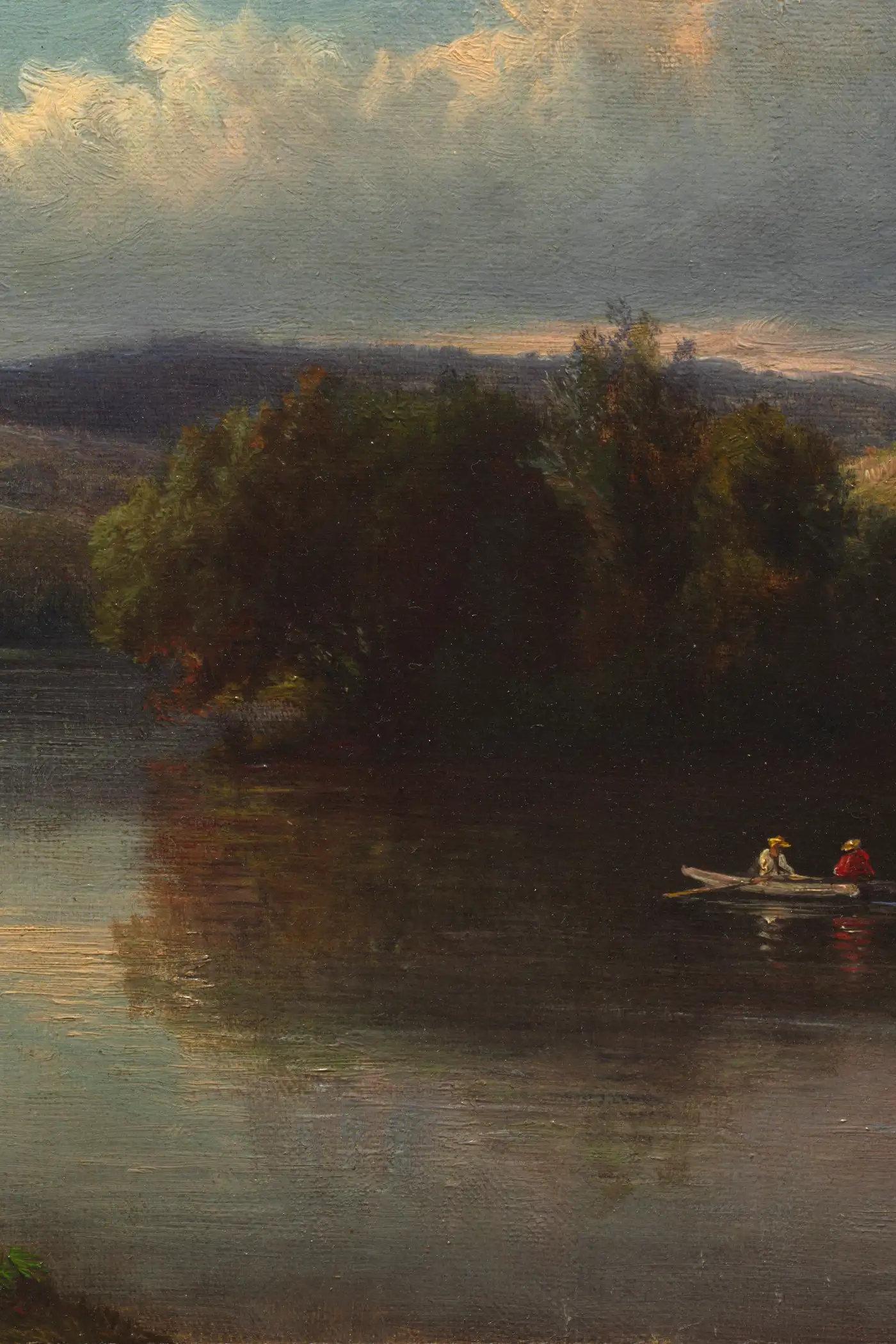
In 1839, Thoreau and his brother took a small boat upriver and back. Some years later, while in his cabin at Walden Pond, he gathered his notes from that journey and other writings from his journals, and composed this, his first book. Like the rivers it describes, the book meanders through varying territories and climates. He writes of the natural surroundings they encounter and of the history of the region, but also takes long and remarkable detours through topics like friendship, history, a comparison of Christianity and Hinduism, Vedic literature, government and conscience, Thoreau’s philosophy of literature, monuments and graveyards, poetry (in particular Ossian, Chaucer, and certain minor Greek poets), and the satires of Aulus Persius Flaccus. Thoreau also includes several poems of his own. Thoreau had the first edition of this book published at his own expense, and at first it struggled to find an audience. “I have now a library of nearly 900 volumes,” he remarked at one point, “over 700 of which I wrote myself.”
Main themes in A Week on the Concord and Merrimack Rivers
Nature and wilderness
Nature and wilderness emerges as a defining element in A Week on the Concord and Merrimack Rivers, shaping character development.
Fraternal bonds
In A Week on the Concord and Merrimack Rivers, fraternal bonds provides a lens for understanding the story's core message.
Transcendentalism
The theme of transcendentalism weaves through A Week on the Concord and Merrimack Rivers, adding depth to its narrative.
American landscape
The theme of american landscape weaves through A Week on the Concord and Merrimack Rivers, adding depth to its narrative.
Why A Week on the Concord and Merrimack Rivers is still relevant today
Thoreau's debut work blends travel narrative with philosophical meditation, offering a literary journey that anticipated the nature writing genre. Published in 1849, the book records a boat trip taken with his brother John in 1839, weaving together observations on nature, literature, history, and religion. The work's reflective approach to landscape and solitude prefigures modern environmental writing and remains a touchstone for readers seeking contemplative prose about the American wilderness.
More by this author

Frequently Asked Questions
What is A Week on the Concord and Merrimack Rivers about?
It chronicles a boat trip Thoreau took with his brother John along the Concord and Merrimack rivers in 1839, blending travel narrative with essays on nature, literature, philosophy, and history.
How does this book relate to Walden?
Written during Thoreau's time at Walden Pond, it was actually published first in 1849. Both works share transcendentalist themes, but A Week focuses on journey and movement rather than stationary reflection.
Is this book difficult to read?
The prose can be digressive, as Thoreau freely weaves philosophical and literary essays into the travel narrative. Readers who enjoy contemplative, nonlinear writing will find it rewarding.
Can I read this book free online on TextStack?
Yes, you can read the complete text of A Week on the Concord and Merrimack Rivers for free on TextStack with chapter navigation and bookmarking features.