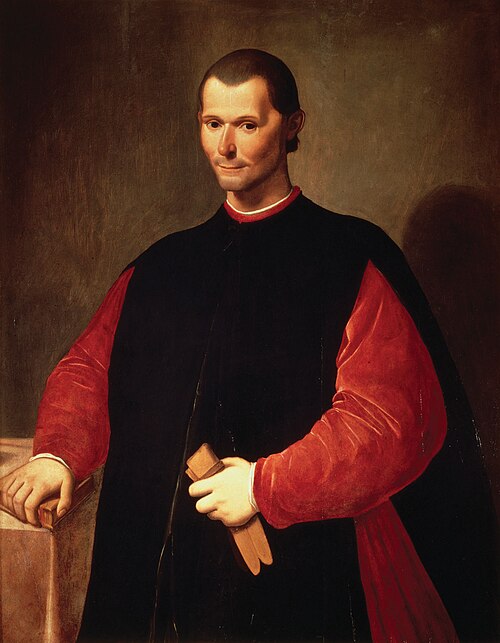
Niccolò Machiavelli
Biography
Niccolò Machiavelli (1469-1527) was an Italian Renaissance diplomat, philosopher, and writer whose treatise The Prince transformed political thought and made his name synonymous with cunning ruthlessness. Born in Florence during the height of Renaissance culture, he served as a senior official in the Florentine Republic, conducting diplomatic missions throughout Europe. When the Medici returned to power in 1512, Machiavelli was imprisoned, tortured, and exiled. During this forced retirement, he wrote The Prince (published posthumously in 1532), a revolutionary analysis of political power that shocked contemporaries by separating politics from Christian morality. His advice that rulers must be willing to act immorally when necessary earned lasting infamy. Machiavelli also wrote Discourses on Livy, a republican political philosophy text; The Art of War; and comedies including Mandragola. Though vilified for centuries as an advocate of amoral politics, he is now recognized as the founder of modern political science and a keen analyst of power whose insights remain startlingly relevant.
Common themes in Niccolò Machiavelli's work
Political power and its exercise
A recurring theme throughout Niccolò Machiavelli's writing.
Ends justifying means
A recurring theme throughout Niccolò Machiavelli's writing.
Virtue and virtu (political effectiveness)
A recurring theme throughout Niccolò Machiavelli's writing.
Fortune and human agency
A recurring theme throughout Niccolò Machiavelli's writing.
Books
Explore by genre
Other authors you may enjoy
Why Niccolò Machiavelli is still read today
Niccolò Machiavelli transformed political thought with The Prince, a work so influential that his name became an adjective for ruthless political cunning. His separation of political ethics from personal morality revolutionized how power is analyzed and discussed. Modern political science, international relations, and leadership studies all engage with his insights. Beyond The Prince, his Discourses on Livy offer republican political theory that influenced democratic thinking. Contemporary politicians, business leaders, and strategists continue to study his work for its insights into power dynamics. His unflinching analysis of how power actually operates—versus how we wish it did—remains startlingly relevant. Whether admired or condemned, Machiavelli established frameworks for understanding politics that persist five centuries later.
Frequently Asked Questions
What is The Prince really about?
The Prince (1532) is a practical guide to acquiring and maintaining political power. Machiavelli advises princes to prioritize effectiveness over conventional morality, arguing that survival sometimes requires cruelty, deception, or breaking promises. It's both handbook and analysis.
What does 'Machiavellian' mean?
'Machiavellian' describes cunning, amoral political manipulation. However, this oversimplifies Machiavelli's thought. He analyzed how power actually works, not necessarily how it should work. Whether he endorsed ruthlessness or merely described it remains debated.
Was Machiavelli evil?
Machiavelli was a Florentine diplomat and patriot who wanted Italy unified and free from foreign domination. The Prince may be read as realist analysis, satire, or job application to the Medici. His Discourses show his republican sympathies. 'Machiavellian evil' oversimplifies.
What are the Discourses on Livy?
This longer work analyzes Roman republican history to draw lessons for maintaining free government. It shows Machiavelli's preference for republics over principalities and influenced democratic political theory, particularly through its analysis of civic virtue and institutional design.
Why is Machiavelli still relevant?
Machiavelli's analysis of power dynamics—the gap between political necessity and moral ideals, the role of fortune, the importance of appearances—remains applicable to politics, business, and international relations. His realism challenges idealistic thinking about power.
Essential cookies keep you signed in and save your reading progress. Analytics cookies help us understand how the site is used. You can reject analytics — we still work without them. Learn more in our Privacy Policy.