Almayer’s Folly
What is Almayer’s Folly about?
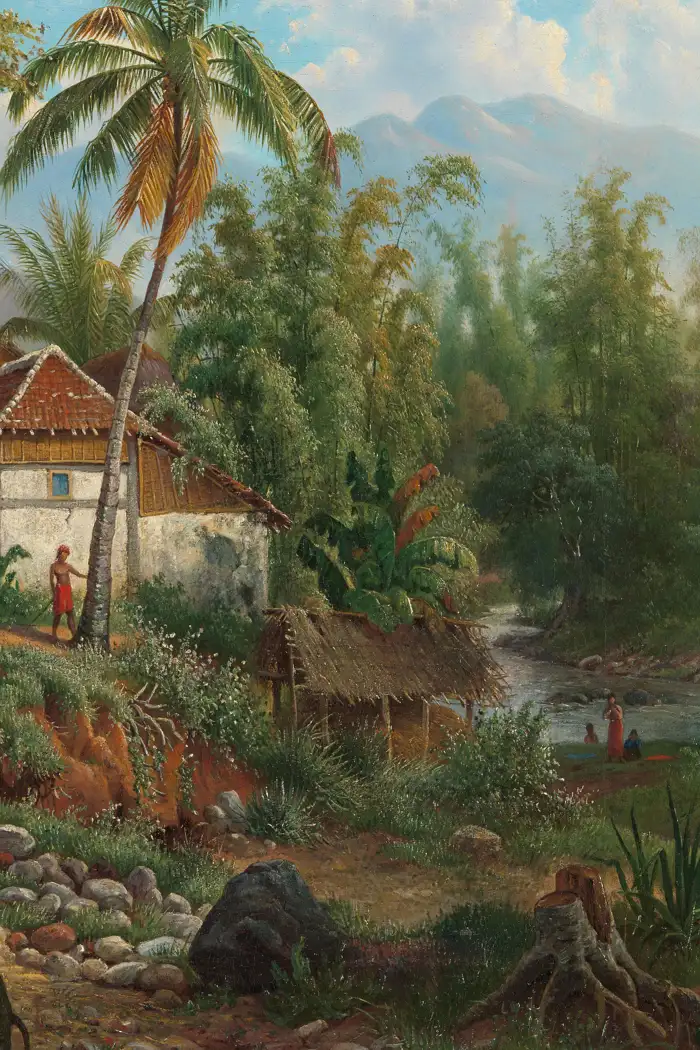
Kaspar Almayer is a Dutch trader whose career has stalled. He finds himself in a riverside village in the jungles of East Borneo with his estranged Malay wife, their beautiful daughter Nina, and a lavish but unfinished house the village has dubbed “Almayer’s Folly.” Kaspar dreams of becoming rich enough to free himself from the backwater village and take Nina to Europe. Rumors of gold deposits in the depths of the jungle delude him into thinking he’s close to achieving that dream, and with the arrival of a rajah’s son who’s willing to join Kaspar in his get-rich-quick scheme, the plot is kicked into motion. Almayer’s Folly is notable for being Joseph Conrad’s first novel, published in 1895 after six years of casual writing and just one year after he ended his maritime career. For this book, Józef Konrad Korzeniowski adopted the pen name by which he would later be known as a master of the English language. The book is based on Conrad’s experience as a seaman in the British merchant navy and his travels to Indonesia. Both the book’s titular character and the riverside village have their counterparts in real-life. While critics argue that Almayer’s Folly isn’t as good as Conrad’s more famous works, the book introduces themes which he often returns to in his writing career, including colonialism, the clash of East and West, and the dominant forces of Nature.
Main themes in Almayer’s Folly
Colonial decline
The theme of colonial decline weaves through Almayer’s Folly, adding depth to its narrative.
Failed dreams
Failed dreams emerges as a defining element in Almayer’s Folly, shaping character development.
Interracial relationships
Interracial relationships emerges as a defining element in Almayer’s Folly, shaping character development.
Father-daughter conflict
Almayer’s Folly thoughtfully explores father-daughter conflict through its central conflicts.
Why Almayer’s Folly is still relevant today
Almayer's Folly (1895) was Conrad's first novel, written over five years while he worked as a merchant seaman. Set in Borneo, it tells the story of a Dutch trader whose dreams of wealth and his daughter's future crumble tragically. The novel introduced Conrad's characteristic themes of colonial failure, racial tension, and the gap between aspiration and reality that would define his later masterpieces.
More by this author



Frequently Asked Questions
What is Almayer's Folly about?
The novel follows Kaspar Almayer, a Dutch trader in Borneo who dreams of gold and a grand future for his mixed-race daughter Nina. His ambitions crumble when Nina chooses love over her father's plans, leaving him broken and alone.
Is Almayer's Folly based on a real person?
Yes, Conrad met a trader named William Charles Olmeijer in Borneo who inspired the character of Almayer. Conrad transformed this encounter into his first exploration of colonial failure and cultural displacement.
How does Almayer's Folly connect to Conrad's other works?
The novel is the first in an unofficial trilogy. Almayer and related characters appear in "An Outcast of the Islands" and briefly in "The Rescue." Together they form Conrad's portrait of colonial Borneo.
Why is it called Almayer's Folly?
"Folly" refers both to Almayer's foolish dreams and to the grand house he builds in anticipation of wealth that never comes—a physical symbol of his misplaced ambitions.