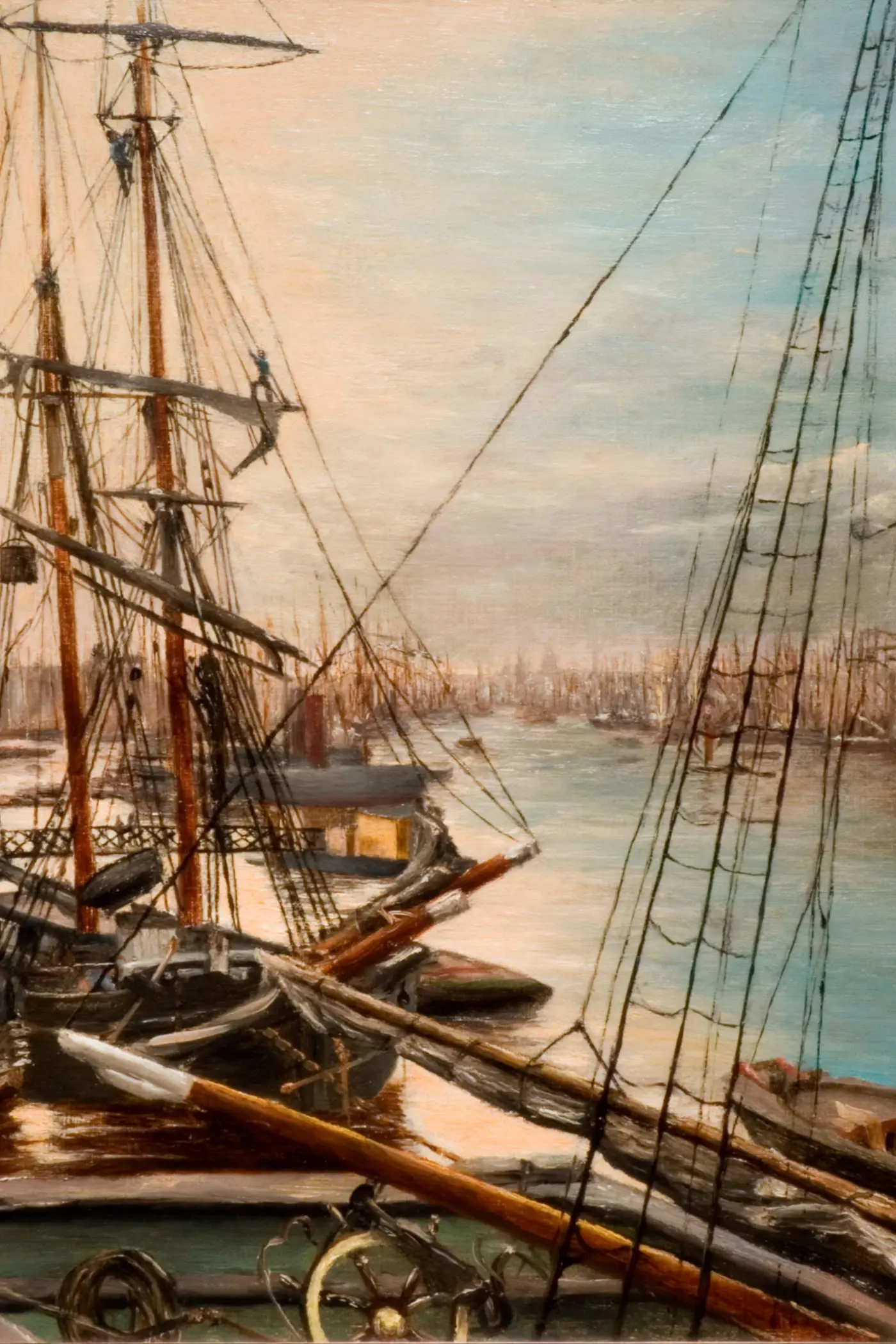
The Mirror of the Sea
What is The Mirror of the Sea about?
The Mirror of the Sea is the first of two autobiographical memoirs by Joseph Conrad . Prior to his career as a writer, Conrad spent two decades as a sailor, working in the French and British merchant marine from 1874 to 1894. Published in 1906, The Mirror of the Sea is a collection of essays on Conrad’s relationship with the sea, sailing, and ships. The book’s fifteen essays explore a wide range of maritime topics: from a seafarer’s perspective on departure and landfall, to the nature of the East and West Winds, and the symbolism of the anchor. These thematic reflections are mixed with personal anecdotes and autobiographical chapters in which Conrad reflects on his own nautical adventures.
Main themes in The Mirror of the Sea
Maritime memoir
In The Mirror of the Sea, maritime memoir provides a lens for understanding the story's core message.
Ships and seamanship
In The Mirror of the Sea, ships and seamanship provides a lens for understanding the story's core message.
Autobiography
Autobiography emerges as a defining element in The Mirror of the Sea, shaping character development.
The character of the sea
In The Mirror of the Sea, the character of the sea provides a lens for understanding the story's core message.
Why The Mirror of the Sea is still relevant today
The Mirror of the Sea (1906) collects Conrad's reflections on his twenty years as a merchant seaman. These autobiographical essays explore seamanship, ships he knew, ports he visited, and the character of the sea itself. Part memoir, part meditation, the book offers Conrad's most direct engagement with the maritime world that shaped his imagination and provided material for his greatest fiction.
More by this author


Frequently Asked Questions
What is The Mirror of the Sea about?
This collection of autobiographical essays reflects on Conrad's maritime career—the ships he served on, the storms he weathered, the ports he knew, and his philosophy of seamanship. It's his most direct writing about the sea.
Is The Mirror of the Sea fiction or nonfiction?
It's nonfiction—a collection of essays and reminiscences about Conrad's actual experiences at sea. However, Conrad's characteristic style means even factual content reads with literary polish.
What subjects does Conrad cover?
Topics include types of ships and their characters, the craft of seamanship, specific voyages and incidents, famous maritime events, and philosophical reflections on the sea and those who work on it.
How does this book relate to Conrad's fiction?
It provides context for understanding the maritime world Conrad draws on in his novels. Many incidents and observations here illuminate the experiences he transforms into fiction elsewhere.