Back to Methuselah
What is Back to Methuselah about?
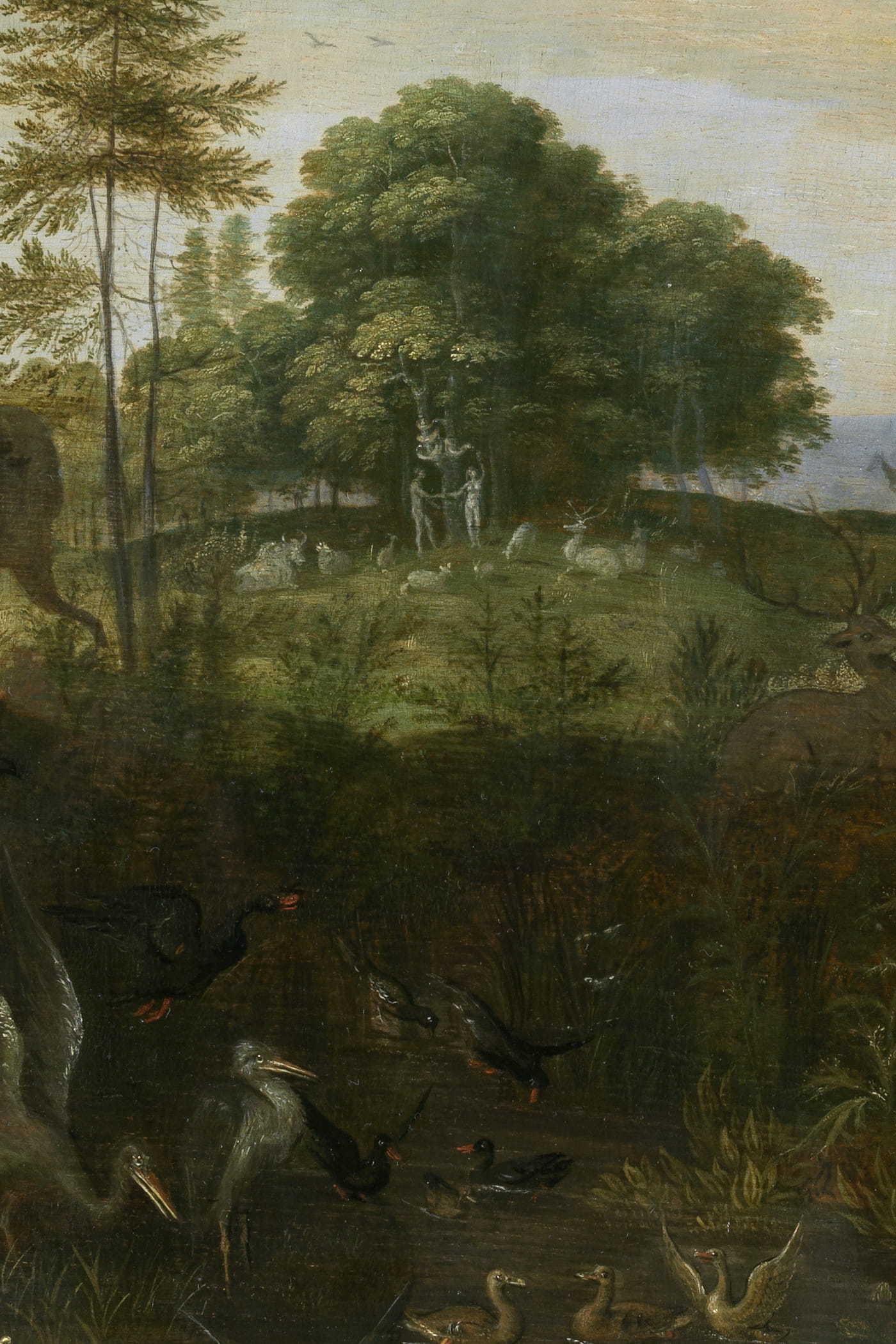
Back to Methuselah is a five-part dramatic cycle by George Bernard Shaw, first published in 1921 and staged in 1922. Spanning from the Garden of Eden to the year 31,920 AD, the cycle unfolds across five self-contained but thematically linked plays: "In the Beginning," "The Gospel of the Brothers Barnabas," "The Thing Happens," "Tragedy of an Elderly Gentleman," and "As Far as Thought Can Reach." Shaw conceived the work as a "metabiological pentateuch," a secular scripture articulating his philosophy of Creative Evolution — the proposition that humanity must consciously will itself to live longer in order to acquire the wisdom necessary for civilized governance. The early parts satirize Edwardian political life through thinly veiled portraits of Lloyd George and Herbert Asquith, while the later parts envision a distant future in which long-lived humans shed bodily existence in favor of pure contemplation. Shaw regarded the cycle as his most ambitious work, a corrective to what he saw as the fatalistic determinism of Darwinian natural selection. Its literary significance lies in its fusion of Shavian wit, Bergsonian vitalism, and Nietzschean aspiration within a dramatic form that deliberately strains the limits of the stage.
Main themes in Back to Methuselah
Creative Evolution and the Life Force
Creative Evolution and the Life Force emerges as a defining element in Back to Methuselah, shaping character development.
Human longevity and political wisdom
Back to Methuselah thoughtfully explores human longevity and political wisdom through its central conflicts.
Disillusionment with democratic governance
Back to Methuselah thoughtfully explores disillusionment with democratic governance through its central conflicts.
Mortality and the transcendence of the body
In Back to Methuselah, mortality and the transcendence of the body provides a lens for understanding the story's core message.
Why Back to Methuselah is still relevant today
Back to Methuselah speaks directly to contemporary debates about human longevity, biotechnology, and the fitness of democratic institutions to manage long-term civilizational challenges. Shaw's satirical portraits of politicians incapable of thinking beyond the next election resonate in an era of short electoral cycles and climate policy failures. His speculation about radical life extension anticipates modern transhumanist discourse, while his critique of the gap between biological capacity and political wisdom remains pointed. The cycle also raises questions about what it means to be human when the body is transcended — territory now explored in artificial intelligence research and bioethics. Readers drawn to utopian and dystopian literature, political philosophy, or the history of evolutionary thought will find Shaw's arguments as provocative as they were in 1921. The full text is freely available on TextStack.
More by this author
Frequently Asked Questions
What is Back to Methuselah about?
Back to Methuselah is a five-part play cycle by George Bernard Shaw that follows humanity from the Garden of Eden to the year 31,920 AD. Its central argument is that human beings must evolve to live for centuries rather than decades in order to develop the wisdom required to govern themselves and survive as a civilization. Each part dramatizes a different stage of this evolutionary journey, blending political satire, philosophical dialogue, and speculative fiction.
Is Back to Methuselah difficult to read?
The cycle is lengthy and demands patience, as Shaw prioritizes philosophical argument over dramatic action. Individual parts vary in accessibility: the early parts, set in recognizable historical periods, are more immediately engaging, while the final part — set in the remote future — is more abstract and overtly didactic. Readers familiar with Shaw's other plays, or with the ideas of Bergson and Lamarck, will find the arguments easier to follow. The full text is available to read free on TextStack.
How long does it take to read Back to Methuselah?
Back to Methuselah is one of the longest dramatic works in the English language, running to roughly 250,000 words across its five parts. Reading the complete cycle typically takes between twelve and twenty hours depending on pace. Each part can also be read independently, making it practical to approach the cycle in stages over several sessions on TextStack.
What are the main themes in Back to Methuselah?
The central themes include Creative Evolution and Shaw's concept of the Life Force as a purposive drive in nature; the relationship between human longevity and political wisdom; disillusionment with parliamentary democracy and its inability to address long-term problems; the conflict between bodily existence and intellectual or spiritual development; and the ultimate transcendence of matter in favor of pure thought. Shaw weaves these themes through satire, prophecy, and philosophical dialogue across the five parts of the cycle.