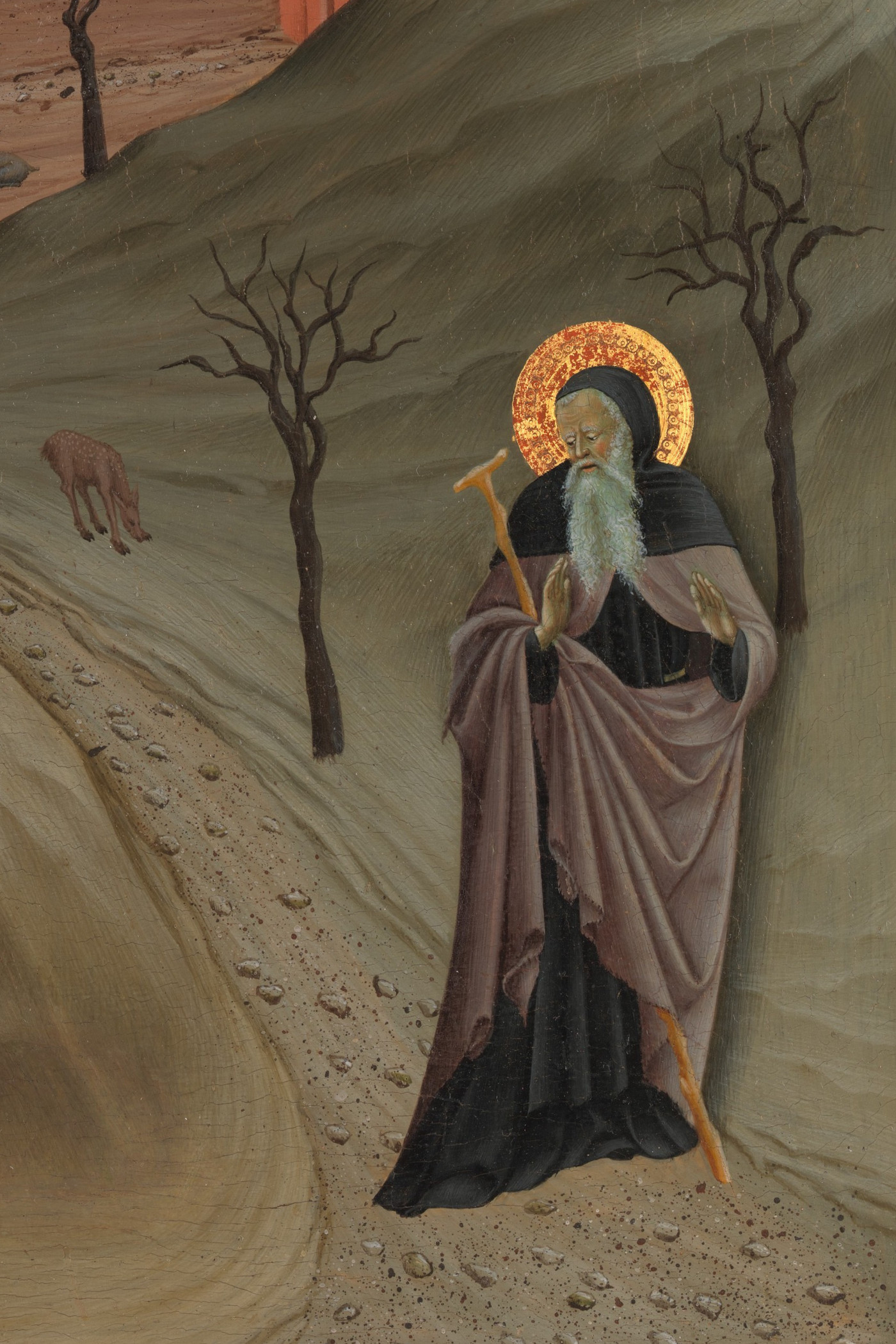
Barlaam and Ioasaph
What is Barlaam and Ioasaph about?
Barlaam and Ioasaph is a medieval hagiographic novel, likely composed in Greek between the eighth and eleventh centuries, though long attributed to Saint John of Damascus. The narrative follows Ioasaph, a prince of India whose father, a pagan king, attempts to shield him from Christianity after court astrologers prophesy his conversion. Despite confinement to a royal palace, Ioasaph encounters suffering, old age, and death, and is eventually sought out by the Christian hermit Barlaam, who instructs him through parables and theological argument. Ioasaph converts, renounces his throne, and ultimately withdraws into the desert to live as an ascetic. The text draws heavily on the legendary biography of the Buddha — the protected prince, the awakening encounters, the renunciation — transposing that framework into a Christian theological context. It incorporates a rich collection of parables, some traceable to Sanskrit and Syriac antecedents, making it a significant document in the transmission of Eastern narrative traditions to medieval Europe. The work functioned both as devotional literature and as a vehicle for systematic Christian apologetics, presenting arguments against polytheism and in favor of monastic virtue. Ioasaph was venerated as a saint in both Eastern and Western churches, with a feast day still observed in some traditions.
Main themes in Barlaam and Ioasaph
Conversion and spiritual awakening
Conversion and spiritual awakening emerges as a defining element in Barlaam and Ioasaph, shaping character development.
Renunciation and ascetic withdrawal
The theme of renunciation and ascetic withdrawal weaves through Barlaam and Ioasaph, adding depth to its narrative.
Royal duty versus religious vocation
The theme of royal duty versus religious vocation weaves through Barlaam and Ioasaph, adding depth to its narrative.
The transmission of wisdom through parable
In Barlaam and Ioasaph, the transmission of wisdom through parable provides a lens for understanding the story's core message.
Why Barlaam and Ioasaph is still relevant today
Barlaam and Ioasaph occupies a singular position in world literary history as a documented pathway by which Buddhist narrative traditions entered Christian Europe. Scholars tracing the migration of story forms — parables, frame tales, didactic fiction — regard it as essential evidence of pre-modern cross-cultural transmission across Indian, Arabic, Georgian, and Greek literary spheres. For contemporary readers, the text offers insight into how religious traditions borrow and reframe one another's founding stories, a question with obvious relevance to interfaith dialogue and comparative religion. Its parables remain accessible and rhetorically effective, and the central theme of a sheltered individual awakening to mortality and meaning resonates independently of any doctrinal context. The novel also anticipates conventions of spiritual autobiography and the bildungsroman. Readers interested in medieval literature, the history of Christianity, or the global circulation of narrative forms will find it a rewarding primary source, available in full on TextStack.
More by this author

Frequently Asked Questions
What is Barlaam and Ioasaph about?
Barlaam and Ioasaph tells the story of an Indian prince named Ioasaph who, despite being raised in isolation by his pagan father to prevent his exposure to Christianity, is converted by a wandering monk named Barlaam. The narrative follows his spiritual education through parables and theological dialogue, his eventual rejection of his throne, and his life as a Christian ascetic. Scholars have noted that the plot closely parallels legendary accounts of the life of the Buddha.
Is Barlaam and Ioasaph difficult to read?
The text is written in a formal, ecclesiastical register that reflects its medieval Greek origins and the conventions of hagiographic literature. Modern English translations are generally readable, though the extended theological arguments and allegorical parables require some patience. Readers familiar with medieval devotional prose or classical apologetics will find the style familiar. The embedded parables are self-contained and often accessible on their own terms.
How long does it take to read Barlaam and Ioasaph?
The full text runs to roughly 150,000 words in English translation, which places it in the range of a substantial novel. A typical reader can expect to spend eight to twelve hours reading it cover to cover. The episodic structure — organized around distinct parables and dialogues — also makes it suitable for reading in shorter sessions. The complete text is freely available on TextStack.
What are the main themes in Barlaam and Ioasaph?
The central themes include conversion and spiritual awakening, the conflict between worldly power and religious vocation, the value of ascetic self-discipline, and the use of parable as a vehicle for moral and theological instruction. The text also engages with questions of mortality, the transience of earthly pleasure, and the nature of wisdom — themes that connect it both to Christian monastic literature and to the Buddhist narrative traditions from which parts of the story derive.