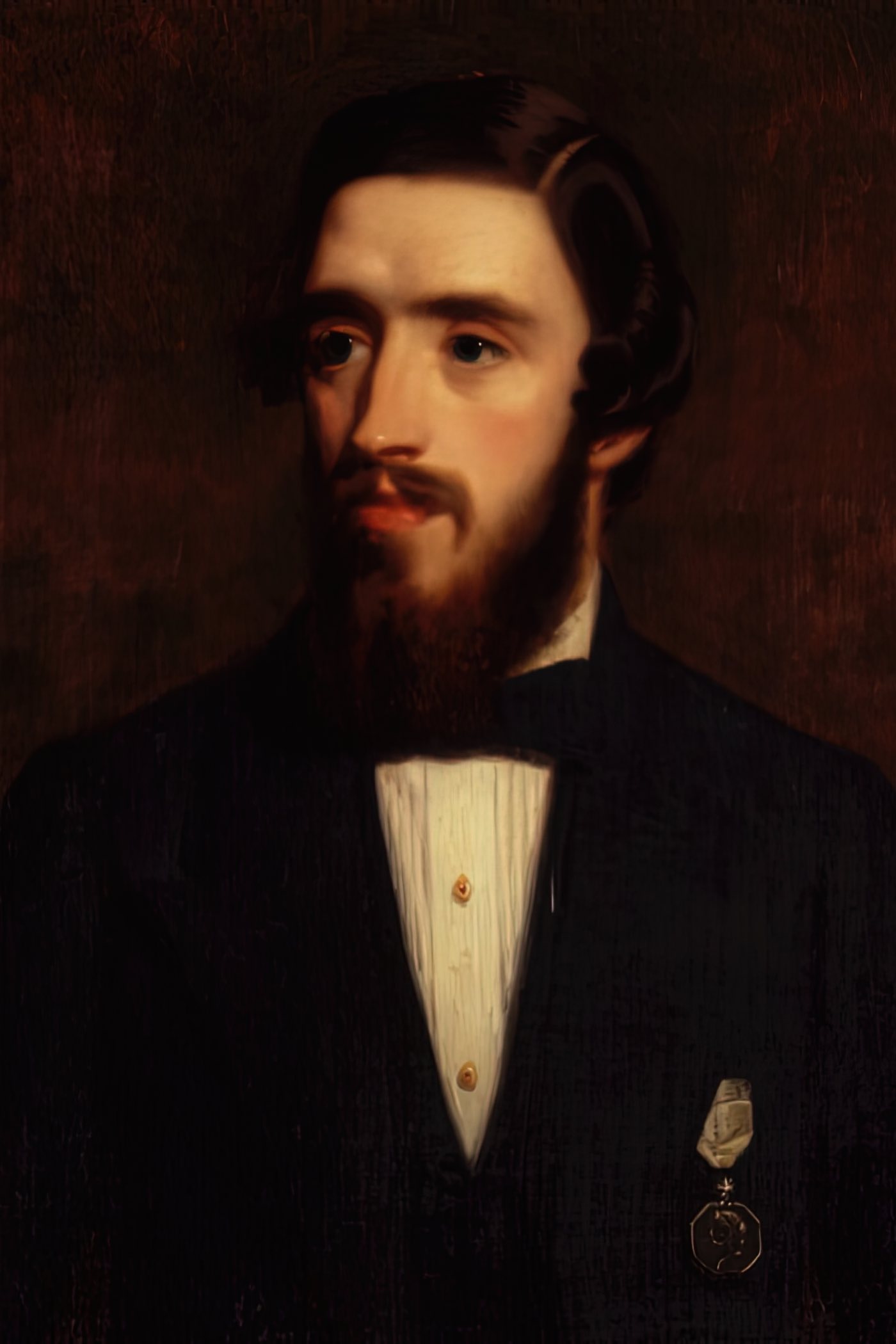
Daniel Deronda
What is Daniel Deronda about?
Daniel Deronda , published in 1876, was George Eliot’s last novel. It deals with two major characters whose lives intersect: One is a spoiled young woman named Gwendolen Harleth who makes an unwise marriage to escape impending poverty; the other is the titular character, Daniel Deronda, a wealthy young man who feels a mission to help the suffering. During her childhood Gwendolen’s family was well-off. She lived in comfort and was indulged and pampered. But the family’s fortune is lost through an unwise investment, and she returns to a life of near-poverty, a change which she greatly resents both for herself and for her widowed mother. The only escape seems to be for her to marry a wealthy older man who has been courting her in a casual, unemotional way. The marriage turns out to be a terrible mistake. Daniel Deronda has been raised by Sir Hugo Mallinger as his nephew, but Daniel has never discovered his true parentage, thinking it likely that he is Sir Hugo’s natural son. This consciousness of his probable illegitimacy moves him to kindness and tolerance towards anyone who is suffering from disadvantage. One evening, while rowing on the river Thames, he spots a young woman about to leap into the water to drown herself. He persuades her instead to come with him for shelter to a family he knows. The young woman turns out to be Jewish, and through his trying to help her find her lost family, Deronda comes into contact with Jewish culture—and in particular with a man named Mordecai, who has a passionate vision for the future of the Jewish race and who sees in Daniel a kindred spirit. The paths that Gwendolen and Daniel follow intersect often, and Daniel’s kindly nature moves him to try to offer her comfort and advice in her moments of distress. Unsurprisingly, Gwendolen misinterprets Daniel’s attentions. In Daniel Deronda Eliot demonstrates considerable sympathy towards the Jewish people, their culture, and their aspirations for a national homeland. At the time this was an unpopular and even controversial view. A foreword in this edition reproduces a letter Evans wrote to Harriet Beecher Stowe, defending her stance in this regard. Nevertheless, the novel was a success, and was translated almost immediately into German and Dutch. It is considered to have had a positive influence on Zionist thinkers. Daniel Deronda has been adapted both for film and television, with the 2002 B.B.C. series winning several awards.
Main themes in Daniel Deronda
Jewish identity
Jewish identity emerges as a defining element in Daniel Deronda, shaping character development.
Women and marriage
Women and marriage emerges as a defining element in Daniel Deronda, shaping character development.
Moral awakening
The theme of moral awakening weaves through Daniel Deronda, adding depth to its narrative.
Nationalism and belonging
Daniel Deronda thoughtfully explores nationalism and belonging through its central conflicts.
Why Daniel Deronda is still relevant today
Daniel Deronda (1876) is Eliot's final and most ambitious novel, combining the story of the beautiful gambler Gwendolen Harleth with Daniel Deronda's discovery of his Jewish heritage. The Jewish storyline, unprecedented in English fiction, explores identity, nationalism, and spiritual purpose. The novel's scope and seriousness make it a fitting conclusion to Eliot's career, though its dual structure has divided readers.
More by this author
Frequently Asked Questions
What is Daniel Deronda about?
Two interweaving stories: Gwendolen Harleth, a beautiful but self-absorbed woman who makes a disastrous marriage, and Daniel Deronda, who discovers his Jewish heritage and finds purpose in Jewish nationalism. Their lives intersect as Daniel becomes Gwendolen's moral guide.
Why was the Jewish storyline significant?
It was unprecedented—serious, sympathetic treatment of Jewish characters and culture in English fiction. Eliot researched extensively and supported Jewish nationalism before the term Zionism existed.
Why do some readers prefer only the Gwendolen sections?
The Gwendolen storyline offers brilliant psychological portraiture in Eliot's finest manner. Some find the Daniel sections more didactic and less dramatically compelling, leading to editions that excerpt only Gwendolen's story.
How does this compare to Middlemarch?
It's more uneven but also more ambitious in tackling Jewish identity and nationalism. The Gwendolen sections match Middlemarch's psychological depth, while the Daniel sections pursue larger historical and spiritual themes.