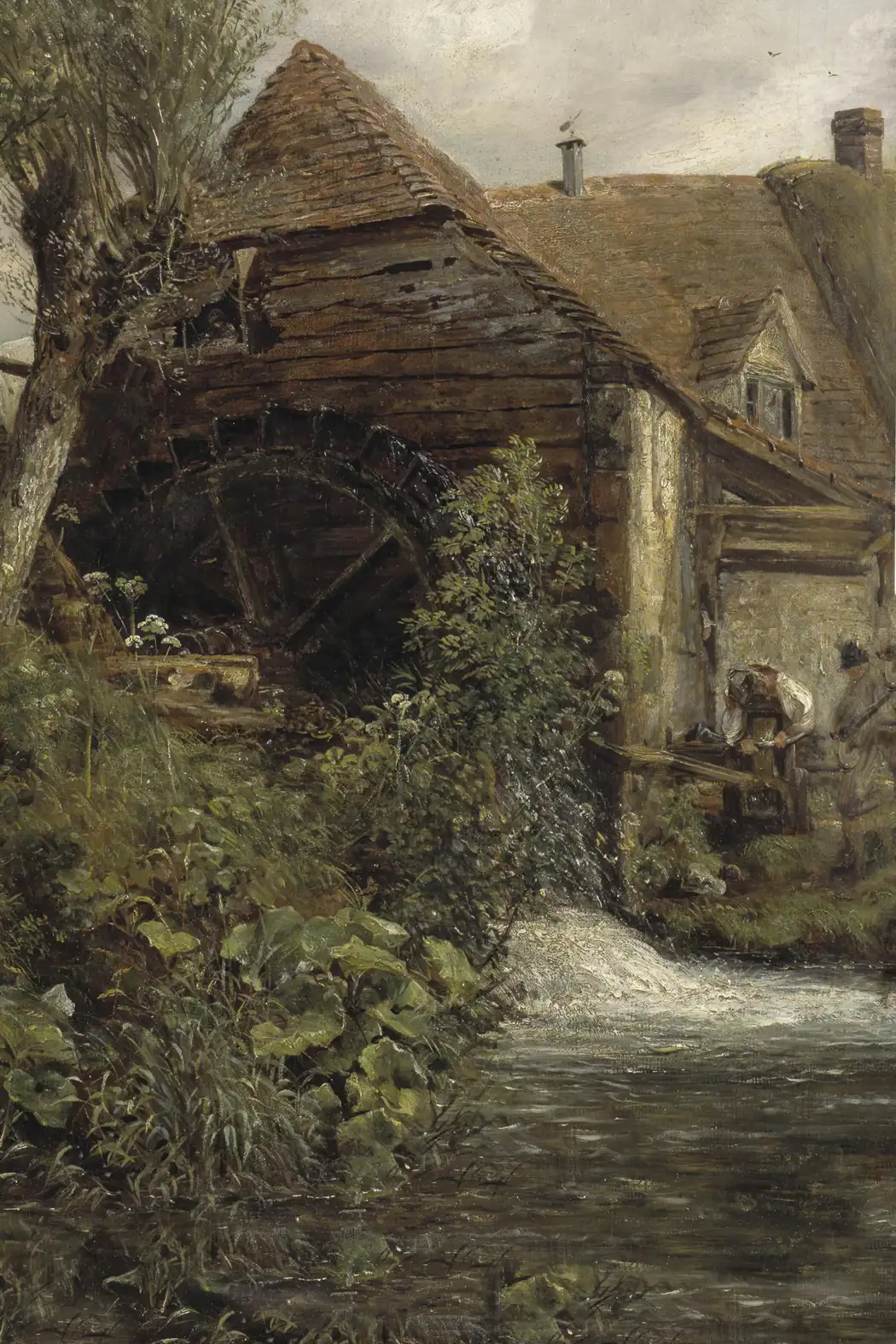
The Mill on the Floss
What is The Mill on the Floss about?
Published in 1860, The Mill on the Floss was the second novel published by George Eliot (the pen name of Mary Ann Evans). Set in the late 1820s or early 1830s, it tells the story of two young people, Tom and Maggie Tulliver, from their childhood into early adulthood. Their father, Jeremy Tulliver, owns Dorlcote Mill on the river Floss, and the children grow to adolescence in relative comfort. However Mr. Tulliver is litigious and initiates an unwise legal suit against a local solicitor, Mr. Wakem. The suit is thrown out and the associated costs throw the Tulliver family into poverty, and they lose possession of the mill. The main character of the novel is Maggie Tulliver, an intelligent and passionate child and young woman, whose mental, romantic, and moral struggles we follow closely. As in Eliot’s other novels, the author shows a realistic and sympathetic understanding of human behavior. The Mill on the Floss is regarded as a classic of English literature, and has been made into both a film and a television series.
Main themes in The Mill on the Floss
Women's limited choices
The theme of women's limited choices weaves through The Mill on the Floss, adding depth to its narrative.
Childhood and memory
In The Mill on the Floss, childhood and memory provides a lens for understanding the story's core message.
Provincial narrow-mindedness
Provincial narrow-mindedness emerges as a defining element in The Mill on the Floss, shaping character development.
Sibling bonds
The presence of sibling bonds in The Mill on the Floss connects readers to its enduring relevance.
Why The Mill on the Floss is still relevant today
The Mill on the Floss (1860) is Eliot's most autobiographical novel, following Maggie Tulliver from childhood to tragic young womanhood in provincial England. Maggie's intelligence and passion clash with the narrow expectations for women of her class and time. The novel's vivid childhood scenes, psychological depth, and controversial ending make it one of the great Victorian explorations of a woman's inner life.
More by this author
Frequently Asked Questions
What is The Mill on the Floss about?
Maggie Tulliver grows up at Dorlcote Mill with her beloved brother Tom. Her intelligence and emotional nature find no acceptable outlet in provincial society. As an adult, her romantic choices lead to social ruin and tragedy.
Is this autobiographical?
Substantially—Eliot drew on her own Midlands childhood, her close relationship with her brother Isaac (who rejected her over her unconventional life), and her sense of being an intelligent woman in a restricting society.
Why is the ending controversial?
The flood that drowns Maggie and Tom has struck some readers as melodramatic and too convenient. Others see it as the only possible resolution for Maggie's impossible situation—death uniting her with Tom when life could not.
How does Maggie compare to other Victorian heroines?
Maggie's inner life—her conflicts between desire and duty, her intellectual hunger—is portrayed with unusual depth. Eliot shows her limitations as social constraints rather than personal failings.