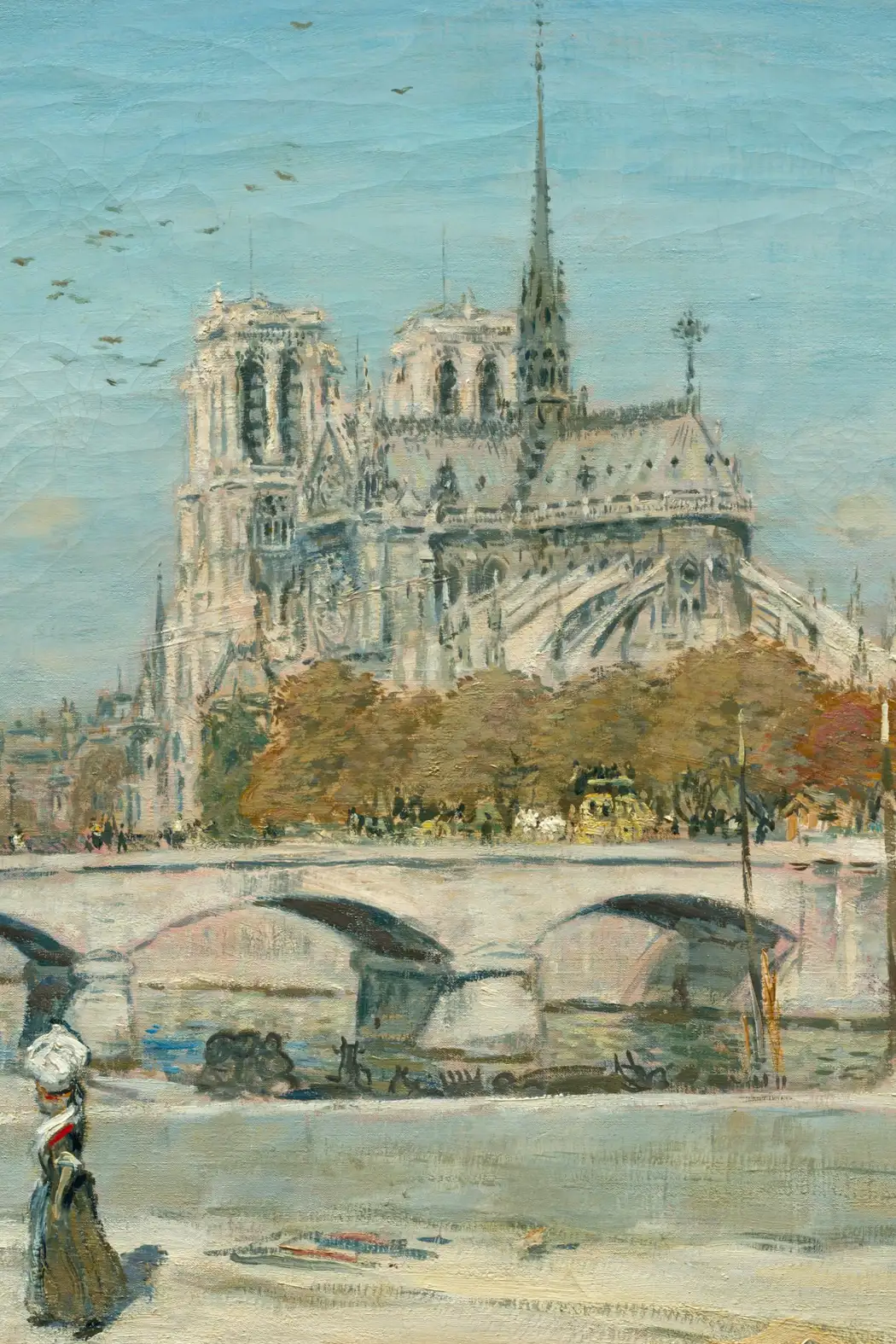
Notre-Dame de Paris
What is Notre-Dame de Paris about?
Esmeralda is a breathtaking beauty and attracts the attention of men all around her, including an actor, a captain, and an archdeacon, to whom she is of course forbidden. But because of a kindness she paid to him, there is one whose love for her is pure: the archdeacon’s bellringer. The actions of the archdeacon, who cannot control his lust for the young woman, ultimately draws all four men into her orbit, and his, with tragic consequences. Hugo’s tragic novel is an ode to gothic architecture in general and that of Notre-Dame de Paris in particular. Hugo was upset both at the neglect of buildings like Notre-Dame, and the modernization of those that weren’t being neglected. By centering on the building, he was able to bring all classes into his story: from kings and nobles to bellringers and sewer rats. The first American translation changed the title to “The Hunchback of Notre Dame,” shifting attention to the bellringer, but Hugo’s focus was always on Notre-Dame and the beautiful gothic architecture of Paris.
Main themes in Notre-Dame de Paris
Gothic architecture
In Notre-Dame de Paris, gothic architecture provides a lens for understanding the story's core message.
Beauty and ugliness
The presence of beauty and ugliness in Notre-Dame de Paris connects readers to its enduring relevance.
Obsession and desire
In Notre-Dame de Paris, obsession and desire provides a lens for understanding the story's core message.
Sanctuary and persecution
In Notre-Dame de Paris, sanctuary and persecution provides a lens for understanding the story's core message.
Why Notre-Dame de Paris is still relevant today
Notre-Dame de Paris (The Hunchback of Notre Dame) is a Gothic masterpiece centered on the medieval cathedral, bringing together the deformed bellringer Quasimodo, the beautiful Esmeralda, and the obsessed archdeacon Frollo. Hugo wrote partly to save Gothic architecture from destruction, making the cathedral itself a character.
More by this author
Frequently Asked Questions
What is Notre-Dame de Paris about?
In 15th-century Paris, Quasimodo, the deaf hunchback bellringer of Notre-Dame, loves the Romani dancer Esmeralda. His adoptive father, Archdeacon Frollo, also desires her destructively. The cathedral witnesses their tragic fates.
Is this the same as The Hunchback of Notre Dame?
Yes, English translations use that title. The original French title emphasizes the cathedral, which Hugo considered the true protagonist. He wrote to advocate for preserving Gothic architecture then threatened with demolition.
How does the novel differ from Disney's version?
Hugo's novel is dark and tragic—almost everyone dies, including Esmeralda. There's no happy ending. Frollo is a priest (changed to a judge in Disney). The novel is adult Gothic tragedy, not children's entertainment.
Did Hugo save Notre-Dame Cathedral?
Hugo's novel sparked interest in Gothic architecture and contributed to preservation efforts. The restoration campaign he inspired helped save Notre-Dame and other medieval buildings. His advocacy for the cathedral was deliberate and effective.