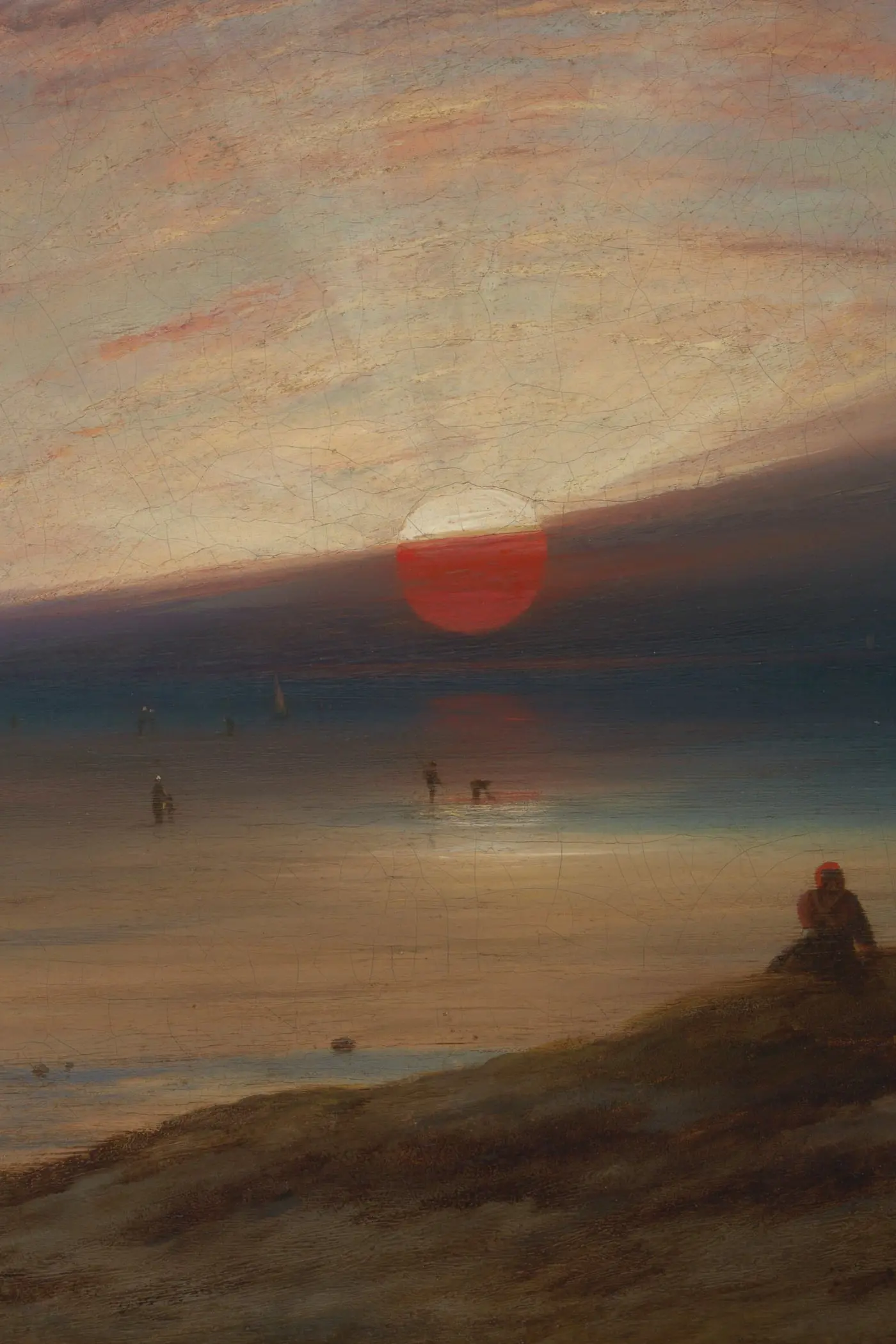
Toilers of the Sea
What is Toilers of the Sea about?
Gilliat is an accomplished sailor, but due to a mysterious mother and a home locally regarded as haunted, his acceptance into Guernsey society is limited. That isolation doesn’t stop him from falling for Déruchette, the “neat and delicate and pretty” niece of local ferry-owner Mess Lethierry. When the ship is involved in a catastrophic incident, Déruchette announces that she will marry the man who can salvage it; Gilliat immediately steps forwards to take on, alone, the impossible task. Victor Hugo wrote Toilers of the Sea while living on Guernsey, in the Channel Islands. It followed his extremely successful novel Les Misérables , both written there after exile from France for criticizing Napoleon’s 1851 coup d’état. The themes of individual struggle and triumph over the wild forces of nature are easily seen as a corollary for the industrialization happening in the society of the time, but the novel also records the contemporary life, language, and superstitions of the Channel Islands. The edition is based on the authorized translation of 1877 by William Moy Thomas.
Main themes in Toilers of the Sea
Man versus sea
The theme of man versus sea weaves through Toilers of the Sea, adding depth to its narrative.
Heroic labor
Heroic labor emerges as a defining element in Toilers of the Sea, shaping character development.
Love and sacrifice
Toilers of the Sea thoughtfully explores love and sacrifice through its central conflicts.
Channel Islands life
The presence of channel islands life in Toilers of the Sea connects readers to its enduring relevance.
Why Toilers of the Sea is still relevant today
Toilers of the Sea is Hugo's sea epic, pitting fisherman Gilliatt against ocean and octopus in a monumental struggle. Less famous than his Paris novels, it showcases Hugo's romantic vision of individual heroism against nature. The novel's famous octopus battle influenced later sea literature.
More by this author
Frequently Asked Questions
What is Toilers of the Sea about?
Fisherman Gilliatt undertakes impossible salvage of a ship's engine to win Déruchette, whom he loves. Working alone against storms, tides, and a giant octopus, he succeeds heroically—but the ending brings unexpected tragedy.
Why did Hugo write about the Channel Islands?
Hugo lived in exile on Guernsey when he wrote Toilers of the Sea. The novel reflects his intimate knowledge of island life, sea conditions, and fishing communities. He dedicated it to the island that sheltered him.
How does Toilers of the Sea compare to Hugo's other novels?
It's shorter and more focused than Les Misérables, with fewer social digressions. The sea and one man's labor replace Paris and its masses. It's Hugo's most concentrated study of individual heroism.
What is the octopus scene?
Gilliatt battles a giant octopus (devilfish) in one of literature's most famous action sequences. Hugo's detailed, horrifying description influenced later sea monsters. The scene exemplifies his ability to make nature terrifyingly vivid.