Personal Recollections of Joan of Arc
What is Personal Recollections of Joan of Arc about?
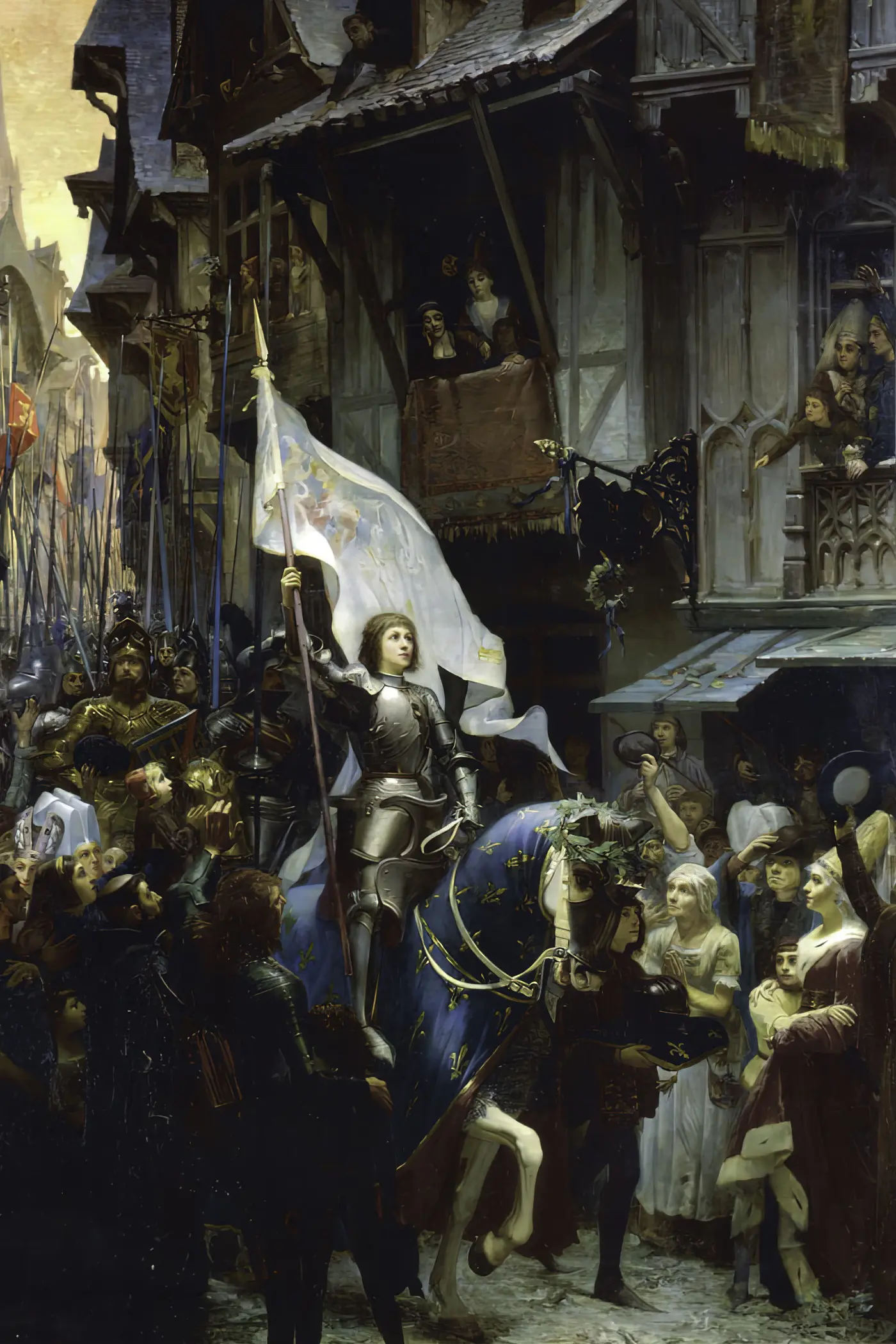
The essential facts regarding Joan of Arc are well known. A young teenage girl hears voices that tell her she will deliver France from England’s oppression during the Hundred Years War. She manages to take her message to the dauphin, who after some persuasion places her at the head of his army. That army promptly lifts the siege of Orléans, throws the English out of the Loire valley, hands them another significant defeat at Patay, and marches all the way to Reims, where the dauphin is crowned King Charles VII. After an ill-advised and short-lived truce, Joan is captured by the Burgundians—French nobility who have aligned themselves with the English—and they try her for heresy and burn her at the stake. Twain first became fascinated with Joan as a teenager. When he finally decided to write a book about her, he researched it for a dozen years and spent two more years writing it. It was, in his words, “the best of all my books,” and became his last finished novel. Although a work of fiction, Twain’s research was time well spent: the known facts of Joan’s life, and especially the trial, are very accurate in their depiction. To tell Joan’s story, Twain invented a memoirist, Louis de Conte, a fictionalized version of her real-life page, Louis de Contes. Twain has the fictional de Conte grow up with Joan, and so he is able to tell her story from her early childhood all the way through the trial and execution. The result is the story of one of the great women in history told by one of history’s great storytellers.
Main themes in Personal Recollections of Joan of Arc
Faith and martyrdom
In Personal Recollections of Joan of Arc, faith and martyrdom provides a lens for understanding the story's core message.
Heroism and sacrifice
Personal Recollections of Joan of Arc thoughtfully explores heroism and sacrifice through its central conflicts.
Institutional corruption
Personal Recollections of Joan of Arc thoughtfully explores institutional corruption through its central conflicts.
Gender and power
Personal Recollections of Joan of Arc thoughtfully explores gender and power through its central conflicts.
Why Personal Recollections of Joan of Arc is still relevant today
Personal Recollections of Joan of Arc was Twain's favorite among his works, a serious historical novel quite different from his humorous reputation. His reverent treatment of Joan as a genuine heroine reflects deep research and sincere admiration. The novel explores faith, nationalism, and the tragedy of a young woman destroyed by corrupt institutions.
More by this author

Frequently Asked Questions
What is Personal Recollections of Joan of Arc about?
The novel tells Joan of Arc's story through the fictional memoirs of her secretary, following her from peasant girl to military leader to martyr. Twain portrays her as genuinely holy and heroic, destroyed by corrupt churchmen and politicians.
Why did Twain write about Joan of Arc?
Twain considered it his best and most important work, researching it for twelve years. He admired Joan as a unique figure—a peasant girl who achieved military genius and spiritual authority, only to be betrayed by the institutions she served.
Is Personal Recollections of Joan of Arc historically accurate?
Twain researched extensively and follows the historical record closely. The fictional narrator, Sieur Louis de Conte, allows intimate access to Joan while maintaining historical events. It's considered among the more accurate Joan of Arc novels.
Is Joan of Arc different from other Mark Twain books?
Yes, it's earnest rather than satirical, reverent rather than irreverent. Some readers expecting Twain's humor are surprised by its serious treatment of faith and martyrdom. Twain published it anonymously initially, fearing readers wouldn't accept it from him.