Pudd’nhead Wilson
What is Pudd’nhead Wilson about?
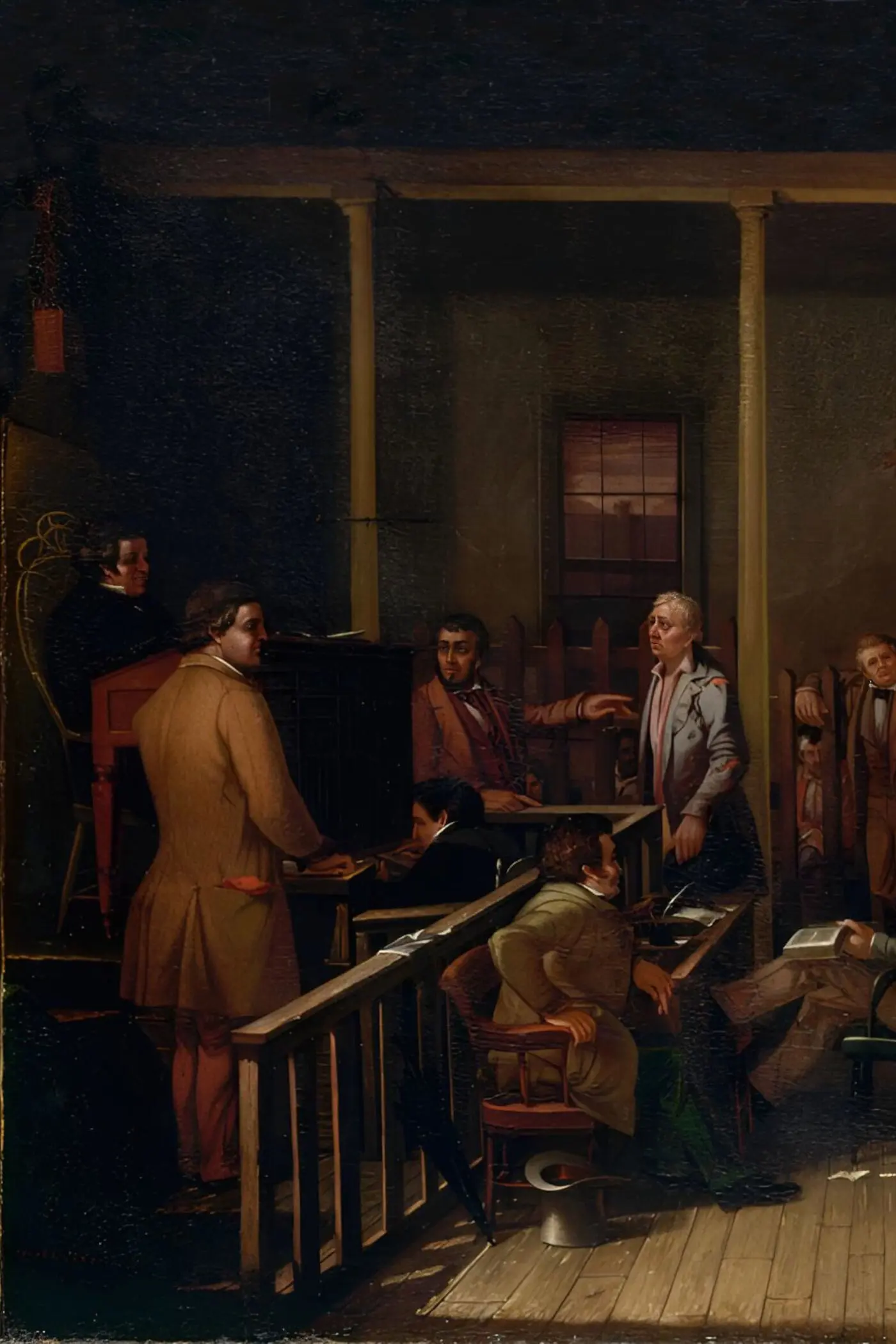
Pudd’nhead Wilson is a thought-provoking novel set in the fictional town of Dawson’s Landing, Missouri. The story revolves around the peculiar character of David Wilson, known as “Pudd’nhead” Wilson, a quirky and eccentric young lawyer with the unusual hobby of collecting fingerprints. As he experiments with this new forensic science, Wilson becomes entangled in the lives of two infants, Tom Driscoll, the son of a wealthy local family, and Chambers, a slave child. Due to a mix-up during infancy, the two boys’ lives take drastically different paths, with Tom growing up as the heir to a fortune, and Chambers living the life of a slave. The novel weaves a complex narrative that intertwines the lives of the two switched infants, the townspeople of Dawson’s Landing, and the enigmatic Wilson. Twain’s sharp wit and satirical prowess illustrates the story’s social commentary on race and the examination of the consequences of the switch. The characters face moral dilemmas, and as the story unfolds, the consequences of their actions come to a head in a dramatic and tragic climax. Pudd’nhead Wilson serves as a thought-provoking exploration of societal norms and the impact of identity on the human experience. It was first serialized in The Century Magazine in 1893–1894, then published as a book by Charles L. Webster & Co. in 1894.
Main themes in Pudd’nhead Wilson
Race and identity
Pudd’nhead Wilson thoughtfully explores race and identity through its central conflicts.
Nature versus nurture
The theme of nature versus nurture weaves through Pudd’nhead Wilson, adding depth to its narrative.
Slavery and its effects
Slavery and its effects emerges as a defining element in Pudd’nhead Wilson, shaping character development.
Justice and law
Justice and law emerges as a defining element in Pudd’nhead Wilson, shaping character development.
Why Pudd’nhead Wilson is still relevant today
Pudd'nhead Wilson is Twain's darkest examination of race in America, using a baby-switch plot to expose the arbitrary nature of racial categories. The novel's use of fingerprinting as plot device was groundbreaking. Its unflinching look at slavery's dehumanization and the "one drop rule" makes it essential reading on American racial history.
More by this author



Frequently Asked Questions
What is Pudd'nhead Wilson about?
A slave woman switches her light-skinned baby with her master's son to save him from being sold down the river. The switched boys grow up, one as slave, one as master. Years later, the truth is revealed through fingerprint evidence.
Why is it called Pudd'nhead Wilson?
David Wilson, a lawyer, is mockingly called "Pudd'nhead" (fool) by townspeople who don't understand his ironic humor. He collects fingerprints as a hobby, which eventually solves the mystery and vindicates his intelligence.
What does Pudd'nhead Wilson say about race?
The novel demonstrates that race is a social construction—the babies are identical, but upbringing determines their fates. It exposes how slavery corrupts everyone it touches and how racial categories are arbitrary and dehumanizing.
Is Pudd'nhead Wilson difficult to read?
The novel is shorter than Twain's major works and relatively straightforward. Its subject matter is serious—slavery, racism, murder—but Twain balances darkness with his characteristic wit and irony.