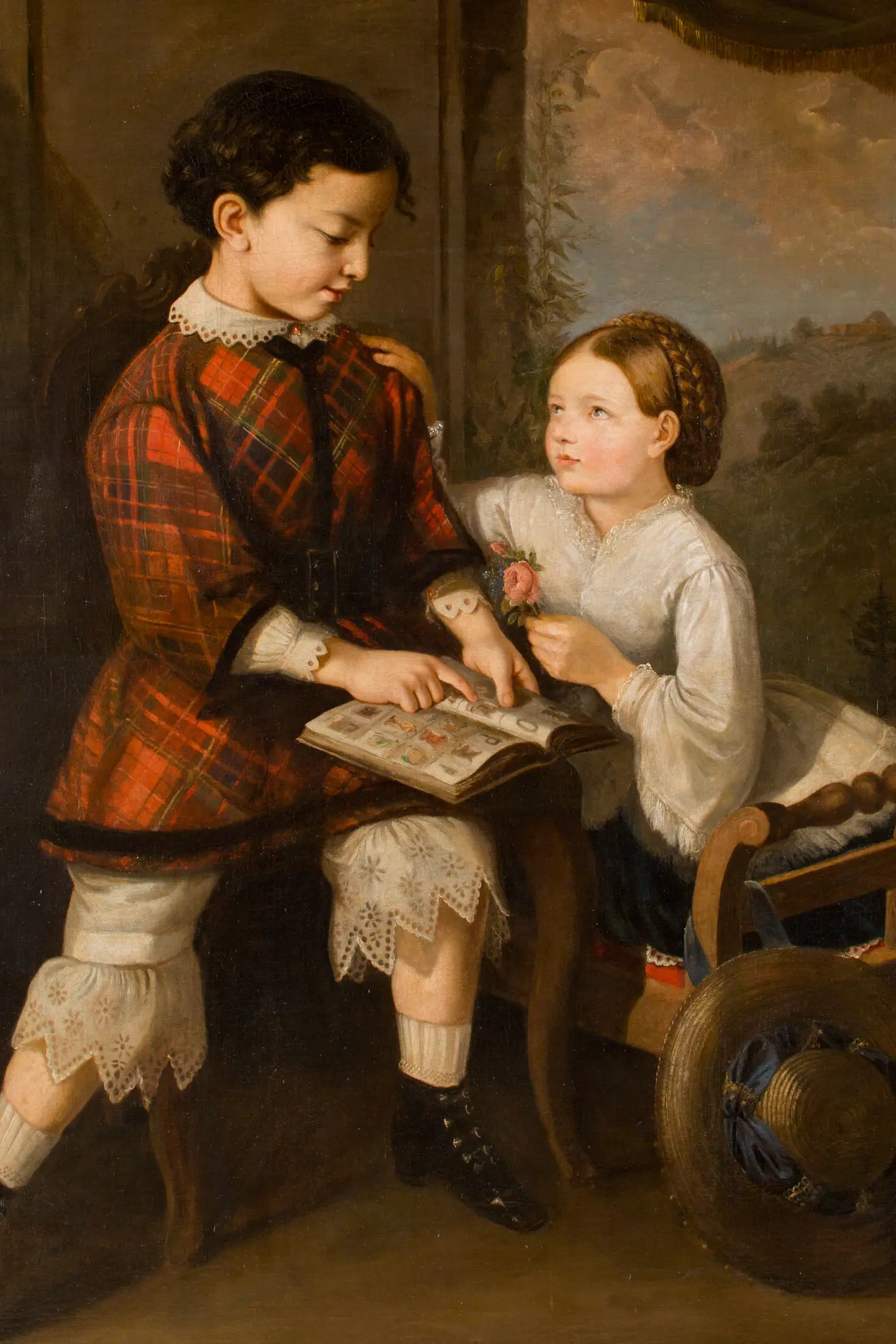
Sylvie and Bruno
What is Sylvie and Bruno about?
In Sylvie and Bruno , the titular characters serve as the connection between the novel’s two settings: Outland, a fictional land in which the children’s father is the Warden, and the real world, Victorian England. After their father is betrayed by their uncle, the family leaves their home and travels to different places to meet interesting and unusual characters. The part of the story set in England is social commentary, with the characters discussing philosophy, religion, morals, and economics. The part set in Outland is a fairy tale akin to Carroll’s much more popular works, Alice’s Adventures in Wonderland and Through the Looking-Glass . The novel is a combination of two previous published short stories, plus ideas Carroll had collected throughout the years. This pedigree results in a fairly scattered plot, and the book was not well received by contemporary critics or audiences.
Main themes in Sylvie and Bruno
Fantasy and fairy tales
The theme of fantasy and fairy tales weaves through Sylvie and Bruno, adding depth to its narrative.
Morality and ethics
The theme of morality and ethics weaves through Sylvie and Bruno, adding depth to its narrative.
Social satire
Sylvie and Bruno thoughtfully explores social satire through its central conflicts.
Imagination and reality
The presence of imagination and reality in Sylvie and Bruno connects readers to its enduring relevance.
Why Sylvie and Bruno is still relevant today
Sylvie and Bruno remains relevant for readers interested in the evolution of fantasy literature and Lewis Carroll’s later ideas on morality, logic, and society. The novel explores themes such as responsibility, compassion, and the contrast between idealism and reality, offering insight into Victorian thought while showcasing Carroll’s imaginative style beyond Alice in Wonderland.
More by this author
Frequently Asked Questions
What is Sylvie and Bruno about?
The novel follows the magical adventures of two children, Sylvie and Bruno, whose fairy-tale world intersects with Victorian England, blending fantasy with philosophical and moral reflections.
Who wrote Sylvie and Bruno?
Sylvie and Bruno was written by Lewis Carroll, the author of Alice’s Adventures in Wonderland.
Is Sylvie and Bruno similar to Alice in Wonderland?
While both books feature fantasy elements, Sylvie and Bruno is more philosophical and reflective, combining fairy-tale storytelling with social commentary and moral themes.
Is Sylvie and Bruno suitable for children?
The book contains fairy-tale elements suitable for children, but its philosophical discussions and social themes are often more appreciated by adult readers.