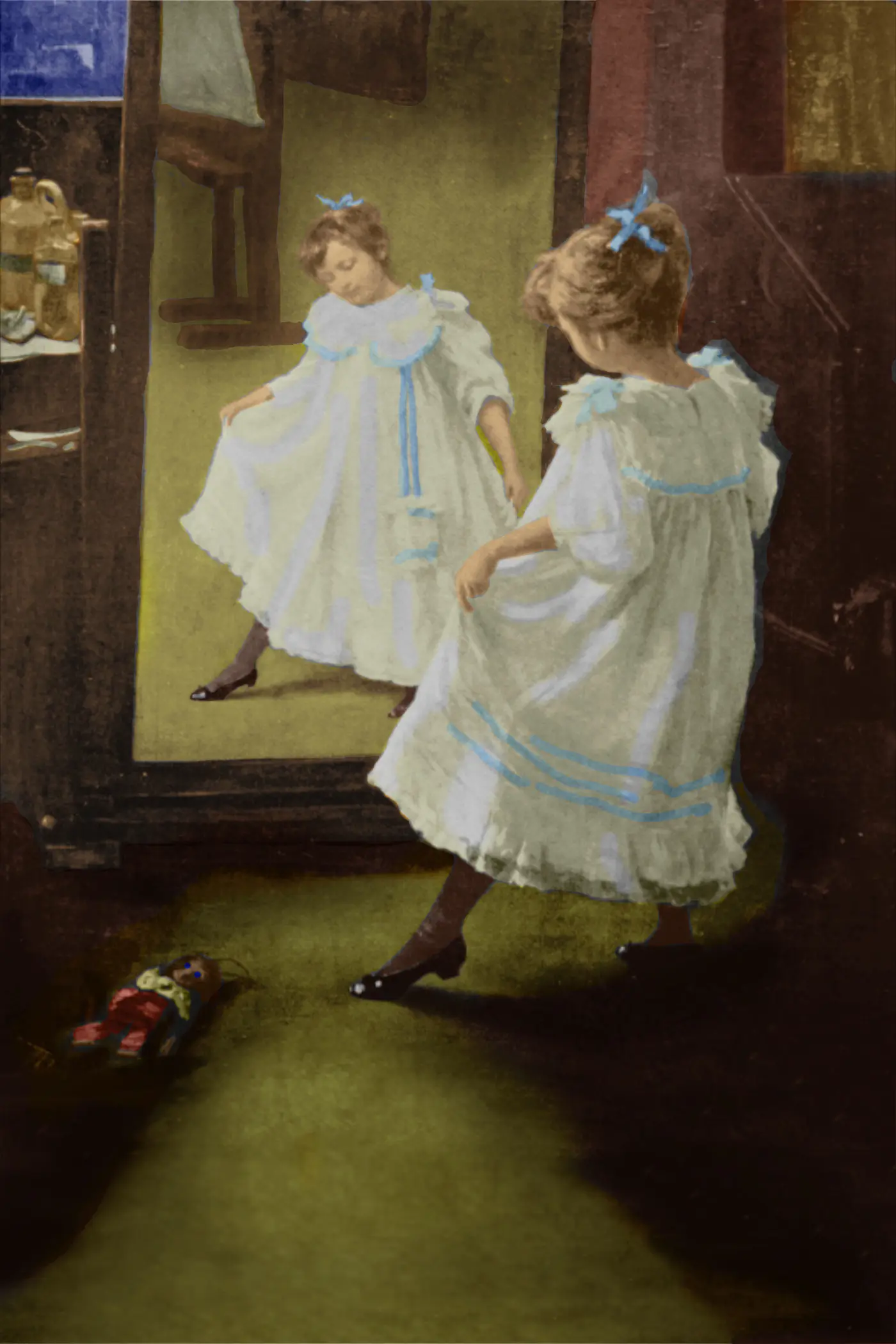
Through the Looking-Glass
What is Through the Looking-Glass about?
Alice dreams herself into a mirror version of Wonderland, a whimsical land of talking flowers, and chess pieces, and a fighting lion and unicorn, and crosses sections of a life-size chess board. Upon reaching the Eighth Square, she is crowned a queen and the Red and White Queens throw her her very own dinner party to celebrate. Through the Looking-Glass is a sequel to the wildly popular Alice’s Adventures in Wonderland , where Alice finds herself in a mirror image of Wonderland, instead based on a chess board rather than a deck of cards, meeting mirror copies of her old friends.
Main themes in Through the Looking-Glass
Mirror worlds and reversal
The presence of mirror worlds and reversal in Through the Looking-Glass connects readers to its enduring relevance.
Chess and game structure
The theme of chess and game structure weaves through Through the Looking-Glass, adding depth to its narrative.
Language and meaning
Language and meaning emerges as a defining element in Through the Looking-Glass, shaping character development.
Identity and transformation
Identity and transformation emerges as a defining element in Through the Looking-Glass, shaping character development.
Why Through the Looking-Glass is still relevant today
Through the Looking-Glass continues the surreal adventures of Alice, expanding the imaginative world Carroll created in Wonderland with chess-game structure and mirror-world logic. Its characters—Tweedledee and Tweedledum, Humpty Dumpty, the Red and White Queens—have become cultural icons. The poems "Jabberwocky" and "The Walrus and the Carpenter" are among the most quoted in English. Carroll's play with language, logic, and identity anticipates modernist experimentation while remaining accessible to readers of all ages.
More by this author
Frequently Asked Questions
What is Through the Looking-Glass about?
Alice climbs through a mirror into a world where everything is reversed. She becomes a pawn in a living chess game, meeting characters like Tweedledee and Tweedledum, Humpty Dumpty, and the Red and White Queens as she moves across the board to become a queen.
How does Looking-Glass relate to Wonderland?
It's a sequel, with Alice now slightly older. While Wonderland used card-game imagery, Looking-Glass uses chess. The mirror-world has its own logic of reversal and reflection. Both explore nonsense, identity, and growing up, but with different structural conceits.
What is 'Jabberwocky'?
A famous nonsense poem within the novel, using invented words ('brillig,' 'slithy,' 'mimsy') in recognizable syntax. Readers can follow its heroic narrative despite incomprehensible vocabulary. It's one of the most celebrated examples of literary nonsense.
Is Looking-Glass darker than Wonderland?
Some readers find it more melancholy. The chess structure is more rigid, and themes of mortality and loss (particularly in 'The White Knight's Song') emerge more strongly. Carroll wrote it during a period of personal difficulty.
How is language treated in the novel?
Carroll plays constantly with language, logic, and meaning. Humpty Dumpty insists words mean whatever he chooses; the Red Queen runs to stay in place. These games anticipate modernist concerns about language while remaining playfully accessible.