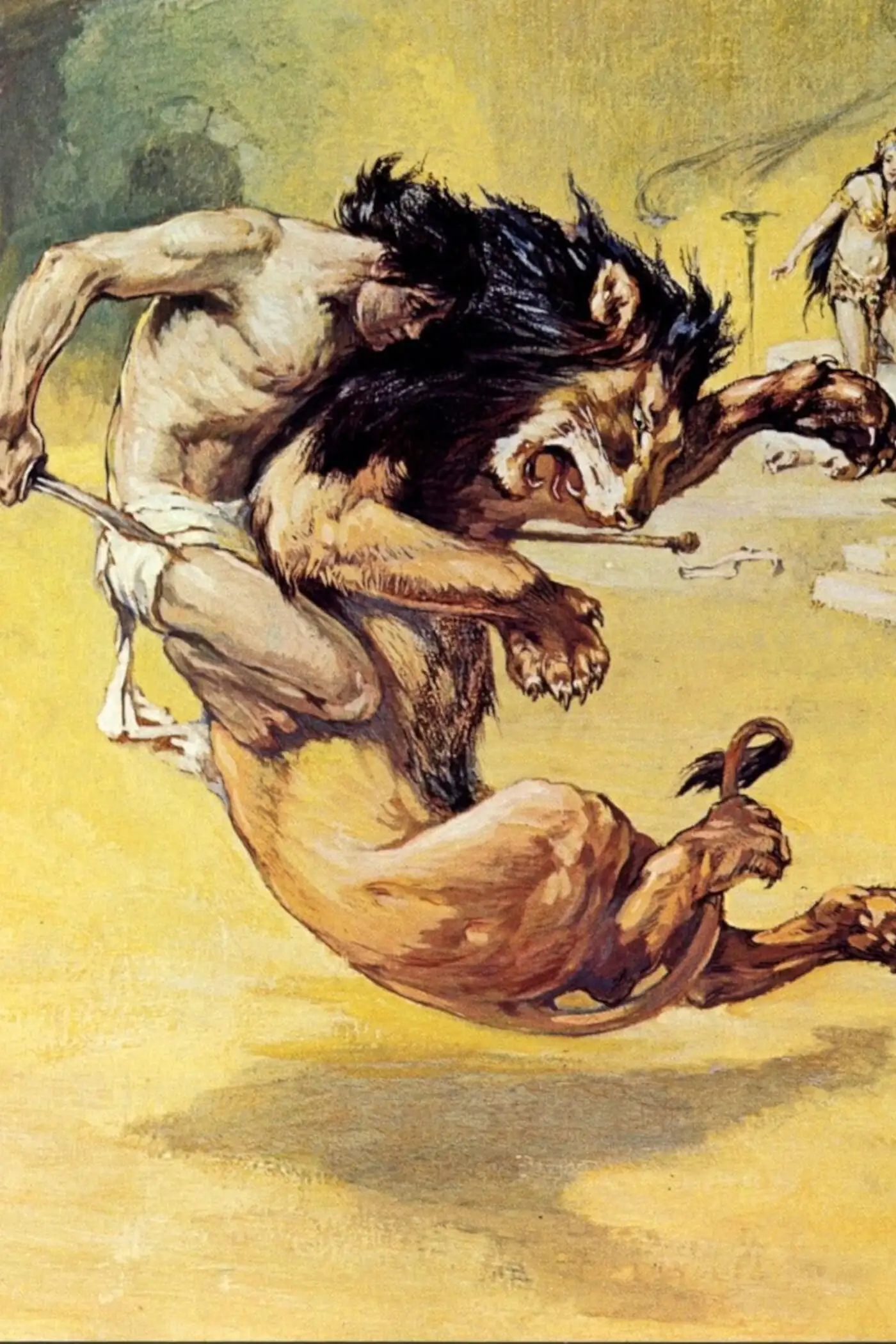
Tarzan and the Jewels of Opar
What is Tarzan and the Jewels of Opar about?
Tarzan and the Jewels of Opar, published in 1916, is the fifth novel in Edgar Rice Burroughs's Tarzan series. When financial ruin threatens the Greystoke estate, Tarzan returns to the lost city of Opar to replenish his supply of gold. However, a blow to the head during an earthquake robs him of his memory, reducing him to a feral state with no knowledge of his civilized life. Meanwhile, the Belgian villain Werper infiltrates Tarzan's expedition, stealing the precious jewels of Opar for his own gain. With Tarzan wandering the jungle as a mindless savage, Jane is left vulnerable to enemies, and the race for the jewels draws in Arab raiders, treacherous deserters, and the priestess La of Opar, who sees an opportunity to claim Tarzan for herself. Multiple factions pursue the treasure across the jungle in a complex web of betrayal and pursuit. Tarzan and the Jewels of Opar is a masterfully plotted adventure with multiple converging storylines, offering a fresh perspective on Tarzan by stripping away his civilized identity and exploring what remains.
Main themes in Tarzan and the Jewels of Opar
Memory, identity, and the feral self
Memory, identity, and the feral self emerges as a defining element in Tarzan and the Jewels of Opar, shaping character development.
The lure of treasure and its corrupting influence
Tarzan and the Jewels of Opar thoughtfully explores the lure of treasure and its corrupting influence through its central conflicts.
Lost cities and ancient mysteries
The presence of lost cities and ancient mysteries in Tarzan and the Jewels of Opar connects readers to its enduring relevance.
Betrayal and competing ambitions
The theme of betrayal and competing ambitions weaves through Tarzan and the Jewels of Opar, adding depth to its narrative.
Why Tarzan and the Jewels of Opar is still relevant today
Tarzan and the Jewels of Opar returns to the iconic lost city first introduced in The Return of Tarzan, deepening its mythology and the character of the priestess La. The amnesia plot device allows Burroughs to explore Tarzan's primal nature stripped of all civilized influence, raising questions about identity and what lies beneath learned behavior. The novel's multiple competing storylines make it one of the most intricately plotted in the series. As a public-domain work, it offers an exciting entry point for readers drawn to lost-city adventure and treasure-hunt narratives.
More by this author
Frequently Asked Questions
What is Tarzan and the Jewels of Opar about?
Tarzan returns to the lost city of Opar for gold but loses his memory after an earthquake. While he wanders as a feral savage, a villain steals the jewels of Opar, and multiple factions compete for the treasure as Jane faces danger without Tarzans protection.
Who is La of Opar?
La is the high priestess of the lost city of Opar, a beautiful and powerful woman who is obsessively in love with Tarzan. She rules over the degenerate descendants of ancient Atlanteans and appears in several Tarzan novels.
Does Tarzan lose his memory permanently?
No, Tarzans amnesia is temporary, caused by a head injury during an earthquake. His memory gradually returns over the course of the novel, though the period of feral existence creates significant complications.
What is the lost city of Opar?
Opar is a fictional lost city in the Tarzan series, said to be a colony of ancient Atlantis. It is filled with gold and treasure, ruled by the priestess La, and inhabited by degenerate beast-men.