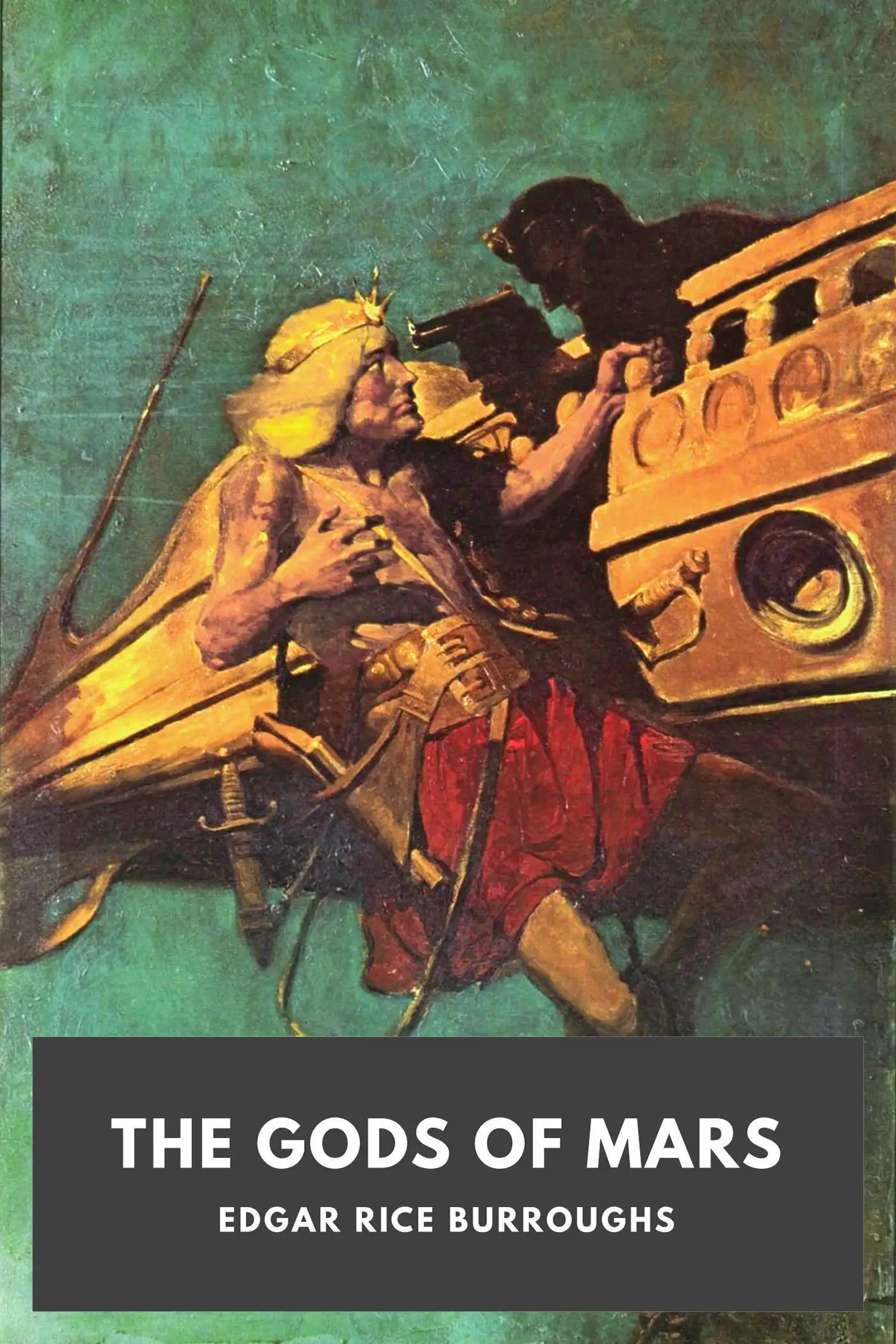
The Gods of Mars
What is The Gods of Mars about?
The Gods of Mars, published in 1913, is the second installment of Edgar Rice Burroughs's Barsoom series. After years of longing on Earth, John Carter is transported back to Mars, only to arrive in the Valley Dor, the Barsoomian paradise that awaits the dead. He quickly discovers that this supposed heaven is actually a deadly trap maintained by the Holy Therns, a race of white-skinned priests who exploit Barsoomian religious belief to enslave and devour pilgrims. Deeper still, Carter uncovers yet another layer of deception controlled by the black-skinned First Born and their cruel goddess Issus. Reunited with his Thark friend Tars Tarkas, Carter battles through underground rivers, hidden temples, and arenas of death while exposing the centuries-old religious fraud that has held all of Barsoom in thrall. The novel ends on a gripping cliffhanger as Dejah Thoris and two other women are sealed inside a slowly rotating prison from which only time can free them. The Gods of Mars deepens the mythology of Barsoom with its sharp critique of religious corruption and its relentless, suspenseful adventure.
Main themes in The Gods of Mars
Religious deception and institutional corruption
The theme of religious deception and institutional corruption weaves through The Gods of Mars, adding depth to its narrative.
The heros return and disillusionment
The presence of the heros return and disillusionment in The Gods of Mars connects readers to its enduring relevance.
Racial hierarchy and social stratification
The Gods of Mars thoughtfully explores racial hierarchy and social stratification through its central conflicts.
Friendship and loyalty across species
The theme of friendship and loyalty across species weaves through The Gods of Mars, adding depth to its narrative.
Why The Gods of Mars is still relevant today
The Gods of Mars is a key sequel in the Barsoom series that deepened Burroughs's fictional world and introduced themes of religious deception that were remarkably bold for 1913. The novel critiques blind faith and institutional corruption through adventure storytelling, making it relevant to readers interested in early science fiction's engagement with social themes. Its cliffhanger ending was groundbreaking for serial fiction and kept readers captivated across publications. As a public-domain classic, it remains an important work in the history of planetary romance.
More by this author
Frequently Asked Questions
What is The Gods of Mars about?
The Gods of Mars follows John Carters return to Barsoom, where he discovers that the planets religion is a massive fraud. The supposed paradise of the afterlife is actually a trap run by the Holy Therns, who enslave pilgrims. Carter must expose the deception while fighting to save his loved ones.
Is The Gods of Mars a sequel?
Yes, The Gods of Mars is the second book in Edgar Rice Burroughss Barsoom series, following A Princess of Mars. It was serialized in The All-Story magazine in 1913.
Does The Gods of Mars end on a cliffhanger?
Yes, the novel ends with one of the most famous cliffhangers in early science fiction. Dejah Thoris is sealed inside a slowly rotating prison that cannot be opened for one full Barsoomian year.
What themes does The Gods of Mars explore?
The novel explores themes of religious fraud, blind faith, racial hierarchy, and the courage required to challenge entrenched power structures, all wrapped in fast-paced adventure storytelling.