The Great Gatsby
What is The Great Gatsby about?
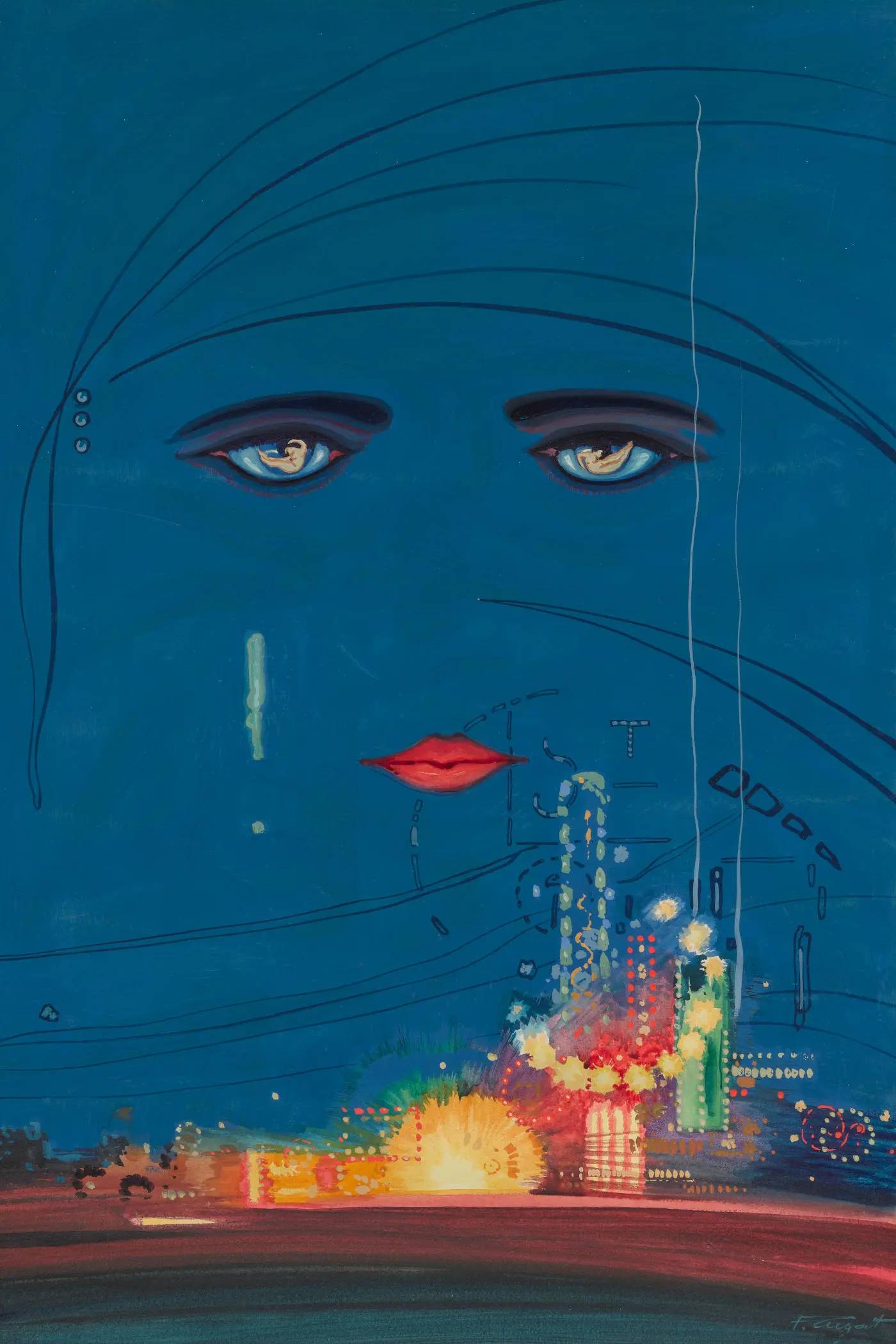
The Great Gatsby is a novel that needs no introduction for a certain generation of American readers. Long taught as required reading in American schools, critics have consistently held it up alongside Moby Dick , Huck Finn , and To Kill a Mockingbird as perhaps the quintessential Great American Novel. Nick Carraway is a young Midwestern man freshly arrived in New York to make his fortune. He rents a shabby apartment in Long Island next door to a sumptuous mansion: the home of the mysterious and wealthy Jay Gatsby. Carraway spends time catching up with his distant cousin Daisy and her industry-baron husband Tom before being invited to one of Gatsby’s wildly lavish weekend parties. There he meets Jordan, a flapper and a golf star, and an intricate web of romances and betrayals begins to unfold. The novel is a colorful study of America’s Jazz Age—a term said to be coined by Fitzgerald himself—complete with wealthy socialites living in hedonistic abandon, libertine flappers, jazz bands, roaring roadsters, and greasy speakeasies populated with shady grifters. Contrasted against the glamorous lives of wealthy socialites is the entrenched lower class, who live in gray, dingy squalor among smoldering ash-heaps. Fitzgerald uses the setting to examine the American Dream: the idea that anyone in America can achieve success through hard work and dedication. Gatsby has spent his life reaching for his dream. Some say he’s already achieved it. But has he? Is the dream even real for the hard-working poor that Gatsby and Tom race past in their glittering cars on the way to the decadent city? Fitzgerald wrote much of his real life into the novel. Like Carraway, he was a Midwesterner educated at an Ivy-league school who went to live on Long Island. Despite his meager finances he hobnobbed with socialites, and spent his career struggling for money to maintain the grand style his romantic interests were accustomed to. The cover art, titled Celestial Eyes , was commissioned from Francis Cugat, who completed it before the novel was finished. The huge eyes gazing down on the blazing city so moved Fitzgerald that he wrote them into the story. Fitzgerald saw the novel as a purely artistic work, free of the pulp pandering required by his shorter commissions—but despite that, contemporary reviews were mixed, and it sold poorly. Fitzgerald thought it a failure, and died believing the novel to be fatally obscure. Only during World War II did it come back to the public consciousness, buoyed by the support of a ring of writers and critics and printed as an Armed Service Edition to be sent to soldiers on the front. Now it is an American classic.
Main themes in The Great Gatsby
The American Dream
In The Great Gatsby, the american dream provides a lens for understanding the story's core message.
Wealth and corruption
The Great Gatsby thoughtfully explores wealth and corruption through its central conflicts.
The past and memory
In The Great Gatsby, the past and memory provides a lens for understanding the story's core message.
East versus West
The theme of east versus west weaves through The Great Gatsby, adding depth to its narrative.
Why The Great Gatsby is still relevant today
The Great Gatsby (1925) is widely considered the Great American Novel—a flawless meditation on wealth, love, and the impossibility of recapturing the past. Through narrator Nick Carraway's account of the mysterious millionaire Jay Gatsby and his doomed love for Daisy Buchanan, Fitzgerald created the defining portrait of the American Dream and its corruption. Its famous last lines about the green light and being borne back ceaselessly into the past have become touchstones of American literature.
More by this author
Frequently Asked Questions
What is The Great Gatsby about?
Nick Carraway narrates the story of his neighbor Jay Gatsby, a mysterious millionaire who throws lavish parties to attract Daisy Buchanan, a woman he loved years before. Gatsby's pursuit of an idealized past leads to tragedy.
What does the green light symbolize?
The green light at the end of Daisy's dock represents Gatsby's hopes and dreams—specifically Daisy, but more broadly the American Dream of achieving the impossible through effort and belief.
Was The Great Gatsby successful when published?
No—it sold modestly and received mixed reviews. Fitzgerald died believing it a failure. Its reputation grew after WWII, and it is now the most widely read American novel.
Why is the ending so famous?
The final passage—about the green light, the orgastic future, being borne back ceaselessly into the past—perfectly captures the novel's themes of hope, loss, and the impossibility of recapturing what's gone.