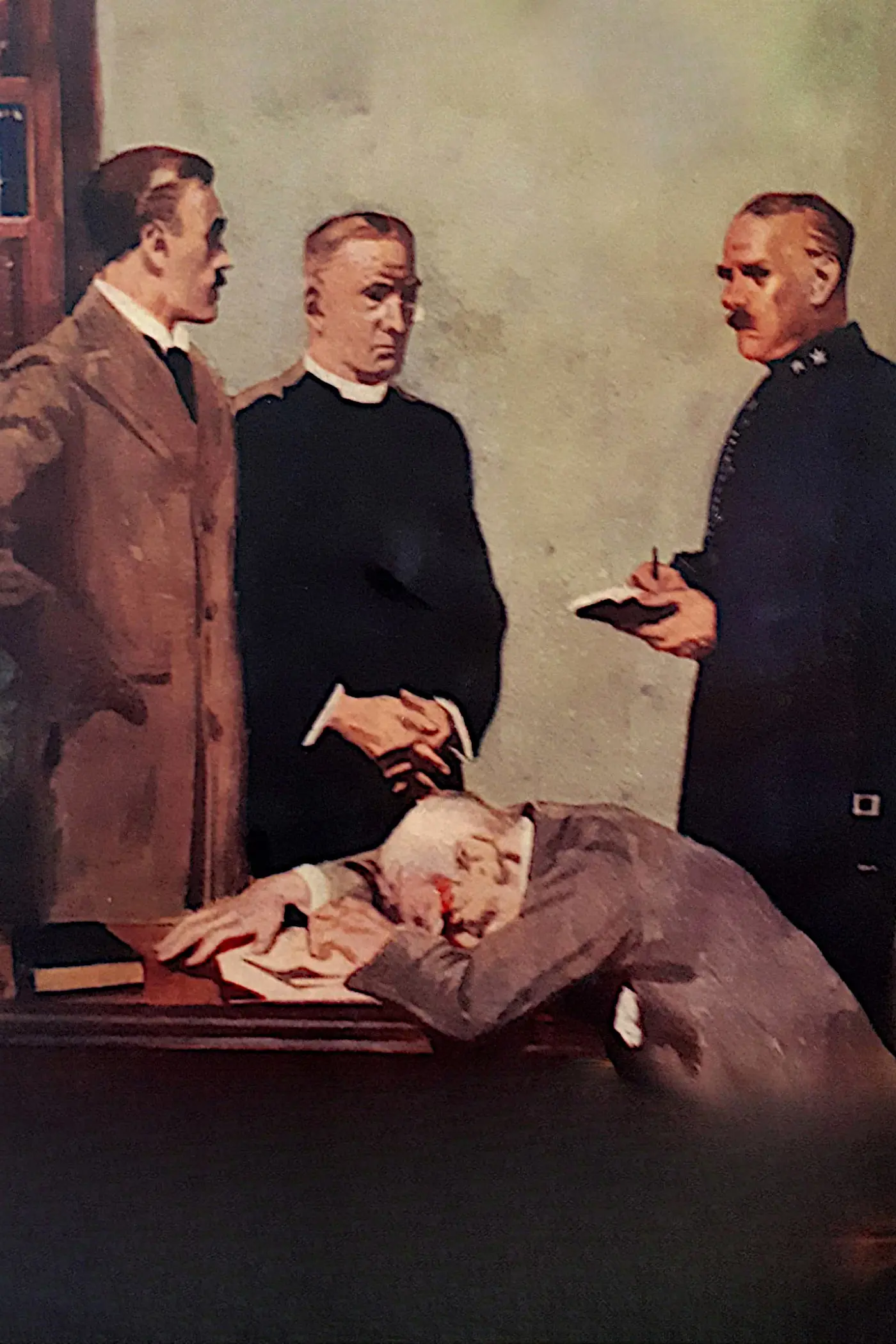
The Murder at the Vicarage
What is The Murder at the Vicarage about?
Not much happens in the sleepy rural town of St. Mary Mead—but that all changes when Colonel Protheroe, a “pompous old brute,” is murdered while awaiting the Vicar in the vicarage study. The main problem isn’t the paucity of suspects—in this case, there seem to be too many willing to confess to the crime. The Vicar, who narrates the story, does his best to unravel the mystery himself, as the police seem not to be making a very good job of it. His investigation soon begins to benefit from the observations of his neighbor, a gossipy old spinster by the name of Miss Marple . This wasn’t Miss Marple’s first fictional appearance: she had played a part in an Agatha Christie short story three years earlier. Miss Marple went on to become one of Christie’s most enduring and endearing characters, portrayed in many adaptations for television, stage, and film.
Main themes in The Murder at the Vicarage
Miss Marple's debut
In The Murder at the Vicarage, miss marple's debut provides a lens for understanding the story's core message.
Village mystery
The Murder at the Vicarage thoughtfully explores village mystery through its central conflicts.
Cozy mystery origins
Cozy mystery origins emerges as a defining element in The Murder at the Vicarage, shaping character development.
Church and community
The presence of church and community in The Murder at the Vicarage connects readers to its enduring relevance.
Why The Murder at the Vicarage is still relevant today
The Murder at the Vicarage (1930) introduced Miss Jane Marple, Christie's second great detective and one of fiction's most beloved characters. Set in the village of St. Mary Mead, it established the cozy mystery formula: a small community where everyone has secrets and an elderly spinster's understanding of human nature proves sharper than official police work. Miss Marple would appear in twelve novels and twenty stories.
More by this author


Frequently Asked Questions
What is The Murder at the Vicarage about?
Colonel Protheroe, the most hated man in St. Mary Mead, is found murdered in the vicar's study. Miss Jane Marple, the village's observant spinster, quietly gathers information that the police overlook.
Is this the first Miss Marple novel?
Yes, although Miss Marple appeared earlier in short stories. This novel established her character and the St. Mary Mead setting that would recur throughout the series.
How does Miss Marple solve crimes?
Miss Marple draws parallels between villagers and murderers—her observation of human nature in St. Mary Mead has shown her every type of person. She notices what others dismiss as gossip.
What is a cozy mystery?
A subgenre featuring amateur detectives, small communities, minimal violence, and emphasis on puzzle-solving. Miss Marple exemplifies the form, and this novel helped define its conventions.