The Trial
What is The Trial about?
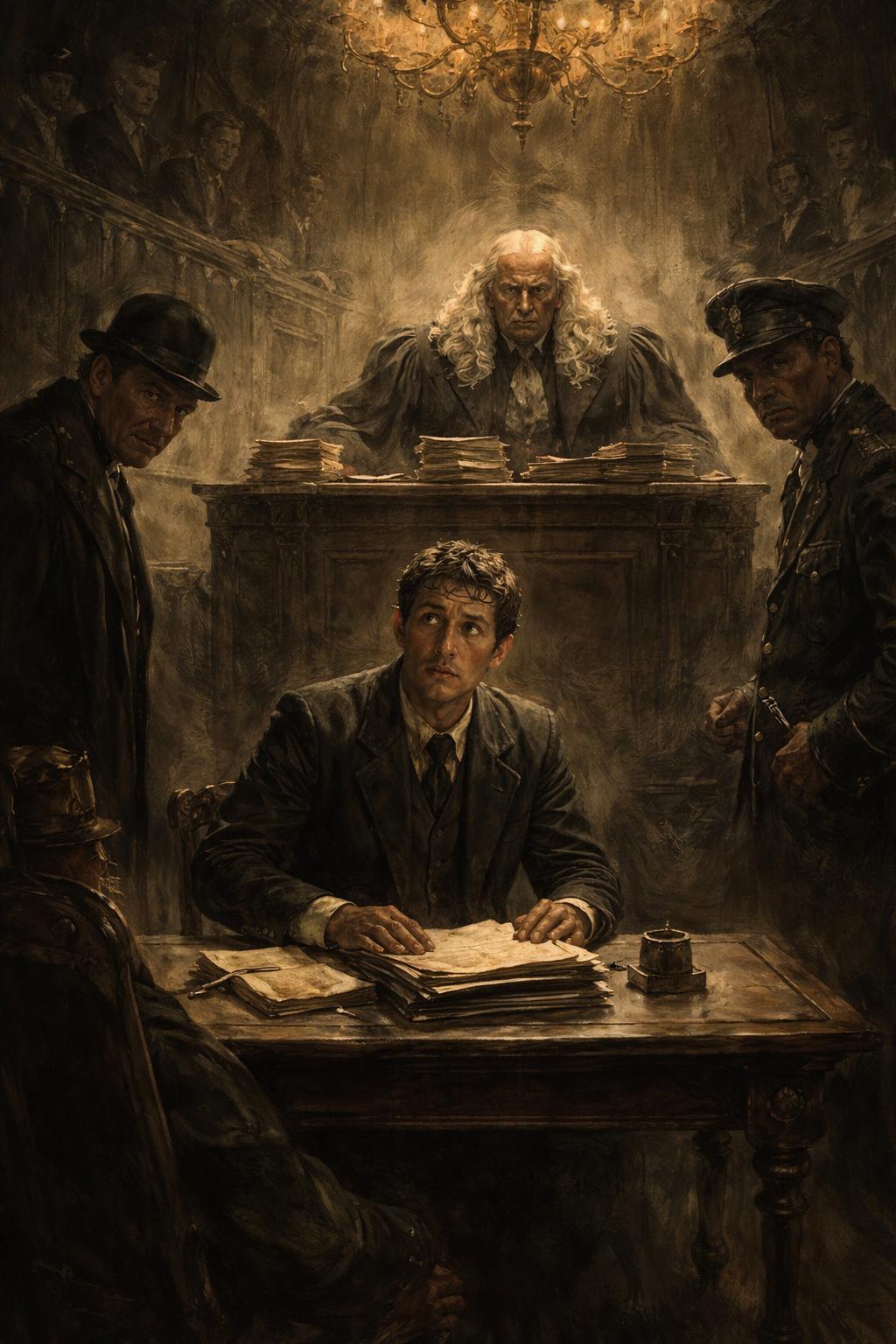
The Trial (Der Prozess) is Franz Kafka's unfinished masterpiece, published posthumously in 1925 by his friend Max Brod. The novel follows Josef K., a bank officer who is arrested one morning by agents of an unspecified court for an unspecified crime. Despite never learning what he is charged with, K. becomes consumed by the opaque legal proceedings that dominate and ultimately destroy his life. The Trial is a profound exploration of bureaucratic absurdity, guilt without cause, and the individual's powerlessness against inscrutable institutional authority. Its nightmarish logic has made it one of the defining novels of the twentieth century.
Main themes in The Trial
Bureaucratic Absurdity
The presence of bureaucratic absurdity in The Trial connects readers to its enduring relevance.
Guilt and Innocence
Guilt and Innocence emerges as a defining element in The Trial, shaping character development.
Institutional Power
The theme of institutional power weaves through The Trial, adding depth to its narrative.
Existential Dread
The Trial thoughtfully explores existential dread through its central conflicts.
Why The Trial is still relevant today
The Trial remains strikingly relevant in an age of surveillance, algorithmic decision-making, and impenetrable institutional processes. Kafka's vision of a justice system that operates beyond the comprehension of those it judges anticipates modern concerns about due process, data privacy, and the kafkaesque nature of dealing with large organizations. The novel is essential reading for understanding both modernist literature and the philosophical roots of existentialism.
More by this author
Frequently Asked Questions
What is The Trial about?
A man named Josef K. is arrested by a mysterious court for an unspecified crime and spends the rest of his life trying to navigate an incomprehensible legal system. Read it free on TextStack.
Is The Trial a finished novel?
No — Kafka left it unfinished at his death. His friend Max Brod edited and published it posthumously in 1925, against Kafka's wishes.
What does Kafkaesque mean in relation to The Trial?
The Trial is the primary source of the term Kafkaesque, meaning absurdly complex, nightmarish bureaucratic situations where the individual is powerless.
Is The Trial hard to read?
The prose is accessible, but the logic of the story is deliberately disorienting — that is part of the point. It reads like a nightmare that follows its own internal rules.